Pyridine → HCID 66789287, compound
Reaction equation

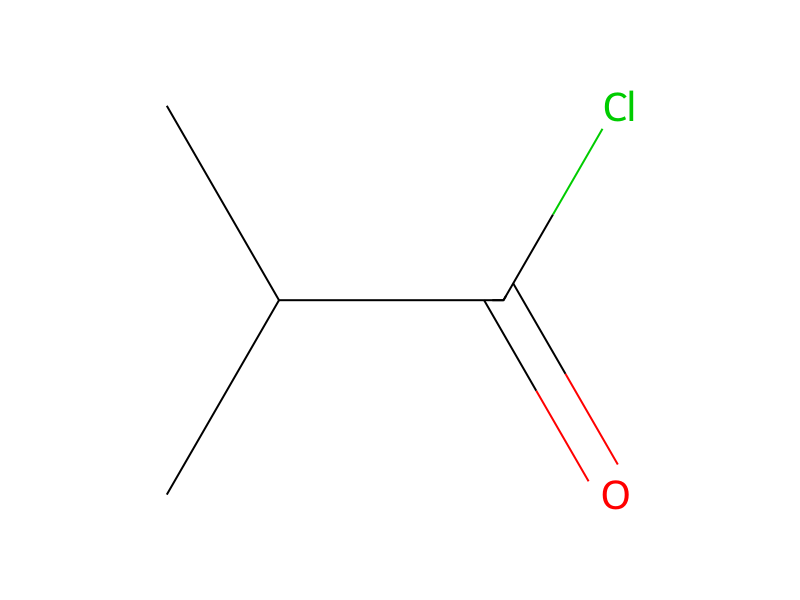
[Br:1][C:2]1[C:3]([Cl:22])=[C:4]([C:9]2[S:10](=[O:21])(=[O:20])[CH2:11][C:12]3[N:13]=[CH:14][CH:15]=[N:16][C:17]=3[C:18]=2[OH:19])[C:5]([F:8])=[CH:6][CH:7]=1.N1C=CC=CC=1.[C:29](Cl)(=[O:33])[CH:30]([CH3:32])[CH3:31]>ClCCl>[Br:1][C:2]1[C:3]([Cl:22])=[C:4]([C:9]2[S:10](=[O:21])(=[O:20])[CH2:11][C:12]3[N:13]=[CH:14][CH:15]=[N:16][C:17]=3[C:18]=2[O:19][C:29](=[O:33])[CH:30]([CH3:32])[CH3:31])[C:5]([F:8])=[CH:6][CH:7]=1Participants
5
Reactant 3


Product 1

Reagents, catalysts & solvents 1

Procedure
To a solution of 7-(3-bromo-2-chloro-6-fluoro-phenyl)-6,6-dioxo-5,6-dihydro-6-thia-1,4-diaza-naphthalen-8-ol (Compound C21 of Table C) (0.5 g) in dichloromethane (5 ml) at 0° C. was added pyridine (0.12 ml) followed by drop wise addition of isobutyryl chloride (0.142 ml). The reaction mixture was stirred at ambient temperature for 2 hours. The reaction mixture was concentrated and the residue purified by chromatography on silica gel (eluent: 0-100% v/v ethyl acetate in hexane) to give isobutyric acid 7-(3-bromo-2-chloro-6-fluoro-phenyl)-6,6-dioxo-5,6-dihydro-6-thia-1,4-diaza-naphthalen-8-yl ester (0.17 g) 1H-NMR (400 MHz, CDCl3): 1.15 (6H, d), 2.80 (1H, quin), 5.00 (2H, s), 7.10 (1H, t), 7.70 (1H, m), 8.65 (1H, d), 8.70 (1H, d).
Workup
- concentrationThe reaction mixture was concentrated
- customthe residue purified by chromatography on silica gel (eluent: 0-100% v/v ethyl acetate in hexane)
Sources & evidence
- ORD record
- ord-9762d82c601041ce8648c2ecea42b799
- Source dataset
- uspto-grants-2013_10
- Patent number
- US08569301B2
Reaction notes
Loading…