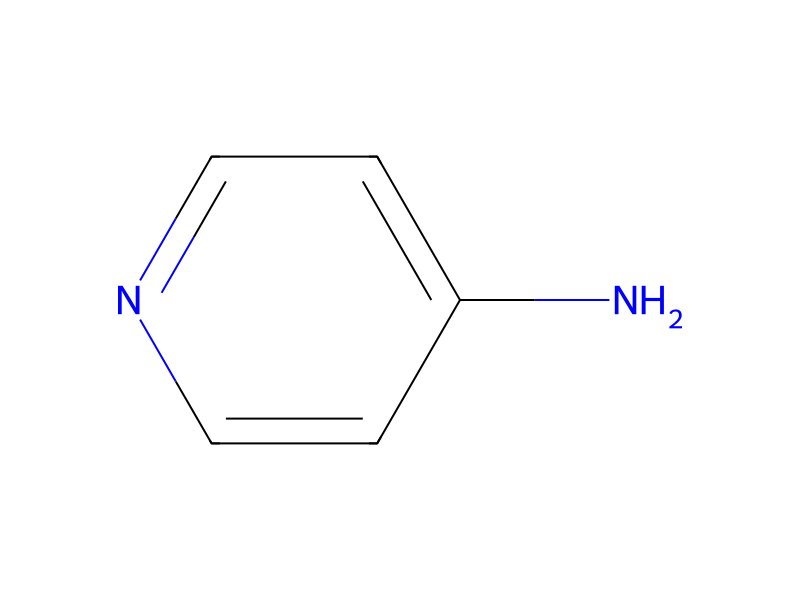
4-Aminopyridine → HCID 86703930, compound
Reaction equation

Cl[C:2]1[C:11]2[C:6](=[CH:7][CH:8]=[C:9]([I:12])[CH:10]=2)[N:5]=[CH:4][N:3]=1.[N:13]1[CH:18]=[CH:17][C:16]([NH2:19])=[CH:15][CH:14]=1>Cl.O1CCOCC1.ClCCl>[I:12][C:9]1[CH:10]=[C:11]2[C:6](=[CH:7][CH:8]=1)[N:5]=[CH:4][N:3]=[C:2]2[NH:19][C:16]1[CH:17]=[CH:18][N:13]=[CH:14][CH:15]=1Participants
5
Reactant 2

Product 1

Reagents, catalysts & solvents 2


Procedure
To a vial was added 4-chloro-6-iodo-quinazoline (100 mg; 0.34 mmol, commercially available), pyridin-4-amine (3 equiv., 1.03 mmol, 97.19 mg, commercially available), and 2 drops of 4M HCl/dioxane. The reaction vial was heated until solids melted. LCMS of resultant solution showed clean product formation. Upon cooling the product re-solidified. The solid was suspended in dichloromethane:water, and collected by filtration. 95 mg of 6-iodo-N-(4-pyridyl)quinazolin-4-amine was recovered as an orange solid, which was carried on directly to the Suzuki step. LCMS M/Z (M+H)=350.
Workup
- customThe reaction
- temperaturevial was heated until solids
- temperatureUpon cooling the product re-solidified
- filtrationwater, and collected by filtration
- custom95 mg of 6-iodo-N-(4-pyridyl)quinazolin-4-amine was recovered as an orange solid, which
Sources & evidence
- ORD record
- ord-93781137f8ed4d6f968ad919adb14fcf
- Source dataset
- uspto-grants-2016_07
- Patent number
- US09382241B2
Reaction notes
Loading…