(R)-3-Pyrrolidinol → HCID 90042368, compound
Reaction equation

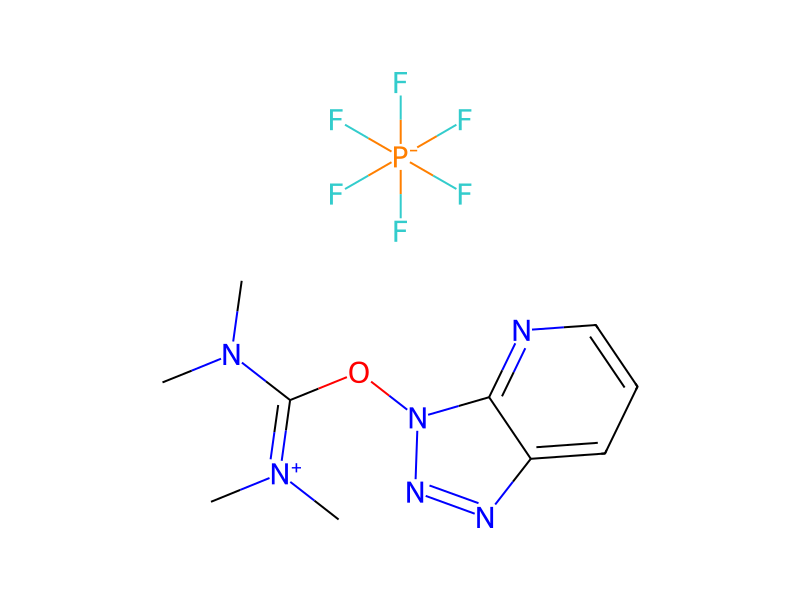
[Br:1][C:2]1[CH:7]=[CH:6][C:5]([C:8]2[CH:13]=[CH:12][C:11]([C:14]([OH:16])=O)=[CH:10][CH:9]=2)=[CH:4][CH:3]=1.[NH:17]1[CH2:21][CH2:20][C@@H:19]([OH:22])[CH2:18]1.CN(C(ON1N=NC2C=CC=NC1=2)=[N+](C)C)C.F[P-](F)(F)(F)(F)F>CN(C=O)C>[Br:1][C:2]1[CH:3]=[CH:4][C:5]([C:8]2[CH:9]=[CH:10][C:11]([C:14]([N:17]3[CH2:21][CH2:20][C@@H:19]([OH:22])[CH2:18]3)=[O:16])=[CH:12][CH:13]=2)=[CH:6][CH:7]=1Participants
5
Reactant 3


Product 1

Reagents, catalysts & solvents 1

Procedure
4′-bromo-[1,1′-biphenyl]-4-carboxylic acid (2 g, 7.22 mmol), (R)-pyrrolidin-3-ol (1.3 g, 14.92 mmol), and HATU (5.5 g, 14.46 mmol) were dissolved in DMF (60 mL). To this solution was added TEA (4 ml, 28.7 mmol) and the reaction mixture was stirred under N2 at room temperature for 24 h. Then the volatiles were removed in vacuo and the resulting residue was partitioned between EtOAc and H2O. The organic layer was separated and washed with 1N HCl, saturated NaHCO3, and brine, and then dried over Na2SO4, filtered and concentrated in vacuo. Chromatography of the resulting residue over silica eluting with 3% MeOH in DCM afforded the desired product. LC-MS: calculated for C17H16BrNO2 345.04 observed m/e: 346.09 (M+H)+ (Rt: 1.62/4 min).
Workup
- customThen the volatiles were removed in vacuo
- customthe resulting residue was partitioned between EtOAc and H2O
- customThe organic layer was separated
- washwashed with 1N HCl, saturated NaHCO3, and brine
- dry with materialdried over Na2SO4
- filtrationfiltered
- concentrationconcentrated in vacuo
Sources & evidence
- ORD record
- ord-d288cf4eb0f24f7a9a78fe96fb4471e9
- Source dataset
- uspto-grants-2016_07
- Patent number
- US09382243B2
Reaction notes
Loading…