Hydroquinone → Acrylonitrile-butadiene mono-n-butyl maleate
Reaction equation

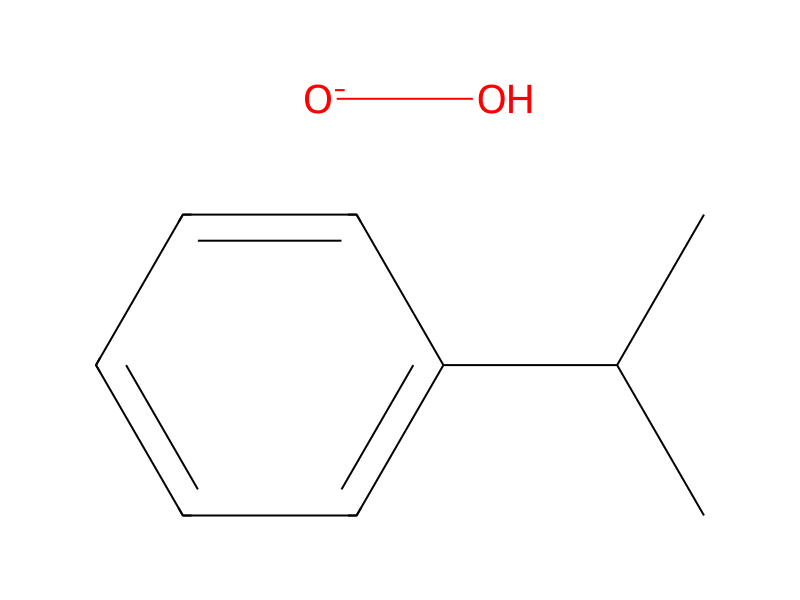
[C:1]1(S(OCCCCCCCCCCCC)(=O)=O)[CH:6]=CC=[CH:3][CH:2]=1.[Na].[C:24](#[N:27])[CH:25]=[CH2:26].[C:28]([O:35][CH2:36][CH2:37][CH2:38][CH3:39])(=[O:34])/[CH:29]=[CH:30]\[C:31]([O-:33])=[O:32].C=CC=C.[O-]O.C1(C(C)C)C=CC=CC=1.C1(C=CC(O)=CC=1)O>O>[CH2:6]=[CH:1][CH:2]=[CH2:3].[C:24](#[N:27])[CH:25]=[CH2:26].[C:28]([O:35][CH2:36][CH2:37][CH2:38][CH3:39])(=[O:34])/[CH:29]=[CH:30]\[C:31]([O-:33])=[O:32]Participants
Reactant 6





Product 1

Reagents, catalysts & solvents 1

Procedure
To a metal bottle, ion exchanged water in 180 parts, concentration 10 wt % of sodium dodecyl benzene sulfonate aqueous solution in 25 parts, acrylonitrile in 37 parts, mono-n-butyl maleate in 6 parts, and t-dodecyl mercaptan (molecular weight adjuster) in 0.75 part were charged in that order. The inside air was replaced with nitrogen three times, then 1,3-butadiene in 57 parts was charged. The metal bottle was held at 5° C., cumen hydroperoxide (polymerization initiator) in 0.1 part was charged, then the metal bottle was rotated while performing a polymerization reaction for 16 hours. After that, a concentration 10 wt % of hydroquinone aqueous solution (polymerization anticatalyst) in 0.1 part was added to stop the polymerization reaction, then a water temperature 60° C. rotary evaporator was used to remove the residual monomers and thereby obtain a latex of acrylonitrile-butadiene-mono-n-butyl maleate copolymer rubber (solid concentration of about 30 wt %).
Workup
- additionwere charged in that order
- customwas held at 5° C.
- customa polymerization reaction for 16 hours
- customthe polymerization reaction
- customa water temperature 60° C. rotary evaporator
- customto remove the residual monomers
Sources & evidence
- ORD record
- ord-252119a7ca6e4b9d92dbfb63e714065f
- Source dataset
- uspto-grants-2016_07
- Patent number
- US09382391B2
Reaction notes
Loading…