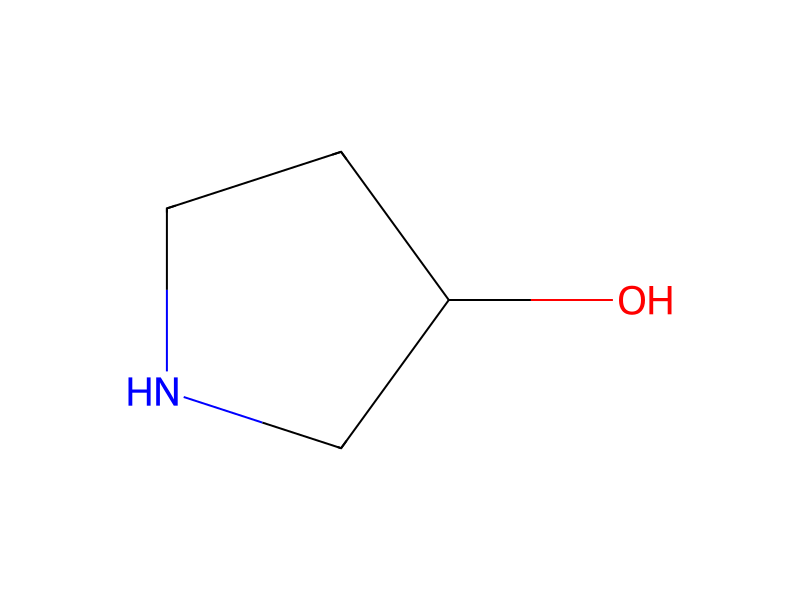
4-Hydroxypyrrolidine → 4-(3-Hydroxypyrrolidin-1-yl)-pyridine-2-carboxylic acid phenylamide
Reaction equation

[CH2:1]1[CH:5]([OH:6])[CH2:4][NH:3][CH2:2]1.[C:7]1([NH:13][C:14]([C:16]2[CH:21]=[C:20](Br)[CH:19]=[CH:18][N:17]=2)=[O:15])[CH:12]=[CH:11][CH:10]=[CH:9][CH:8]=1.C(Cl)(Cl)Cl.CO>C(O)CCC>[C:7]1([NH:13][C:14]([C:16]2[CH:21]=[C:20]([N:3]3[CH2:2][CH2:1][CH:5]([OH:6])[CH2:4]3)[CH:19]=[CH:18][N:17]=2)=[O:15])[CH:8]=[CH:9][CH:10]=[CH:11][CH:12]=1Participants
5



Procedure
A solution of dl-3-pyrrolidinol (0.17 g, 1.95 mmol) and 4-bromo-pyridine-2-carboxylic acid phenylamide (0.36 g, 1.3 mmol) in 1-butanol (25 mL) was heated at 100° C. for 15 hours. The reaction was applied to silica gel (25 g) and eluted with chloroform then chloroform:methanol 9:1 to give the title compound 227 mg (0.80 mmol, 61%).
Workup
- washeluted with chloroform
Sources & evidence
- ORD record
- ord-31581ec3de1342589369d4e17ce65759
- Source dataset
- uspto-grants-2016_07
- Patent number
- US09388176B2
Reaction notes
Loading…