Cyclobutanone → 2-Bromo-5-(1-hydroxycyclobutyl)benzonitrile
Reaction equation

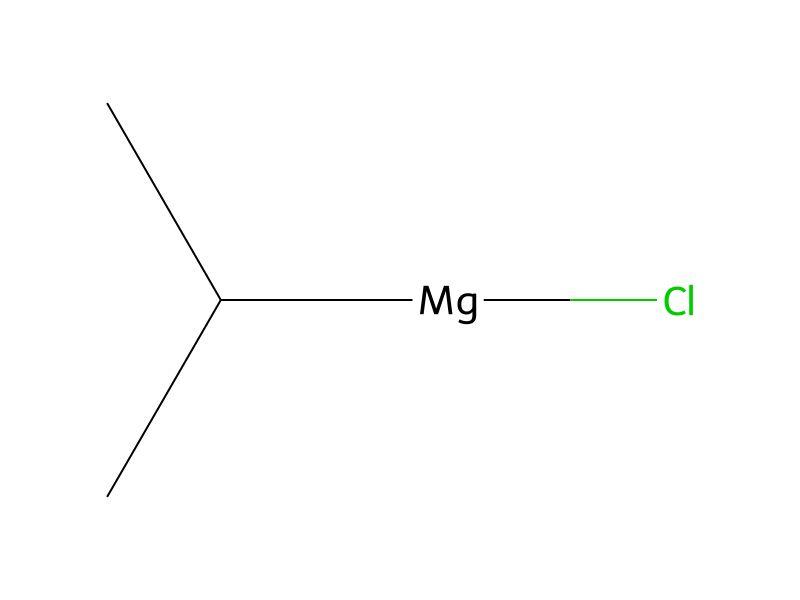
[Br:1][C:2]1[CH:9]=[CH:8][C:7](I)=[CH:6][C:3]=1[C:4]#[N:5].C([Mg]Cl)(C)C.[Cl-].[Li+].[C:18]1(=[O:22])[CH2:21][CH2:20][CH2:19]1>O1CCCC1.O>[Br:1][C:2]1[CH:9]=[CH:8][C:7]([C:18]2([OH:22])[CH2:21][CH2:20][CH2:19]2)=[CH:6][C:3]=1[C:4]#[N:5]Participants
7






Conditions
- Temperature
- -40 °C
Procedure
To 2-bromo-5-iodobenzonitrile (1457 mg, 4.730 mmol) in tetrahydrofuran (10 mL) at −40° C. was added isopropyl magnesium chloride.lithium chloride (1.3 M in THF, 4.4 mL, 5.7 mmol) dropwise. The mixture was stirred at −40° C. for 10 minutes, and was then treated with cyclobutanone (0.4 mL, 5.2 mmol) dropwise at −40° C. The reaction mixture was warmed to room temperature and stirred at that temperature for 16 hours. The reaction mixture was poured into water (10 mL) and extracted with ethyl acetate (3×20 mL). The combined organic layers were dried over sodium sulfate, filtered and concentrated in vacuo to give the title compound which was used directly in the next step without further purification.
Workup
- temperatureThe reaction mixture was warmed to room temperature
- stirringstirred at that temperature for 16 hours
- extractionextracted with ethyl acetate (3×20 mL)
- dry with materialThe combined organic layers were dried over sodium sulfate
- filtrationfiltered
- concentrationconcentrated in vacuo
Sources & evidence
- ORD record
- ord-1cd63c9f4e3d4b2abfdef4b0df56f9ff
- Source dataset
- uspto-grants-2016_07
- Patent number
- US09394285B2
Reaction notes
Loading…