Ethyl Acetate → 3-(difluoromethyl)-5-fluoro-1-methyl-1H-pyrazole-4-carboxylic acid
Reaction equation

I(O)(=O)(=O)=O.[F:6][C:7]1[N:11]([CH3:12])[N:10]=[C:9]([CH:13]([F:15])[F:14])[C:8]=1[CH:16]=[O:17].[Cr](Cl)([O-])(=O)=[O:19].[NH+]1C=CC=CC=1.C(OCC)(=O)C>C(#N)C>[F:6][C:7]1[N:11]([CH3:12])[N:10]=[C:9]([CH:13]([F:14])[F:15])[C:8]=1[C:16]([OH:19])=[O:17]Participants
6




Procedure
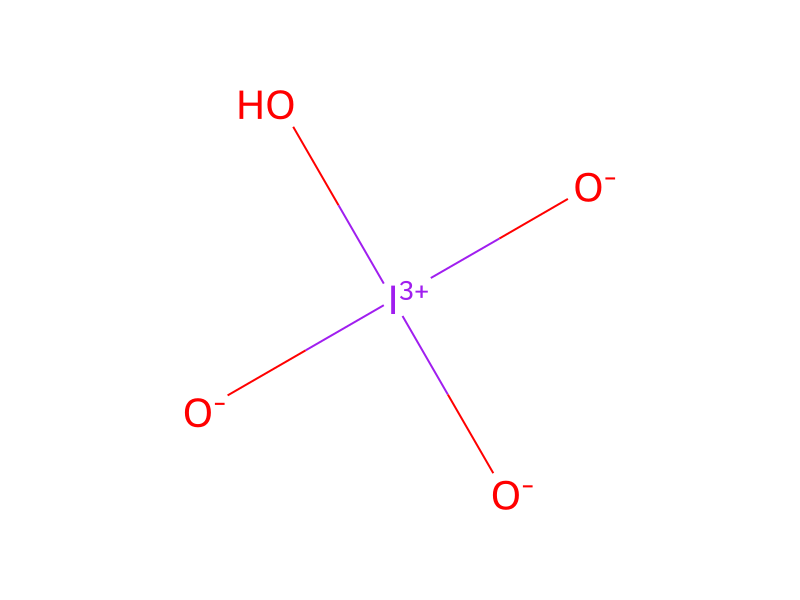
A suspension of 79.7 g (350 mmol) of periodic acid in 640 ml absolute acetonitrile was stirred for 30 min. To this was added 56.6 g (318 mmol) of 5-fluoro-3-(difluoromethyl)-1-methyl-1H-pyrazole-4-carbaldehyde at 0° C. and a solution of 1.4 g (6 mmol) of pyridinium chlorochromate in 130 ml dry acetonitrile. The reaction mixture was stirred for 2.5 hours at room temperature. 1600 ml of ethyl acetate was added to the reaction mixture and the separated organic phase was washed consecutively with brine/water(1:1), saturated sodium metabisulfite and brine. Then the organic phase was dried with sodium sulphate, and evaporated under vacuum to give the expected product as a pale yellow solid.
Workup
- stirringThe reaction mixture was stirred for 2.5 hours at room temperature
- washthe separated organic phase was washed consecutively with brine/water(1:1), saturated sodium metabisulfite and brine
- dry with materialThen the organic phase was dried with sodium sulphate
- customevaporated under vacuum
Sources & evidence
- ORD record
- ord-e87b9dd7f005412fa6c8a5d398941aaa
- Source dataset
- uspto-grants-2016_07
- Patent number
- US09398767B2
Reaction notes
Loading…