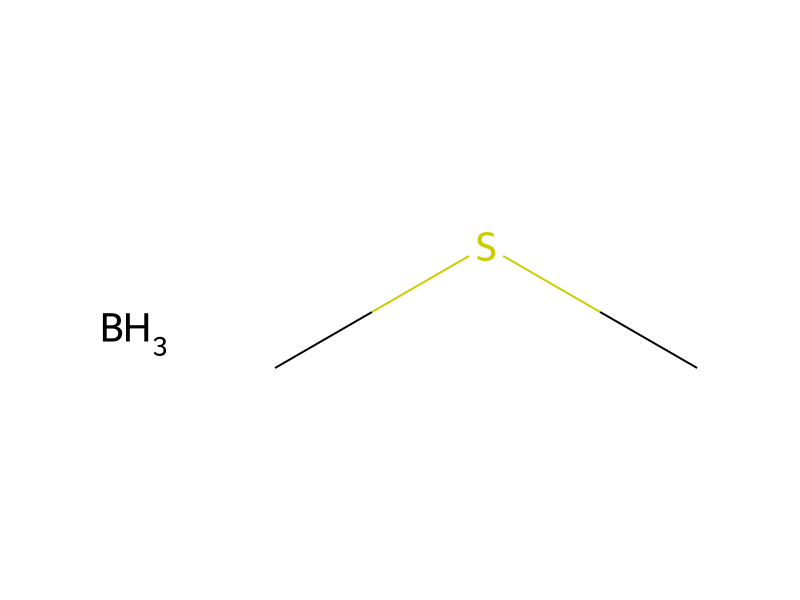
(Dimethyl sulfide)trihydroboron → HCID 9840637, compound
Reaction equation

[CH2:1]([N:8]1[C:20]2[CH:19]=[CH:18][CH:17]=[C:16]([O:21][CH2:22][C:23]#[N:24])[C:15]=2[C:14]2[C:9]1=[C:10]([F:25])[CH:11]=[CH:12][CH:13]=2)[C:2]1[CH:7]=[CH:6][CH:5]=[CH:4][CH:3]=1.B.CSC>C1COCC1>[CH2:1]([N:8]1[C:20]2[CH:19]=[CH:18][CH:17]=[C:16]([O:21][CH2:22][CH2:23][NH2:24])[C:15]=2[C:14]2[C:9]1=[C:10]([F:25])[CH:11]=[CH:12][CH:13]=2)[C:2]1[CH:3]=[CH:4][CH:5]=[CH:6][CH:7]=1Participants
Reactant 2

Product 1

Reagents, catalysts & solvents 1

Procedure
A mixture of 2-[(9-benzyl-8-fluoro-9H-carbazol-4-yl)oxy]acetonitrile (0.7685 g, 0.0023 mol), dry THF (20 mL) and borane-methyl sulfide (0.71 mL, 0.0075 mol) is stirred at room temperature for 3.5 h. Additional borane-methyl sulfide (0.20 mL, 0.0021 mol) is added and the mixture is stirred overnight. The excess borane is cautiously quenched with methanol and the mixture is concentrated under reduced pressure. Methanol and dichloromethane are added to the residue and the solution is again concentrated under reduced pressure (repeated twice). The solids are then dissolved in methanol/dichloromethane and conc. HCl (3 mL) is added. After the mixture stirred for 50 min, the solvent is removed under reduced pressure and the residue is partitioned between dichloromethane and aq. sodium bicarbonate. The combined organic layers are dried over sodium sulfate and concentrated to dryness. The residue is chromatographed on silica gel (100 mL) using methanol/dichloromethane (2/98 and 4/96) and recrystallized from ethyl acetate/dichloromethane/heptane to give 0.333 g (43%) of the title compound; mp 122.25-123° C.; MS (ESI+) for C21H19FN2O m/z 335.2 (M+H)+; IR (drift) 1602, 1577, 1498, 1456, 1443, 1352, 1337, 1325, 1269, 1254, 1242, 1228, 1141, 792, 736 cm−1; 1H NMR (CDCl3) δ3.30, 4.28, 5.30, 6.70, 7.01, 7.11, 7.22, 7.36, 8.10, NH2 not seen. Anal. Calcd for C21H19FN2O: C, 75.43; H, 5.73; N, 8.38. Found: C, 75.25; H, 5.79; N, 8.28.
Workup
- stirringthe mixture is stirred overnight
- customThe excess borane is cautiously quenched with methanol
- concentrationthe mixture is concentrated under reduced pressure
- additionMethanol and dichloromethane are added to the residue
- concentrationthe solution is again concentrated under reduced pressure (
- dissolutionThe solids are then dissolved in methanol/dichloromethane
- additionconc. HCl (3 mL) is added
- stirringAfter the mixture stirred for 50 min
- customthe solvent is removed under reduced pressure
- customthe residue is partitioned between dichloromethane and aq. sodium bicarbonate
- dry with materialThe combined organic layers are dried over sodium sulfate
- concentrationconcentrated to dryness
- customThe residue is chromatographed on silica gel (100 mL)
- customrecrystallized from ethyl acetate/dichloromethane/heptane
Sources & evidence
- ORD record
- ord-e0d35760f4d9422d829d582e92a8b22b
- Source dataset
- uspto-grants-2003_02
- Patent number
- US06514968B1
Reaction notes
Loading…