Lithium Chloride → 3-(2-Pyridyl)-phenyl acetic acid methyl ester
Reaction equation

Br[C:2]1[CH:3]=[C:4]([CH2:8][C:9]([O:11][CH3:12])=[O:10])[CH:5]=[CH:6][CH:7]=1.FC(F)(F)S(O[C:19]1[CH:24]=[CH:23][CH:22]=[CH:21][N:20]=1)(=O)=O.[Cl-].[Li+].C[Sn](C)C.C[Sn](C)C.[F-].[K+].CCOC(C)=O>C1C=CC([P]([Pd]([P](C2C=CC=CC=2)(C2C=CC=CC=2)C2C=CC=CC=2)([P](C2C=CC=CC=2)(C2C=CC=CC=2)C2C=CC=CC=2)[P](C2C=CC=CC=2)(C2C=CC=CC=2)C2C=CC=CC=2)(C2C=CC=CC=2)C2C=CC=CC=2)=CC=1.O1CCOCC1>[CH3:12][O:11][C:9](=[O:10])[CH2:8][C:4]1[CH:5]=[CH:6][CH:7]=[C:2]([C:19]2[CH:24]=[CH:23][CH:22]=[CH:21][N:20]=2)[CH:3]=1Participants
Reactant 5



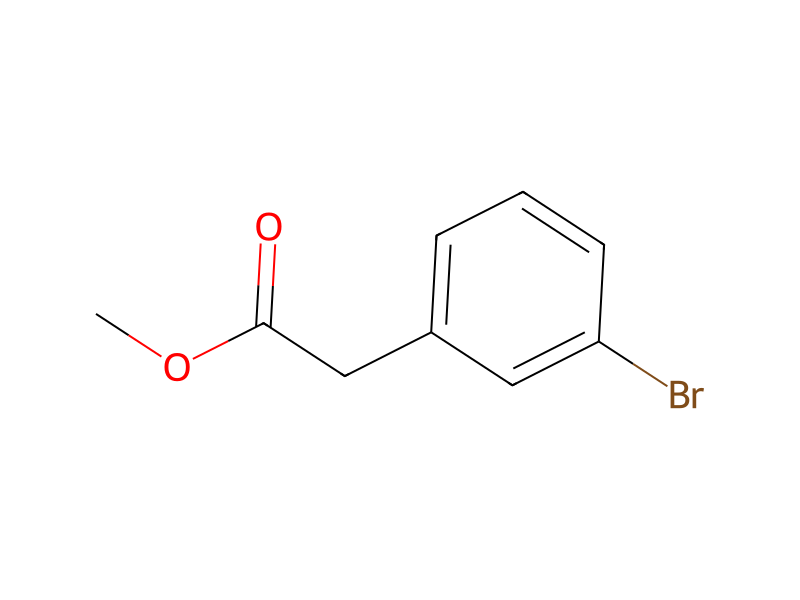

Product 1

Reagents, catalysts & solvents 2


Procedure
Methyl 3-bromophenylacetate (25 g, 0.109 mol), 2-(trifluoro-methylsulfonyloxy)-pyridine (24.8 g, 0.109 mol), anhydrous lithium chloride (13.89 g, 0.3275 mol), and tetrakis(triphenylphosphine)palladium (6.31 g, 0.0055 mol) were combined, followed by hexamethylditin (35.8 g, 0.109 mol) and anhydrous dioxane (300 ml). The mixture was stirred at reflux for 16h, cooled, and poured into 1:1 saturated KF-EtOAc (1.6 L). The mixture was stirred at RT for 2 h, filtered, and the filtrate was washed with saturated aqueous NaHCO3 (200 ml) and with brine (200 ml), dried (MgSO4), and concentrated in vacuo to give a brown oil. The residue was flash chromatographed (silica gel, 1:4 EtOAc:hexane) to give the title compound as a yellow oil (11.9 g. 48% yield): MS(ES+) 228.1 (MH+). cf. Tetrahedron Letters, 1995, 36, 9085-9088
Workup
- temperaturecooled
- stirringThe mixture was stirred at RT for 2 h
- filtrationfiltered
- washthe filtrate was washed with saturated aqueous NaHCO3 (200 ml) and with brine (200 ml)
- dry with materialdried (MgSO4)
- concentrationconcentrated in vacuo
- customto give a brown oil
- customchromatographed (silica gel, 1:4 EtOAc:hexane)
Sources & evidence
- ORD record
- ord-9432548c5cd54f3486a150f974b20d41
- Source dataset
- uspto-grants-2003_02
- Patent number
- US06518267B1
Reaction notes
Loading…