Ammonium Chloride → 3-(1,3-Dioxan-2-yl)-1-(5-norbornen-2-yl)-1-propanol
Reaction equation

Br[CH2:2][CH2:3][CH:4]1[O:9][CH2:8][CH2:7][CH2:6][O:5]1.[CH:10]12[CH2:16][CH:13]([CH:14]=[CH:15]1)[CH2:12][CH:11]2[CH:17]=[O:18].[Cl-].[NH4+]>O1CCCC1>[O:5]1[CH2:6][CH2:7][CH2:8][O:9][CH:4]1[CH2:3][CH2:2][CH:17]([CH:11]1[CH2:12][CH:13]2[CH2:16][CH:10]1[CH:15]=[CH:14]2)[OH:18]Participants



Procedure
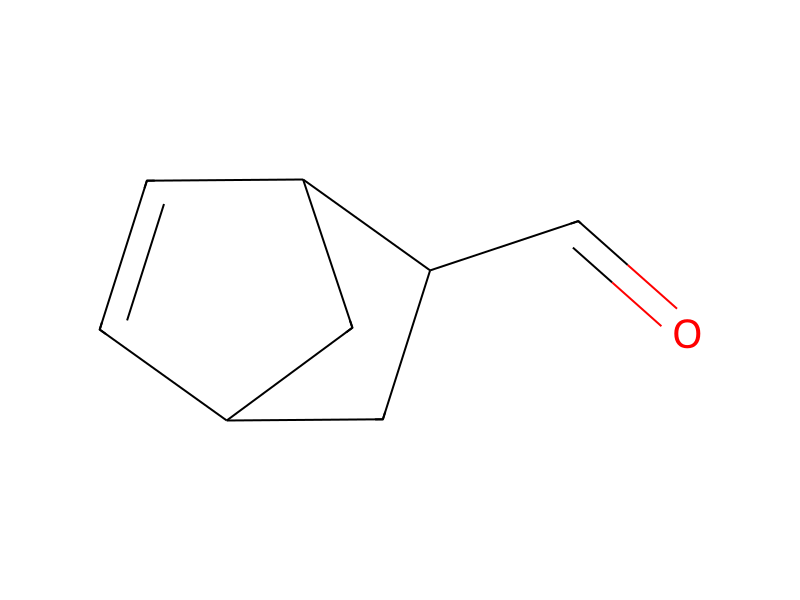
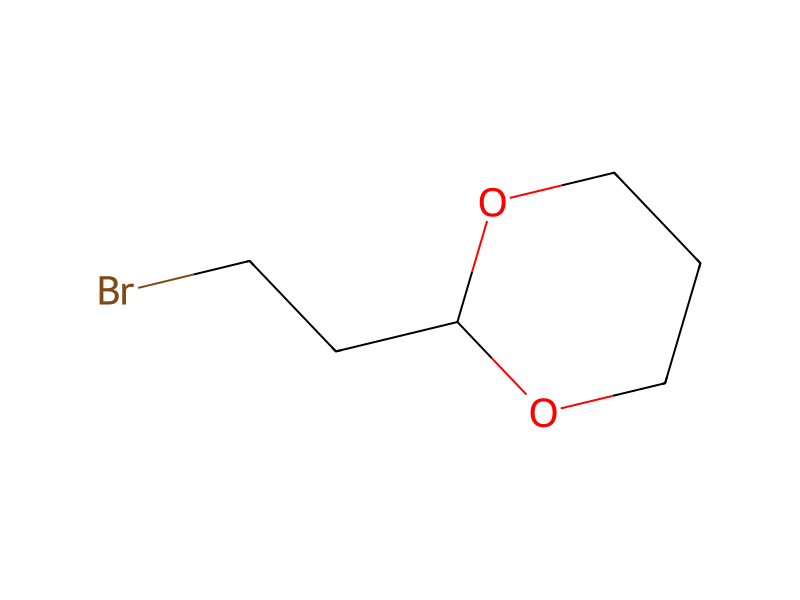
A Grignard reagent was customarily prepared from 36.2 g of 2-(2-bromoethyl)-1,3-dioxane in 200 ml of dry tetrahydrofuran. Then 19.5 g of 5-norbornene-2-carbaldehyde was added dropwise over 30 minutes to the Grignard reagent at 20° C. Stirring was continued for 30 minutes whereupon the reaction solution was added to a saturated aqueous solution of ammonium chloride to stop reaction. After diethyl ether extraction, the organic layer was successively washed with water, saturated sodium bicarbonate water and saturated sodium chloride water, dried over anhydrous sodium sulfate, and concentrated in vacuum. It was further purified by vacuum distillation, obtaining 36.2 g of 3-(1,3-dioxan-2-yl)-1-(5-norbornen-2-yl)-1-propanol (boiling point 125° C./27 Pa, yield 95%).
Workup
- customreaction
- extractionAfter diethyl ether extraction
- washthe organic layer was successively washed with water, saturated sodium bicarbonate water and saturated sodium chloride water
- dry with materialdried over anhydrous sodium sulfate
- concentrationconcentrated in vacuum
- distillationIt was further purified by vacuum distillation
Sources & evidence
- ORD record
- ord-e7fe697a4e0843d8b71845dc07f388b6
- Source dataset
- uspto-grants-2005_11
- Patent number
- US06962767B2
Reaction notes
Loading…