Triphenylphosphine → HCID 178460553, compound
Reaction equation

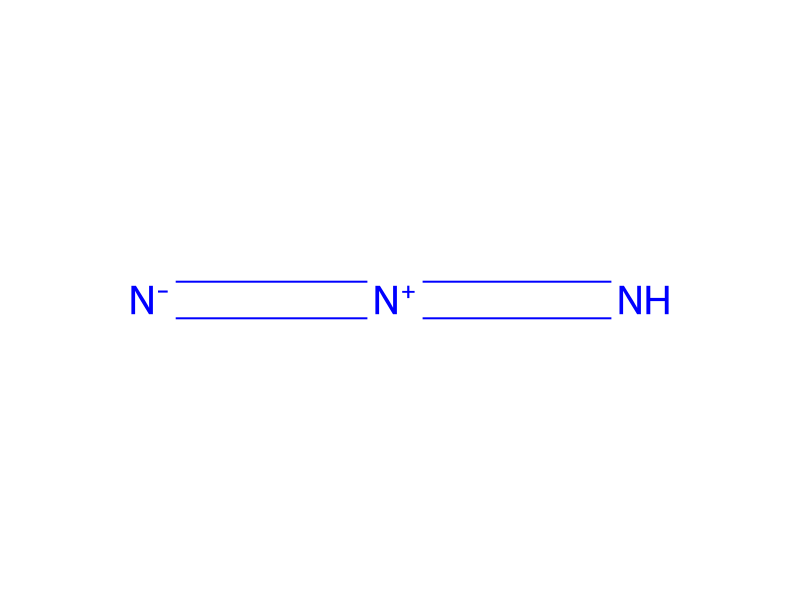
O[CH:2]1[CH2:6][CH2:5][C:4]([CH2:7][PH:8](=[O:13])[O:9][CH:10]([CH3:12])[CH3:11])=[CH:3]1.CCOC(/[N:19]=N/C(OCC)=O)=O.N=[N+]=[N-].C1(P(C2C=CC=CC=2)C2C=CC=CC=2)C=CC=CC=1>C1C=CC=CC=1.C1COCC1.O>[NH2:19][CH:2]1[CH2:6][CH2:5][C:4]([CH2:7][PH:8](=[O:13])[O:9][CH:10]([CH3:12])[CH3:11])=[CH:3]1Participants






Procedure
To a solution of (±)-isopropyl (3-hydroxycyclopentenyl)methylphosphinate (3) (2.5 g, 12.25 mmol), DEAD (4.0 cm3,26.95 mmol) and HN3 (12.9 cm3 of a 1.9 M solution in benzene) in anhydrous THF (100 cm3) at 0° C. was added triphenylphosphine (12.8 g, 49 mmol) in small portions over a period of 1 h. The reaction mixture was allowed to warm to room temperature and stirring continued for 12 h. The reaction mixture was then heated to 50° C. for 3 h after which time water (2 cm3) was added and heating continued for a further 2 h. The reaction mixture was cooled to room temperature and the solvent removed in vacuo. The residue was partitioned between HCl (1M, 40 cm3) and DCM (40 cm3). The organic layer was separated and further extracted with water (3×30 cm3). The combined aqueous fractions were washed with DCM (2×30 cm3) and concentrated in vacuo. The crude product was purified by ion exchange chromatography (Dowex 50 H+ form), eluting first with water until the eluate was neutral and then with aqueous ammonium hydroxide (1 M) collecting ninhydrin positive fractions. The solvent was removed in vacuo to yield the title compound as a pale yellow oil (8) (1.71 g, 68%): 1H NMR (300 MHz; CD3OD) δ 1.26 and 1.27 (3H, d, J=6.0 and 6.0 Hz, POCHCH3), 1.31 and 1.32 (3H, d, J=6.3 and 6.3 Hz, POCHCH3), 1.51 and 1.53 (3H, d, J=14.4 and 14.1 Hz, PCH3) 1.59-1.79 (1H, m, C(4)—H, 2.33-2.55 (2H, m, C(5)—H, C(5)—H′), 2.54-2.72 (1H, m, C(4)—H′) 4.05 (1H, m, C(3)—H), 4.48 (1H, m, C(2)—H), 6.52 (1H, dm, J=9.9 Hz, PCCH), 13C NMR (75.46 MHz, CD3OD) δ 13.92 and 14.10 (PCH3, d, JPC=102.1 and 101.6 Hz), 24.54 and 24.60 (POCHCH3, 2×d, 3JPOCC=46 Hz), 24.9 (POCHCH3, d, 3JPOCC=3.4 Hz), 32.86 and 32.88 (C(4), d, 3JPC=12.6 and 12.3 Hz), 35.0 and 35.13 (C(5), 2×d, 2JPC=10.0 Hz) 59.83 and 60.07 (POCHCH3, d, 2JPOC=5.7 and 5.7 Hz), 71.36 and 71.39 (C(3), d, 3JPC=6.3 and 6.3 Hz), 137.96 (C(1), d, JPC=125.7 Hz), 150.84 and 150.95 (C(2), d, 2JPC=10.9 and 11.1 Hz), 31 P NMR (121 MHz, CD3OD) δ 45.9, MS (EI) m/z 204 (38%) (MH+), 147 (30), 105 (100) (ESI) 204.1151 (MH+-C9H19NO2P requires 204.1153).
Workup
- additionwas added
- temperatureheating
- waitcontinued for a further 2 h
- temperatureThe reaction mixture was cooled to room temperature
- customthe solvent removed in vacuo
- customThe residue was partitioned between HCl (1M, 40 cm3) and DCM (40 cm3)
- customThe organic layer was separated
- extractionfurther extracted with water (3×30 cm3)
- washThe combined aqueous fractions were washed with DCM (2×30 cm3)
- concentrationconcentrated in vacuo
- customThe crude product was purified by ion exchange chromatography (Dowex 50 H+ form)
- washeluting first with water until the eluate
- customwith aqueous ammonium hydroxide (1 M) collecting ninhydrin positive fractions
- customThe solvent was removed in vacuo
Sources & evidence
- ORD record
- ord-c172eebceec246329de549f1a6d00987
- Source dataset
- uspto-grants-2005_11
- Patent number
- US06962907B2
Reaction notes
Loading…