Ammonium Chloride → 4-Fluoro-1-[tris(1-methylethyl)silyl]-1H-pyrrolo[2,3-b]pyridine
Reaction equation

Br[C:2]1[CH:7]=[CH:6][N:5]=[C:4]2[N:8]([Si:11]([CH:18]([CH3:20])[CH3:19])([CH:15]([CH3:17])[CH3:16])[CH:12]([CH3:14])[CH3:13])[CH:9]=[CH:10][C:3]=12.C([Li])(C)(C)C.C1C=CC(S(N(S(C2C=CC=CC=2)(=O)=O)[F:36])(=O)=O)=CC=1.[Cl-].[NH4+]>O.C1COCC1>[F:36][C:2]1[CH:7]=[CH:6][N:5]=[C:4]2[N:8]([Si:11]([CH:18]([CH3:20])[CH3:19])([CH:15]([CH3:17])[CH3:16])[CH:12]([CH3:14])[CH3:13])[CH:9]=[CH:10][C:3]=12Participants
Reactant 4

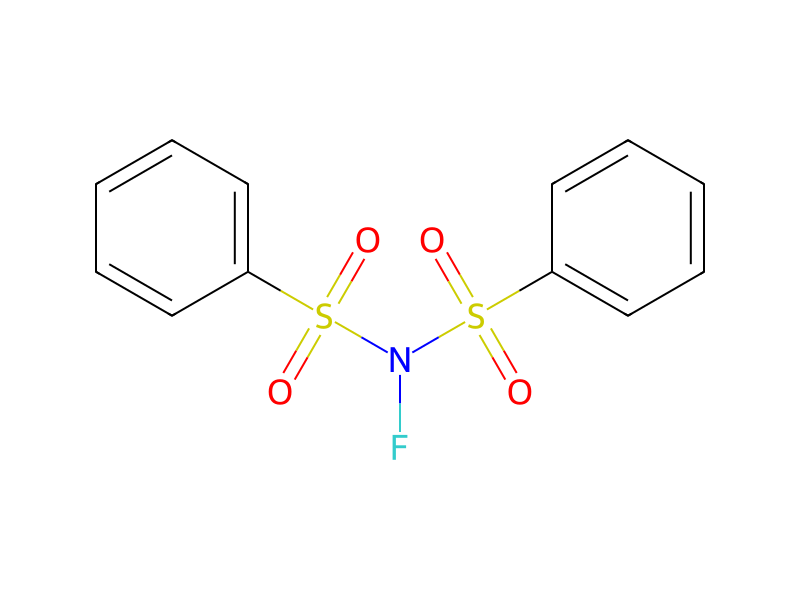


Product 1

Reagents, catalysts & solvents 2


Conditions
- Temperature
- -78 °C
Procedure
The azaindole intermediate 4-Fluoro-1H-pyrrolo[2,3-b]pyridin-5-ol was prepared as follows. E. 1H-Pyrrolo[2,3-b]pyridine-7-oxide (50 g, 1 eq.) and tetramethylammonium bromide (86 g, 1.5 eq.) were placed in DMF (500 mL). The mixture was cooled to 0° C. and methanesulfonic anhydride (130 g, 2 eq.) was added in small portions. The suspension was allowed to reach 23° C. and stirred for 4 h. The mixture was poured in water (1L) and the solution was neutralized with an aqueous solution of 50% sodium hydroxide (pH=7). Water (2L) was added and the mixture was cooled to 10° C. for 30 min. The solid formed was filtered and washed with cooled water (1L). The solid was dissolved in a mixture of dichloromethane/methanol (4:1), dried over MgSO4, concentrated in vacuo to afford 4-bromo-1H-pyrrolo[2,3-b]pyridine (40 g, 54%). 1H NMR (400 MHz, DMSO-d6) δ 12.05 (1H, br. s), 8.08 (1H, d, J=5.3 Hz), 7.59 (1H, m), 7.33 (1H, d, J=5.05 Hz), 6.41 (1H, d, J=3.5 Hz). LCMS; m/z 197 (M+H)+. F. A 500-mL oven-dried flask capped with a rubber septum was evacuated and backfilled with argon. The flask was charged with 4-bromo-1H-pyrrolo [2,3-b]pyridine (40 g, 1 eq.) and THF (400 mL). The mixture was cooled to 0° C. and sodium hydride (60% in oil, washed with hexanes, 8.9 g, 1 eq) was added in small portions. After 15 min, chloro-triisopropylsilane (443.4 mL, 1 eq) was added, the tube was sealed and stirred at 80° C. for 3 h. The reaction mixture was cooled down, neutralized with saturated ammonium chloride (50 mL) and extracted twice with hexanes (2×800 mL). Combined organic layers were dried, and concentrated in vacuo to afford 4-bromo-1-triisopropylsilanyl-1H-pyrrolo[2,3-b]pyridine (71.1 g, 99%). 1H NMR (400 MHz, DMSO-d6) δ 8.09 (1H, d, J=5.1 Hz), 7.60 (1H, d, J=3.5 Hz), 7.37 (1H, d, J=5.3 Hz), 6.59 (1H, d, J=3.5 Hz), 1.85 (3H, septu. J=7.6 Hz), 1.04 (9H, d, J=7.6 Hz). LCMS; m/z 353 (M+H+). G. An 250 mL oven-dried round-bottom flask was evacuated and backfilled with Argon. The flask was charged 4-bromo-1-triisopropylsilanyl-1H-pyrrolo[2,3-b]pyridine (1.4 g, 1 eq), THF (25 mL) and the mixture was cooled to −78° C. Tert-butyllithium (1.7 M in pentane, 4.66 mL, 2 eq.) was added dropwise and after 5 minutes, N-fluorobenzenesulfonimide (1.25 g, 1 eq.) was added. After 45 min, a solution of saturated ammonium chloride (20 mL) was added and the mixture was allowed to reach RT. Water was added (40 mL) and the solution was extracted with hexanes (3×100 mL), combined organic layers were washed with water, dried over MgSO4 and concentrated in vacuo. The crude material was purified by flash chromatography eluting a mixture of 100% hexanes to give 4-fluoro-1-triisopropylsilanyl-1H-pyrrolo[2,3-b]pyridine (970 mg, 84%). H. Procedures described in Example 4E and 4F were then followed to obtain the title compound.
Workup
- customAn 250 mL oven-dried round-bottom flask was evacuated
- customto reach RT
- extractionthe solution was extracted with hexanes (3×100 mL)
- washwere washed with water
- dry with materialdried over MgSO4
- concentrationconcentrated in vacuo
- customThe crude material was purified by flash chromatography
- washeluting
- additiona mixture of 100% hexanes
Sources & evidence
- ORD record
- ord-72e54b74b0ae443cabd644374630dd27
- Source dataset
- uspto-grants-2005_11
- Patent number
- US06969717B2
Reaction notes
Loading…