Hydrogen Peroxide → Acrylic Acid
Reaction equation

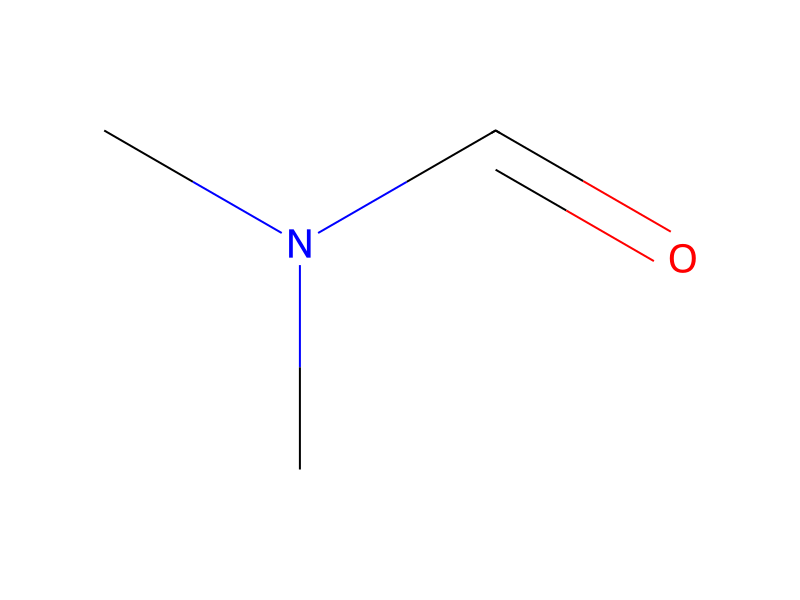
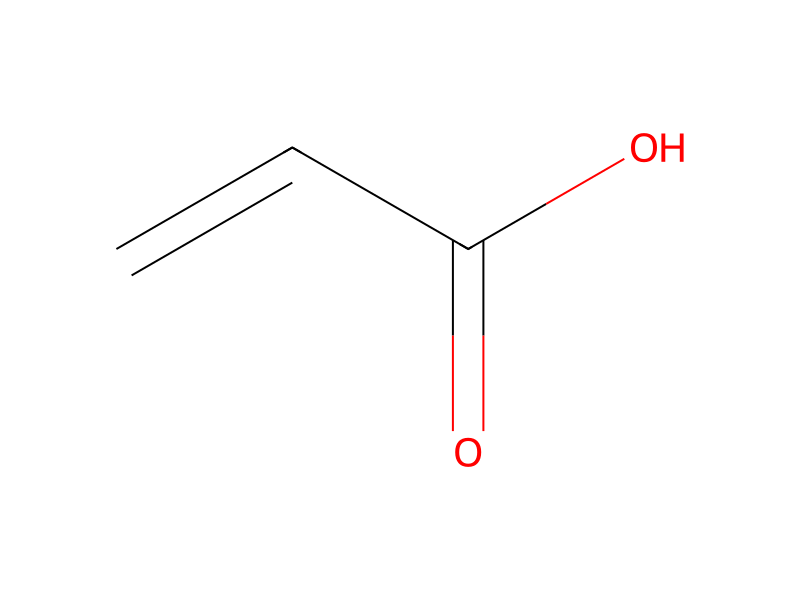
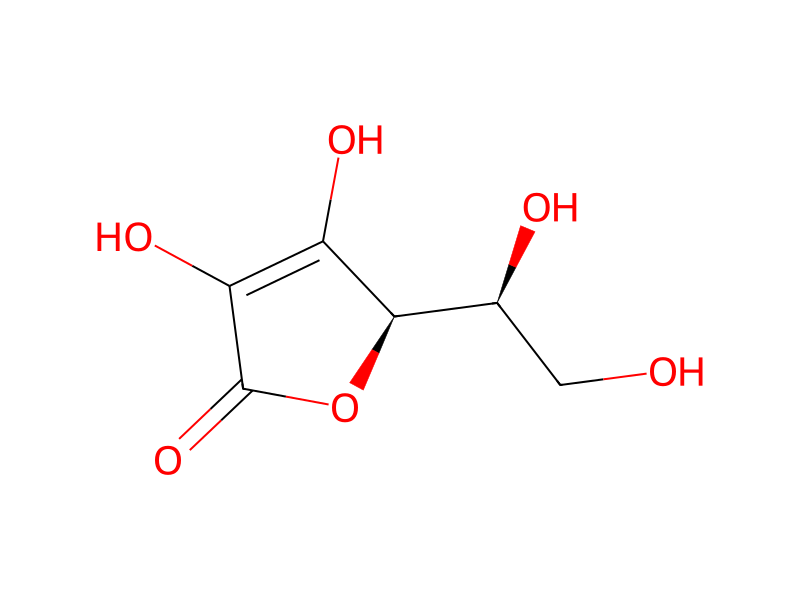
[C:1]([O:6]C[CH2:8][N:9]=[C:10]=[O:11])(=[O:5])[C:2](C)=[CH2:3].O=C1O[C@H:18]([C@H:20]([CH2:22][OH:23])O)C(O)=C1O.OO.C(O)(=O)[CH:27]=[CH2:28].C[N:32](C=O)C>O>[C:1]([OH:6])(=[O:5])[CH:2]=[CH2:3].[CH2:8]([NH:9][C:10](=[O:11])[CH:27]=[CH2:28])[NH:32][C:22](=[O:23])[CH:20]=[CH2:18]Participants



Conditions
- Temperature
- 60 °C
Procedure
In a 500 ml four-necked flask equipped with a stirrer, a thermometer, a reflux condenser, a dropping funnel and a nitrogen gas introducing device, 5 g of polysuccinimide obtained in Synthetic Example 2 and 10 g of DMF were charged and dissolved at about 60° C., and then 0.25 g of 2-methacryloyloxyethyl isocyanate was added. As a result, heat was generated. After the reaction was continued for 30 minutes, the temperature in the system was reduced to about 35° C., 1 g of a pregelatinized starch was charged. After the atmosphere in the four-necked flask was replaced by a nitrogen gas, 7.5 mg of 2,2-azobisaminodipropane dihydrochloride, 5 mg of ascorbic acid and 57 mg of an aqueous hydrogen peroxide (35%) solution were respectively dissolved in 1 g of ion exchange water. The resulting solutions were added to the above aqueous solution, and then the mixture was heated to about 60° C. and maintained for three hours ((1) first step). To the polymer obtained by this step, 25 g of acrylic acid and 25 mg of N,N′-methylenebisacrylamide were added. After the atmosphere in the four-necked flask was replaced by a nitrogen gas, 7.5 g of 2,2-azobisaminodipropane dihydrochloride, 5 mg of ascorbic acid and 57 mg of an aqueous hydrogen peroxide (35%) solution were respectively dissolved again in 1 g of ion exchange water. The resulting solutions were added to the above aqueous solution in this sequence, and then the mixture was heated again to about 60° C. and maintained at the same temperature for three hours ((1) second step). 1.2 g of hexamethylenediamine was dissolved in 20 g of ion exchange water and the resulting solution was added to the above aqueous solution, and then the reaction was conducted. Furthermore, 10.4 g of sodium hydroxide was dissolved in 30 g of ion exchange water and the resulting solution was added, thereby to neutralize carboxyl groups originating in acrylic acid ((1) third step). The resulting gel-like product was dried at 110° C. by a vacuum drier and the resulting dry solid was ground to obtain a water absorbent material of the present invention. The evaluation results of characteristics of the resulting water absorbent material are shown in Table 2.
Workup
- customIn a 500 ml four-necked flask equipped with a stirrer
- additionwere charged
- dissolutiondissolved at about 60° C.
- temperatureAs a result, heat
- customwas reduced to about 35° C.
- additionThe resulting solutions were added to the above aqueous solution
Sources & evidence
- ORD record
- ord-dfa2d8970ada4eaebb3d9828f4b10f05
- Source dataset
- uspto-grants-2005_11
- Patent number
- US06969750B2
Reaction notes
Loading…