1-Methylimidazole → 1-Ethyl-3-methylimidazolium tetrafluoroborate
Reaction equation

[CH3:1][N:2]1[CH:6]=[CH:5][N:4]=[CH:3]1.[F:7][B-:8]([F:11])([F:10])[F:9].[CH2:12]([O+](CC)CC)[CH3:13]>ClCCCl>[F:7][B-:8]([F:11])([F:10])[F:9].[CH3:1][N+:2]1[CH:6]=[CH:5][N:4]([CH2:12][CH3:13])[CH:3]=1Participants
4
Reactant 2
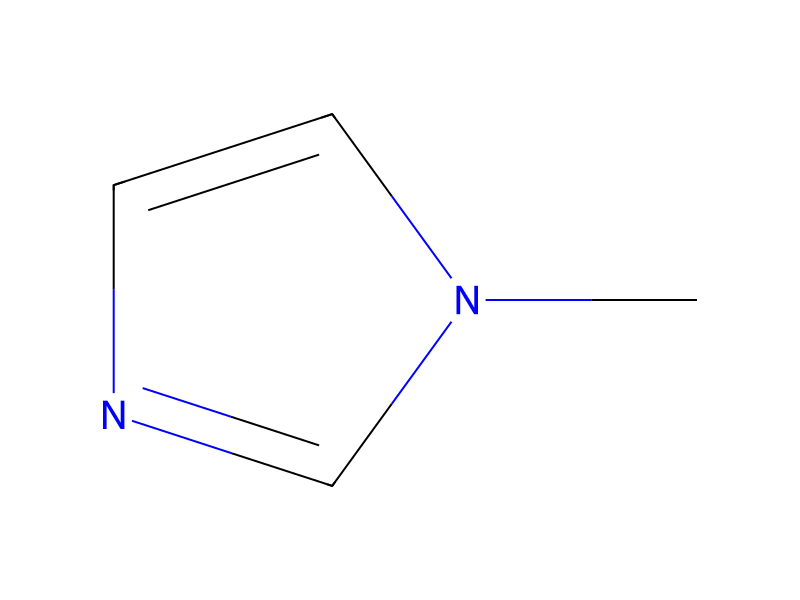

Product 1

Reagents, catalysts & solvents 1

Procedure
22.3 ml of N-methylimidazole and 120 ml of 1,2-dichloroethane were introduced into a 250 ml glass flask under an argon atmosphere. 53.2 g of triethyloxonium tetrafluoroborate was added in small portions. The reaction medium was observed to heat up slightly and the solvent was then refluxed for 1 hour 30 minutes. The molten salt formed was colorless, non miscible and denser than the 1,2-dichloroethane. It was separated by simple decanting and drawn under vacuum using a vane pump.
Workup
- temperatureto heat up slightly
- temperaturethe solvent was then refluxed for 1 hour 30 minutes
- customThe molten salt formed
- customIt was separated
- customby simple decanting
Sources & evidence
- ORD record
- ord-b4d3c0cb83224795a0be319739ce77ce
- Source dataset
- uspto-grants-2001_06
- Patent number
- US06245918B1
Reaction notes
Loading…