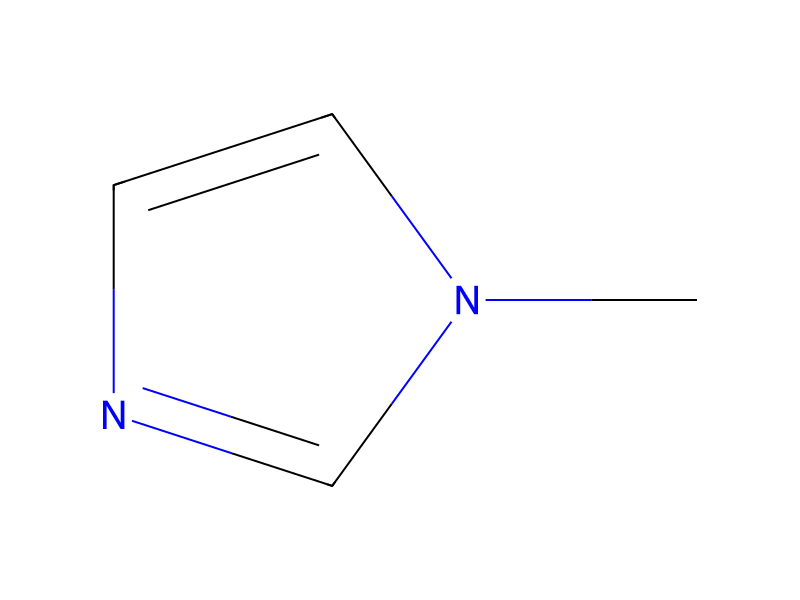
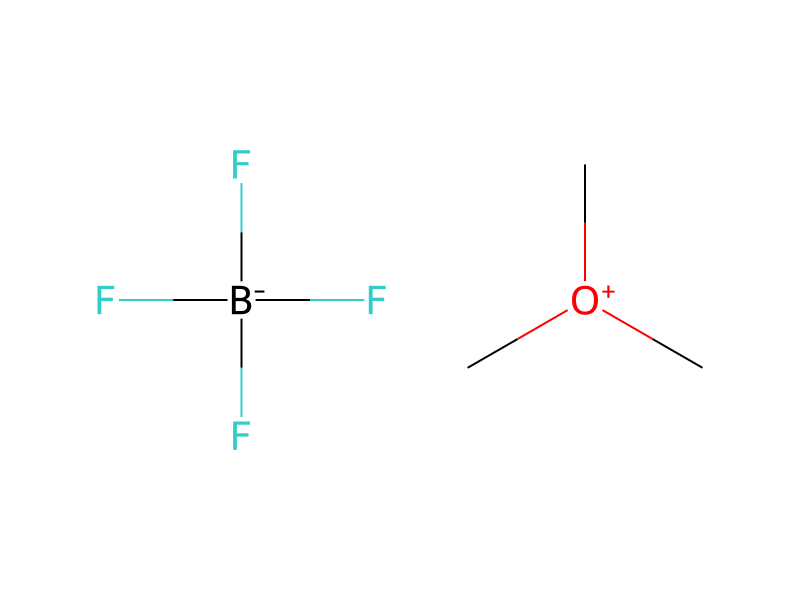
1-Methylimidazole → 1,3-dimethylimidazolium tetrafluoroborate
Reaction equation

[F:1][B-:2]([F:5])([F:4])[F:3].[CH3:6][O+](C)C.[CH3:10][N:11]1[CH:15]=[CH:14][N:13]=[CH:12]1>ClCCCl>[F:1][B-:2]([F:5])([F:4])[F:3].[CH3:10][N+:11]1[CH:15]=[CH:14][N:13]([CH3:6])[CH:12]=1Participants
4
Reactant 2
Product 1

Reagents, catalysts & solvents 1

Procedure
The procedure of Example 2 was followed. 3.9 g of trimethyloxonium tetrafluoroborate in suspension in 20 ml of 1,2-dichloroethane was added to 2.1 ml (2.16 g) of N-methylimidazole in 5 ml of 1,2-dichloroethane. The mixture was stirred for 4 hours at room temperature. A salt was formed (lower phase) which was non miscible with the solvent and was separated by decanting. The remaining solvent was evaporated off under vacuum using a vane pump. A colorless liquid was obtained.
Workup
- customA salt was formed (lower phase) which
- customwas separated
- customby decanting
- customThe remaining solvent was evaporated off under vacuum
- customA colorless liquid was obtained
Sources & evidence
- ORD record
- ord-62db98ef5b714b1d872d3a431d9eb287
- Source dataset
- uspto-grants-2001_06
- Patent number
- US06245918B1
Reaction notes
Loading…