Guanidine Hydrochloride → HCID 178485153, compound
Reaction equation

C[N:2]1[C:10]2[C:5](=[C:6]([CH2:11][NH:12][C:13]([O:15][C:16]([CH3:19])([CH3:18])[CH3:17])=[O:14])[CH:7]=[CH:8][CH:9]=2)[CH:4]=[C:3]1[C:20]([O:22]CC)=O.[ClH:25].[NH2:26][C:27]([NH2:29])=[NH:28].[CH3:30][O-].[Na+]>CO>[ClH:25].[CH3:30][NH:28][C:27]([NH2:29])=[N:26][C:20]([C:3]1[NH:2][C:10]2[C:5]([CH:4]=1)=[C:6]([CH2:11][NH:12][C:13]([O:15][C:16]([CH3:17])([CH3:18])[CH3:19])=[O:14])[CH:7]=[CH:8][CH:9]=2)=[O:22]Participants
Reactant 3
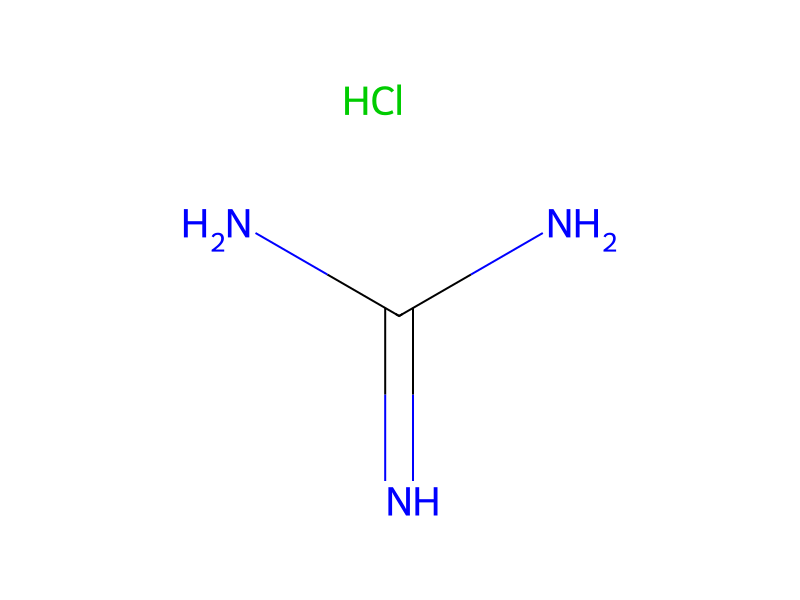


Product 1

Reagents, catalysts & solvents 1

Procedure
The reaction was carried out in a manner similar to Example 1 except for using 1.40 g (4.21 mmol) of ethyl 1-methyl-4-tert-butyloxycarbonylaminomethyl-2-indolecarboxylate, 4.02 g (42.1 mmol) of guanidine hydrochloride and 60 ml of a methanol solution of 2.27 g (42.1 mmol) of sodium methoxide. 1-Methyl-4-tert-butyloxycarbonylaminomethyl-2-indoloylguanidine hydrochloride was obtained in an amount of 1.50 g. After the compound was dissolved in 35 ml of trifluoroacetic acid and 70 ml of methylene chloride, the solution was stirred at room temperature for 2 hours. The reaction mixture was concentrated under reduced pressure. Thereafter ice water was poured onto the resulting residue and the aqueous layer was rendered alkaline with 28% aqueous ammonia. The mixture was then extracted three times with ethyl acetate. The combined extracts were washed with saturated sodium chloride solution. After drying over anhydrous magnesium sulfate, the solvent was distilled off under reduced pressure. The resulting residue was converted with hydrogen chloride/ether into the hydrochloride. Thus 0.58 g (43.2%) of 4-aminomethyl-1-methyl-2-indoloylguanidine dihydrochloride was obtained.
Sources & evidence
- ORD record
- ord-fe61ac30a30446f9bba718629a89787e
- Source dataset
- uspto-grants-2001_06
- Patent number
- US06248772B1
Reaction notes
Loading…