Triphenylphosphine → (4-Phenylbutyl)triphenylphosphonium bromide
Reaction equation

[C:1]1([CH2:7][CH2:8][CH2:9][CH2:10][Br:11])[CH:6]=[CH:5][CH:4]=[CH:3][CH:2]=1.[C:12]1([P:18]([C:25]2[CH:30]=[CH:29][CH:28]=[CH:27][CH:26]=2)[C:19]2[CH:24]=[CH:23][CH:22]=[CH:21][CH:20]=2)[CH:17]=[CH:16][CH:15]=[CH:14][CH:13]=1>C1(C)C=CC=CC=1>[Br-:11].[C:1]1([CH2:7][CH2:8][CH2:9][CH2:10][P+:18]([C:19]2[CH:20]=[CH:21][CH:22]=[CH:23][CH:24]=2)([C:25]2[CH:30]=[CH:29][CH:28]=[CH:27][CH:26]=2)[C:12]2[CH:13]=[CH:14][CH:15]=[CH:16][CH:17]=2)[CH:6]=[CH:5][CH:4]=[CH:3][CH:2]=1Participants
4
Reactant 2

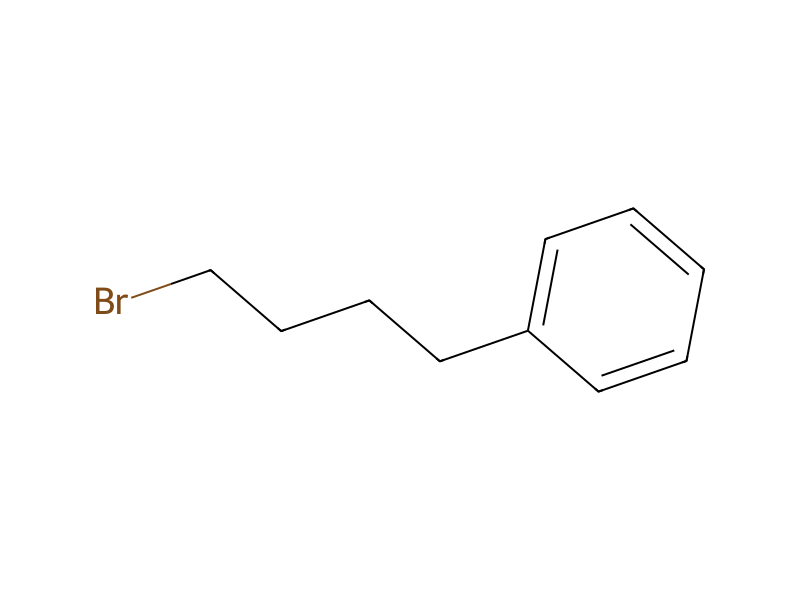
Product 1

Reagents, catalysts & solvents 1

Procedure
A solution of 4-phenylbutyl bromide (from the Step A) and triphenylphosphine (19.00 g) in toluene (100 mL) was heated at 120-130° C. for 3 days. The reaction was cooled to rt and the solid precipitate was collected by filtration, washed with toluene and air dried. The solid was disslved in a 2:1 mixture of water and acetonitrile and gave the title compound (30.6 g) as a white solid after lyophilization. 1H NMR (500 MHz, CD3OD): δ7.84-7.89 (m, 2 H), 7.71-7.81 (m, 15 H), 7.20-7.23 (m, 1H), 7.11-7.15 (m, 2 H), 3.37-3.43 (m, 2 H), 2.66 (t, J=7.5 Hz, 2 H), 1.87 (tt, J=7.5 and 7.3 Hz, 2 H), 1.63-1.70 (m, 2 H).
Workup
- filtrationthe solid precipitate was collected by filtration
- washwashed with toluene and air
- customdried
- additionThe solid was disslved in a 2:1 mixture of water and acetonitrile
Sources & evidence
- ORD record
- ord-854450f84aa2466da5eec2603d710907
- Source dataset
- uspto-grants-2001_06
- Patent number
- US06248755B1
Reaction notes
Loading…