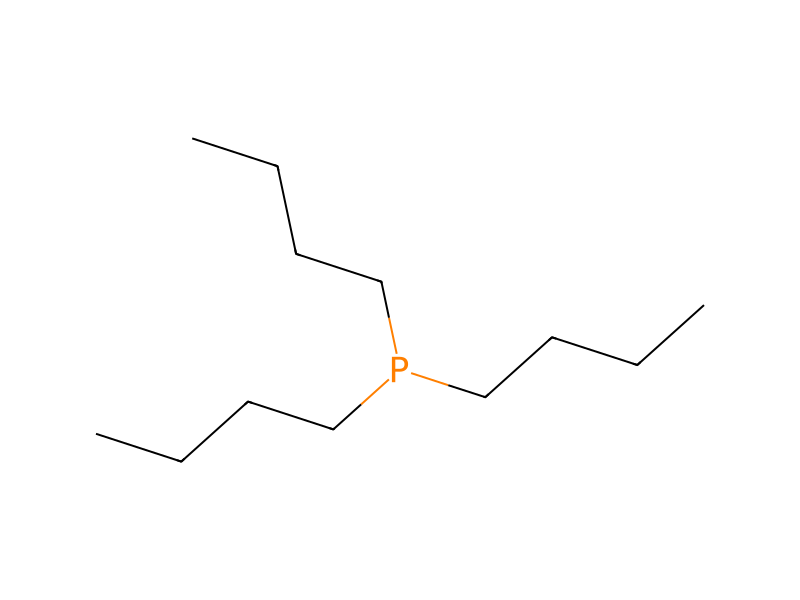
Tributylphosphine → (4-Phenylbenzyl)trichlorosilane
Reaction equation

C(P(CCCC)CCCC)CCC.[C:14]1([C:20]2[CH:27]=[CH:26][C:23]([CH2:24]Cl)=[CH:22][CH:21]=2)[CH:19]=[CH:18][CH:17]=[CH:16][CH:15]=1.[Cl:28][SiH:29]([Cl:31])[Cl:30]>>[C:14]1([C:20]2[CH:27]=[CH:26][C:23]([CH2:24][Si:29]([Cl:31])([Cl:30])[Cl:28])=[CH:22][CH:21]=2)[CH:19]=[CH:18][CH:17]=[CH:16][CH:15]=1Participants
4


Procedure
In the same apparatus and procedure as Example 1 above, 0.15 g (0.75 mmol) of tri-n-butylphosphine, 1.52 g (7.5 mmol) of 4-phenylbenzyl chloride, and 5.08 g (37.5 mmol) of trichlorosilane were reacted at 150° C. for 2 hrs. The resulting mixture was distilled to give 2.0 g of (4-phenylbenzyl)trichlorosilane (mp; 60-65° C., yield; 90%).
Workup
- distillationThe resulting mixture was distilled
Sources & evidence
- ORD record
- ord-eff1e2d6131c4b7bb80e3a919478e8ab
- Source dataset
- uspto-grants-2001_06
- Patent number
- US06251057B1
Reaction notes
Loading…