Ethyl Acetate → HCID 10300103, compound
Reaction equation
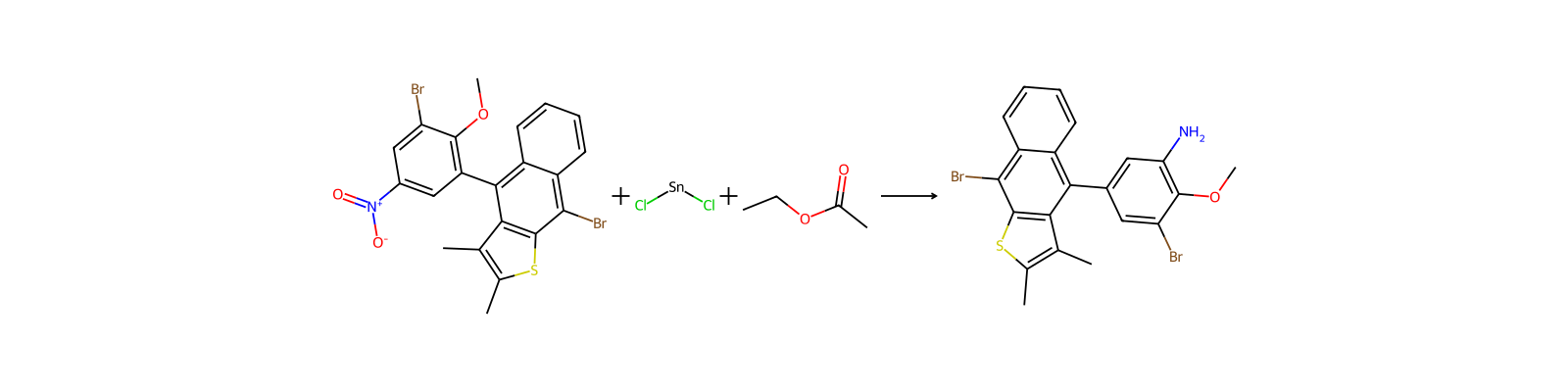
[Br:1][C:2]1[C:11]2[S:12][C:13]([CH3:16])=[C:14]([CH3:15])[C:10]=2[C:9]([C:17]2[CH:22]=[C:21]([N+:23]([O-])=O)[CH:20]=[C:19]([Br:26])[C:18]=2OC)=[C:8]2[C:3]=1[CH:4]=[CH:5][CH:6]=[CH:7]2.[Sn](Cl)Cl.[C:32](OCC)(=[O:34])C>>[Br:26][C:19]1[C:20]([O:34][CH3:32])=[C:21]([NH2:23])[CH:22]=[C:17]([C:9]2[C:10]3[C:14]([CH3:15])=[C:13]([CH3:16])[S:12][C:11]=3[C:2]([Br:1])=[C:3]3[C:8]=2[CH:7]=[CH:6][CH:5]=[CH:4]3)[CH:18]=1Participants

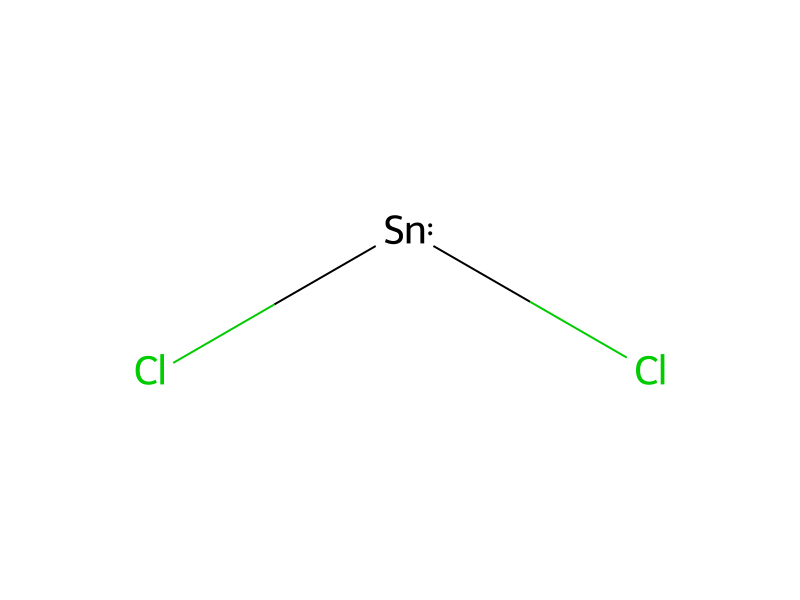


Conditions
- Temperature
- 70 °C
Procedure
A stirred suspension of 9-bromo-4-(3-bromo-methoxy-5-nitro-phenyl)-2,3-dimethyl-naphtho[2,3-b]thiophene (0.372, 0.714 mmol), tin (II) dichloride (805 mg, 3.57 mmol) and ethyl acetate (4 mL)was heated to 70° C. where disolution occurred. After 30 min, the reaction mixture was cooled to room temperature, diluted with ethyl acetate and silica gel was added. The ethyl acetate was removed and the adsorbate was flash chromatographed (4:1 pet. ether: ethyl acetate) to provide the title compound as a white solid (0.324 g, 92%): mp 198-200° C.: NMR (DMSO-d6); 8.18 (d, J=8 Hz, 1H), 7.64 (ddd, J=8, 6, 1 Hz, 1H), 7.58 (d, J=8 Hz, 1H), 7.50 (ddd, J=8, 6, 1 Hz, 1H), 6.70 (d, J=2 Hz, 1H), 6.64 (d, J=2 Hz, 1H), 5.46 (s, 1H), 3.80 (s, 3H), 2.44 (d,J=1 Hz, 3H), 1.73 (d, J=1 Hz, 3H); MS (EI): 2 bromine isotope pattern 489 (50%, M+), 491 (100%, M+), 493 (60%, M+); Anal. Calc. for C21H17Br2NOS: C, 51.34; H, 3.49; N, 2.85. Found: C, 51.00; H, 3.43; N, 2.71.
Workup
- temperaturethe reaction mixture was cooled to room temperature
- additionwas added
- customThe ethyl acetate was removed
- customchromatographed (4:1 pet. ether: ethyl acetate)
Sources & evidence
- ORD record
- ord-f95ffb2dff584dd18e0f742abb5dd4b0
- Source dataset
- uspto-grants-2001_06
- Patent number
- US06251936B1
Reaction notes
Loading…