4-Pyridinecarboxaldehyde → 5,6-Dimethoxy-2-(4-pyridyl)methylene-1-indanone
Reaction equation
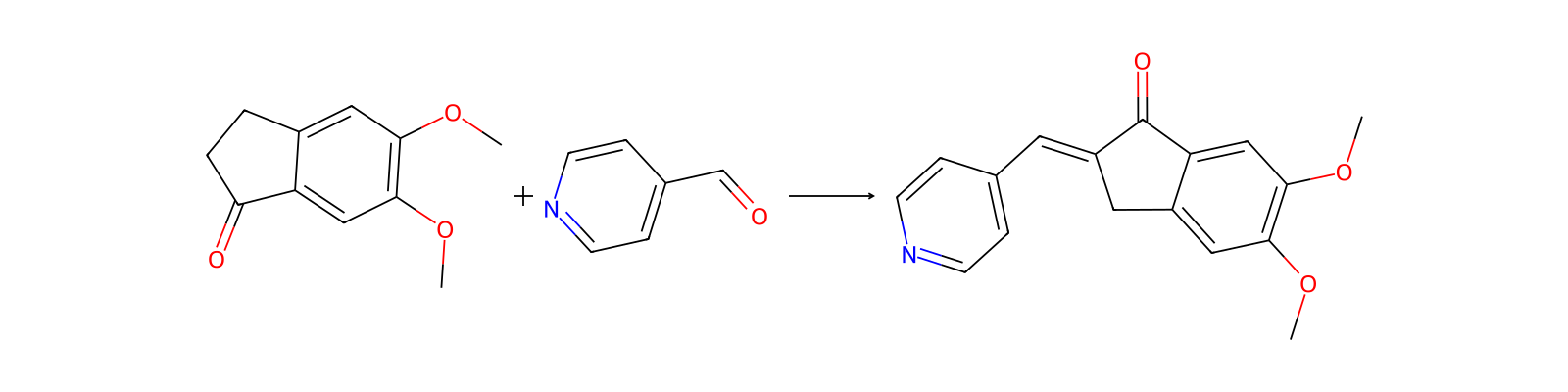
[CH3:1][O:2][C:3]1[CH:4]=[C:5]2[C:9](=[CH:10][C:11]=1[O:12][CH3:13])[C:8](=[O:14])[CH2:7][CH2:6]2.[N:15]1[CH:20]=[CH:19][C:18]([CH:21]=O)=[CH:17][CH:16]=1>>[CH3:1][O:2][C:3]1[CH:4]=[C:5]2[C:9](=[CH:10][C:11]=1[O:12][CH3:13])[C:8](=[O:14])[C:7](=[CH:21][C:18]1[CH:19]=[CH:20][N:15]=[CH:16][CH:17]=1)[CH2:6]2Participants
3


Procedure
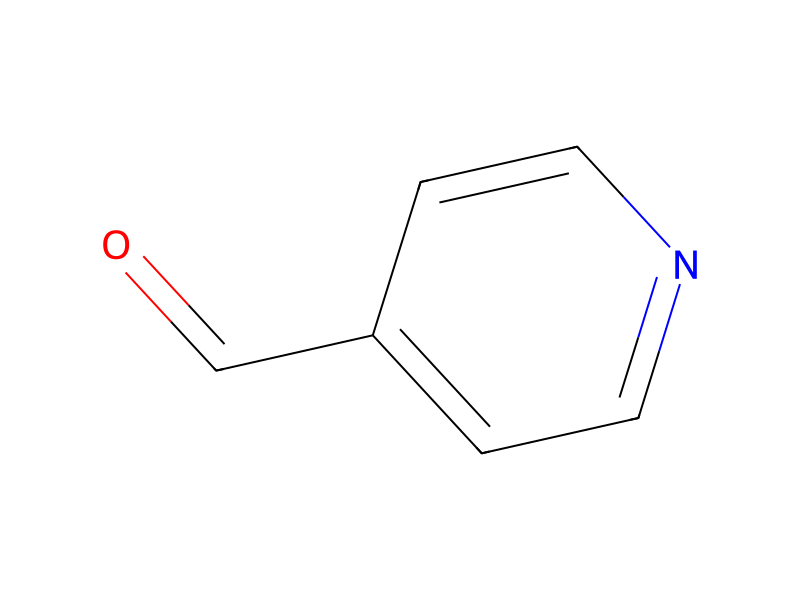
Additionally, it is disclosed in Example 2, 4 and 6 of JP-A 8-225527 (1996) (EP-711,756-A1, U.S. Pat. No. 5,606,064) that reaction of 5,6-dimethoxy-1-indanone with pyridin-4-aldehyde afforded 5,6-dimethoxy-2-(pyridin-4-yl)methyleneindan-1-one (Example 2), followed by reaction with benzyl bromide afforded 1-benzyl-4-(5,6-dimethoxyindan-1-on-2-ylidene)methylpiridinium bromide (Example 4), then reduction in the presence of platinum oxide afforded Donepezil (Example 6). According to this method, yield for Donepezil through Example 2, 4 and 6 was 58.5% (87%×83%×81%).
Sources & evidence
- ORD record
- ord-ed1cc8c79af54fa5b8d2ff0bbc00b90c
- Source dataset
- uspto-grants-2001_06
- Patent number
- US06252081B1
Reaction notes
Loading…