Phosphorus trichloride → N-[5-(5-Bromo-2-thienyl)-2-thiazolyl]-8-hydroxy-7-quinolinecarboxamide
Reaction equation
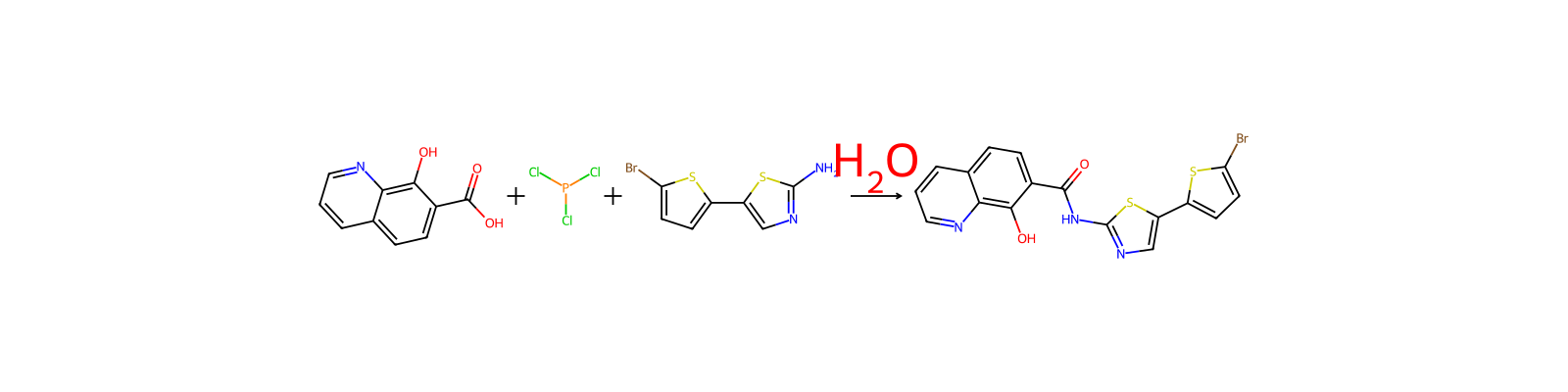
[OH:1][C:2]1[C:3]([C:12]([OH:14])=O)=[CH:4][CH:5]=[C:6]2[C:11]=1[N:10]=[CH:9][CH:8]=[CH:7]2.P(Cl)(Cl)Cl.[NH2:19][C:20]1[S:21][C:22]([C:25]2[S:26][C:27]([Br:30])=[CH:28][CH:29]=2)=[CH:23][N:24]=1>O>[Br:30][C:27]1[S:26][C:25]([C:22]2[S:21][C:20]([NH:19][C:12]([C:3]3[C:2]([OH:1])=[C:11]4[C:6]([CH:7]=[CH:8][CH:9]=[N:10]4)=[CH:5][CH:4]=3)=[O:14])=[N:24][CH:23]=2)=[CH:29][CH:28]=1Participants
5



Procedure
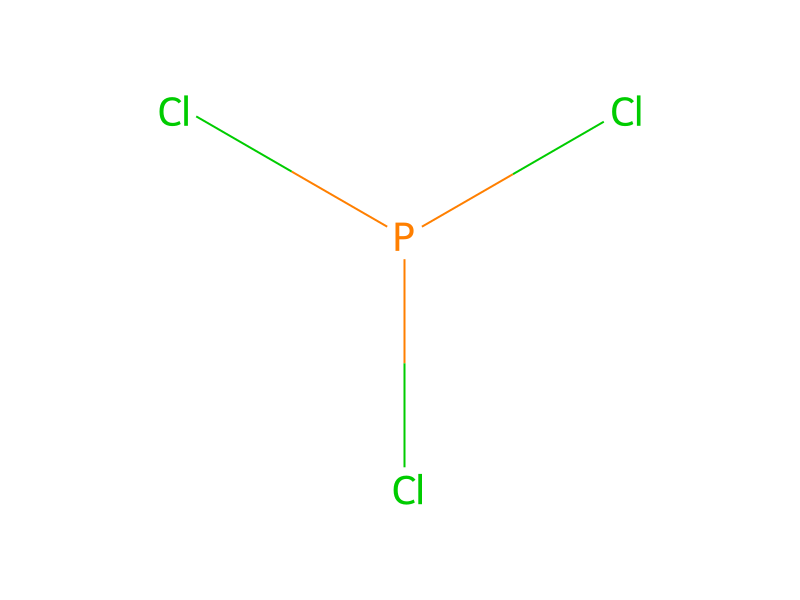
A solution of 8-hydroxyquinoline-7-carboxylic acid (0.43 g) of Preparation 1 in 80 mL xylenes is heated to reflux. PCl3 (0.12 mL) is added dropwise and the mixture stirred for 20 minutes. 2-Amino-5-(5-bromothien-2-yl)thiazole (0.62 g) is added in one portion and the reaction refluxed overnight. The reaction is cooled to room temperature and H2O is added to quench excess PCl3. The solvents are removed and the residue is dissolved in acetic acid. A dark orange solid precipitates upon addition of hexanes (0.28 g) to yield the title product.
Workup
- temperatureis heated to reflux
- temperaturethe reaction refluxed overnight
- customto quench excess PCl3
- customThe solvents are removed
- dissolutionthe residue is dissolved in acetic acid
- customA dark orange solid precipitates upon addition of hexanes (0.28 g)
Sources & evidence
- ORD record
- ord-63d62fa3266e45e7ae0d34634ba61968
- Source dataset
- uspto-grants-2001_06
- Patent number
- US06252080B1
Reaction notes
Loading…