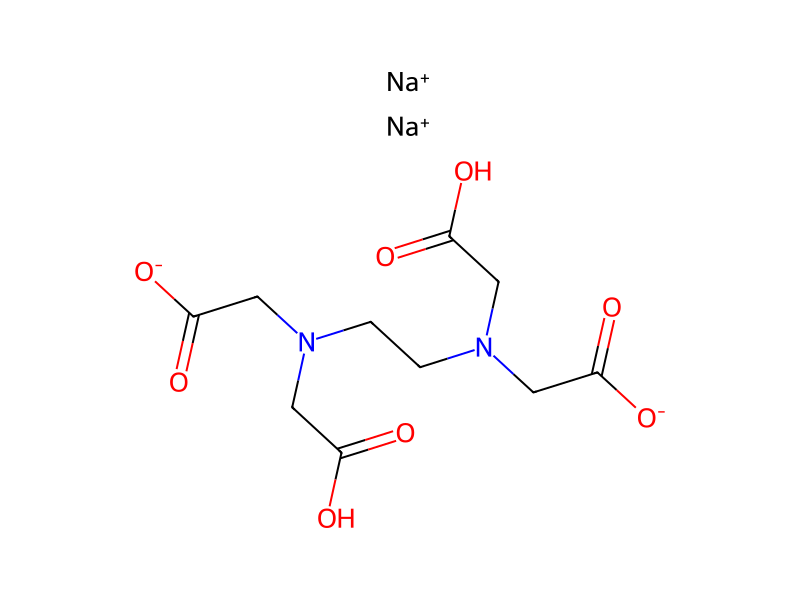
EDTA disodium salt → 1,1-Dioxo-tetrahydro-thiopyran-4-one
Reaction equation

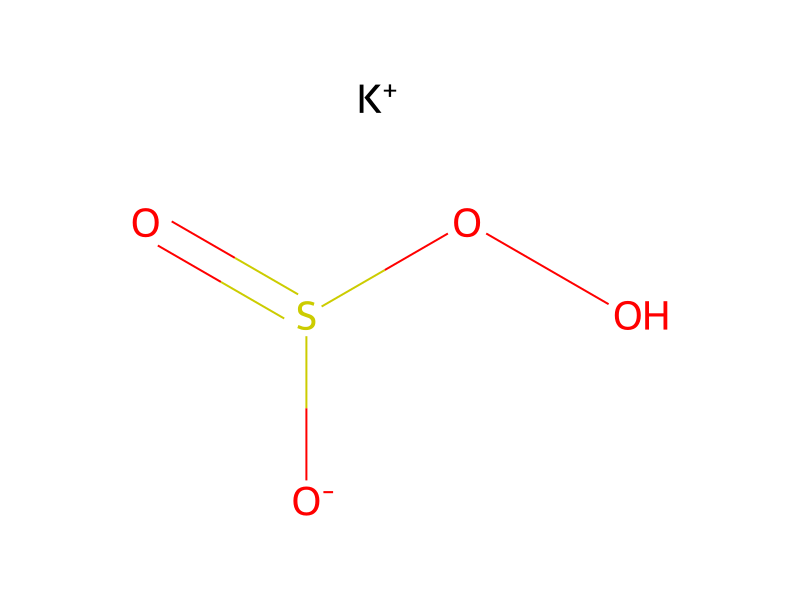
S1[CH2:6][CH2:5][C:4](=[O:7])[CH2:3][CH2:2]1.C(N(CC([O-])=O)CC(O)=O)CN(CC([O-])=O)CC(O)=O.[Na+].[Na+].O[O:31][S:32]([O-:34])=O.[K+].C(=O)(O)[O-].[Na+]>C(#N)C>[O:31]=[S:32]1(=[O:34])[CH2:6][CH2:5][C:4](=[O:7])[CH2:3][CH2:2]1Participants




Procedure
To a solution of tetrahydrothiopyran-4-one (400 mg, 3.45 mmol) in acetonitrile (5 ml) was added aqueous Na2EDTA (3 ml, 0.0004 M). A mixture of oxone (6.30 g, 10.30 mmol) and sodium bicarbonate (2.70, 32 mmol) was added in small portions to the above solution over a period of 20 min. The slurry was stirred for another 1 h before being quenched with methylene chloride. The organic solvent was decanted and the solid residue was triturated with ethyl acetate (3×25 ml). The combined organic layers were dried over sodium sulfate and concentrated to give the desired ketone (0.37 g, 73%) as a colorless solid. mp 170-172° C. (lit. 168-170° C.); 1H NMR (500 MHz, CDCl3) 2.99 (t, J=6.8 Hz, 4H), 3.39 (t, J=6.8 Hz, 4H). Ref: Yang, D.; Yip, Y.-C.; Jiao, G.-S.; Wong, M.-K. Design of Efficient Ketone Catalysts for Epoxidation by Using the Field Effect. J. Org. Chem, 1998, 63, 8952-8956.
Workup
- additionwas added in small portions to the above solution over a period of 20 min
- custombefore being quenched with methylene chloride
- customThe organic solvent was decanted
- customthe solid residue was triturated with ethyl acetate (3×25 ml)
- dry with materialThe combined organic layers were dried over sodium sulfate
- concentrationconcentrated
Sources & evidence
- ORD record
- ord-532bfc4de74842bba2acf6d8b317ba25
- Source dataset
- uspto-grants-2005_06
- Patent number
- US06906205B2
Reaction notes
Loading…