Hydroquinone → Chroman
Reaction equation

[C:1]1([CH:8]=[CH:7]C(O)=[CH:4][CH:3]=1)O.B(F)(F)F.[CH3:13][CH2:14][O:15][CH2:16][CH3:17].O1CCOCC1>C(OCC)C>[O:15]1[C:16]2[C:8](=[CH:1][CH:3]=[CH:4][CH:17]=2)[CH2:7][CH2:13][CH2:14]1Participants
Reactant 3

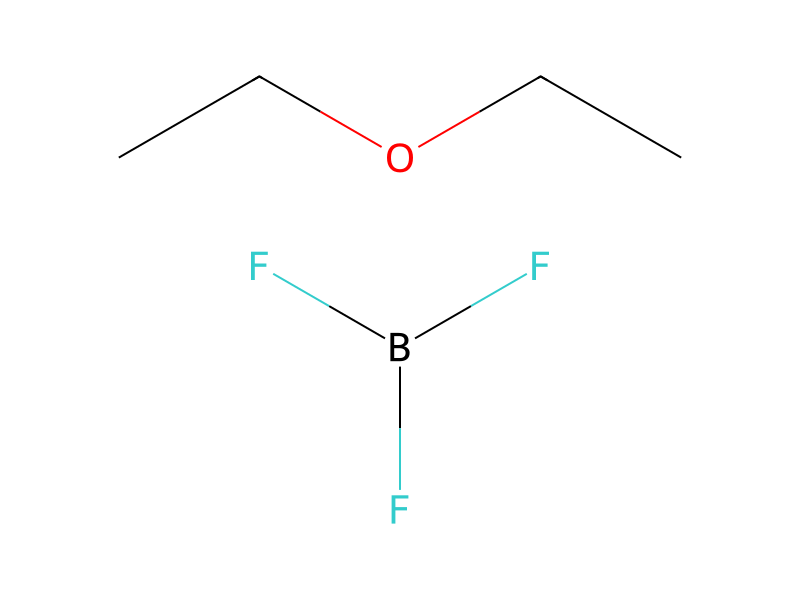

Product 1

Reagents, catalysts & solvents 1

Procedure
To a solution of hydroquinone 1 (0.01 mol) and a catalyst, preferably boron trifluoride diethyl etherate (0.016 mol) In an organic solvent, preferably dry dioxane (10 mL), is added vinyl lactone 2 (0.016 mol) in an organic solvent, preferably dry dioxane (5.0 mL) over 1-60 minutes, preferably 60 minutes, at 0-150° C., preferably 110° C., under an inert gas. The reaction mixture is stirred for 0 to 8 hours, preferably 0 hours, at the selected temperature, cooled to room temperature, and diluted with an organic solvent, preferably diethyl ether (200 mL) The reaction mixture is then washed with water (100 mL, 2×50 mL), dried over sodium sulfate (Na2SO4), and solvent is removed under reduced pressure to afford a brown oily residue. The residue is dissolved in alcohol, preferably methanol (30 mL), and the alcohol is then removed under reduced pressure. The brown oily liquid or semisolid is further purified by chromatography, preferably on silica gel, to afford pure racemic chroman derivative 3.
Workup
- custompreferably 60 minutes
- customat 0-150° C.
- custompreferably 110° C.
- washis then washed with water (100 mL, 2×50 mL)
- dry with materialdried over sodium sulfate (Na2SO4), and solvent
- customis removed under reduced pressure
- customto afford a brown oily residue
- custompreferably methanol (30 mL), and the alcohol is then removed under reduced pressure
- customThe brown oily liquid or semisolid is further purified by chromatography, preferably on silica gel
Sources & evidence
- ORD record
- ord-accbfa60fb8a4b7982ff167cbf50181f
- Source dataset
- uspto-grants-2005_06
- Patent number
- US06908943B2
Reaction notes
Loading…