Mannitol → Mannitol
Reaction equation

[CH2:1]([OH:12])[C@H:2]([C@H:4]([C@@H:6]([C@@H:8]([CH2:10][OH:11])[OH:9])[OH:7])[OH:5])[OH:3].C(=O)([O-])[O-].[K+].[K+]>CC(C)=O>[CH2:1]([OH:12])[C@@H:2]1[O:9][C@H:8]([CH2:10][OH:11])[C@@H:6]([OH:7])[C@@H:4]1[OH:5].[CH2:10]([OH:11])[C@H:8]([C@H:6]([C@@H:4]([C@@H:2]([CH2:1][OH:12])[OH:3])[OH:5])[OH:7])[OH:9]Participants
5
Reactant 2
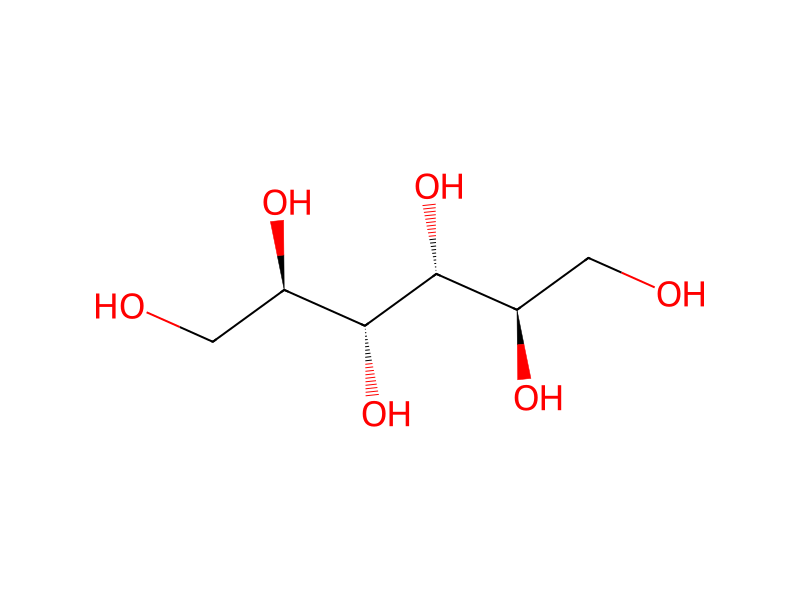

Product 2

Reagents, catalysts & solvents 1

Procedure
The title compound was prepared by a modification of the method of T. A. W. Koerner, et al., Carbohydrate Research, 59, 403-416 (1977). Acidic dehydration of D-mannitol and isopropylidenation of the mixture of anhydrides gave a dark syrup. A solution of the syrup in acetone was stirred over potassium carbonate, filtered and evaporated. The desired isopropylidene derivative of anhydroglucitol was isolated by HPLC (silica gel, 28% yield from D-mannitol) without going through the trityl derivative. Hydrolysis of the isopropylidene gave 2,5-anhydro-D-glucitol.
Workup
- customgave a dark syrup
- filtrationfiltered
- customevaporated
Sources & evidence
- ORD record
- ord-db51a45155994d92ad610c9b9f24aac0
- Source dataset
- uspto-grants-1990_11
- Patent number
- US04968790
Reaction notes
Loading…