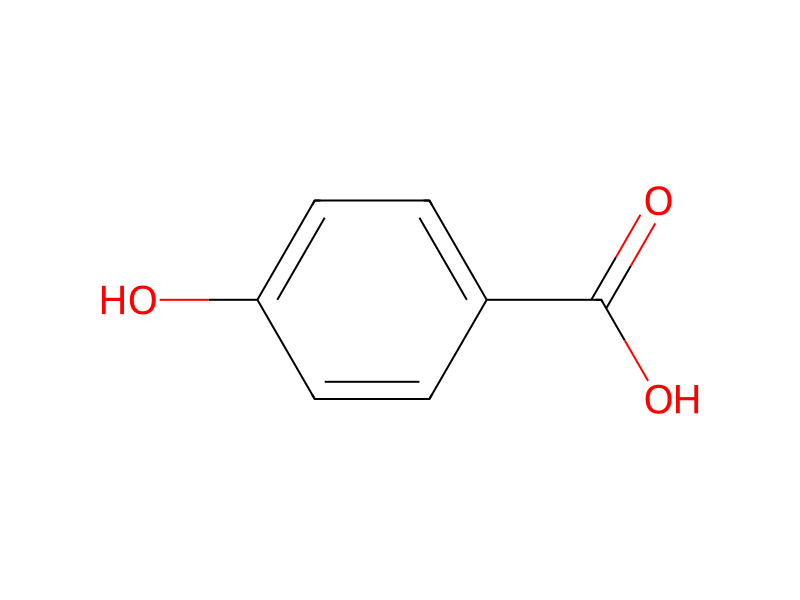
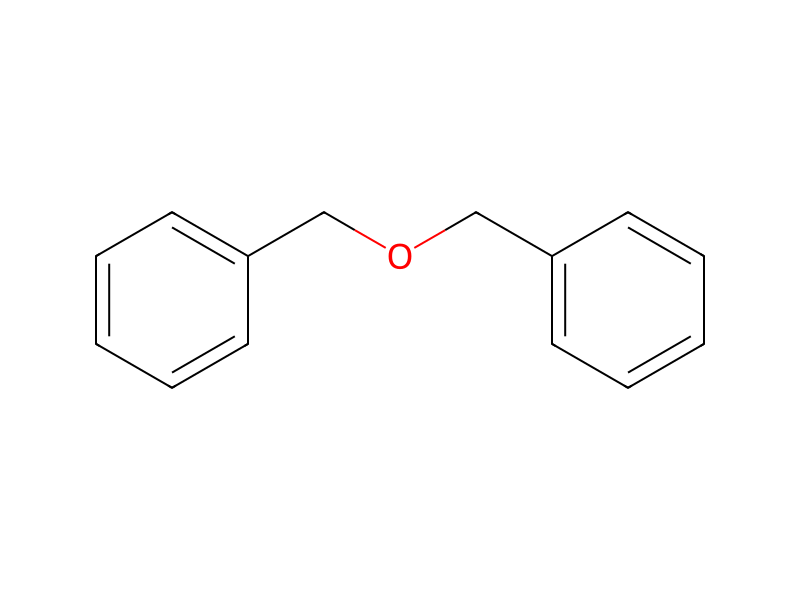
4-Hydroxybenzoic Acid → Dibenzyl ether
Reaction equation

OC1C=CC(C(O)=O)=CC=1.C(O)C1C=CC=CC=1.O[C:20]1[CH:35]=[CH:34][C:23]([C:24]([O:26][CH2:27][C:28]2[CH:33]=[CH:32][CH:31]=[CH:30][CH:29]=2)=O)=[CH:22][CH:21]=1>C1(C)C=CC=CC=1.C1(C)C=CC(S(O)(=O)=O)=CC=1>[CH2:27]([O:26][CH2:24][C:23]1[CH:34]=[CH:35][CH:20]=[CH:21][CH:22]=1)[C:28]1[CH:33]=[CH:32][CH:31]=[CH:30][CH:29]=1Participants
6
Reactant 3


Product 1
Reagents, catalysts & solvents 2


Procedure
In the same way as in Example 13, 69.1 g (0.5 mole) of p-hydroxybenzoic acid and 216.2 g (2 moles) of benzyl alcohol were reacted at 120° C. for 4 hours in 138 g of toluene in the presence of 1.44 g of p-toluenesulfonic acid as a catalyst. The yield of benzyl p-hydroxybenzoate was 26%. Dimerization and dehydration of benzyl alcohol occurred simultaneously, and dibenzyl ether was formed in a ratio of as high as 45%.
Sources & evidence
- ORD record
- ord-5520158b21af4788bd3bb3fd3af0fcf6
- Source dataset
- uspto-grants-1990_11
- Patent number
- US04973737
Reaction notes
Loading…