4-Hydroxybenzaldehyde → HCID 15576447, compound
Reaction equation

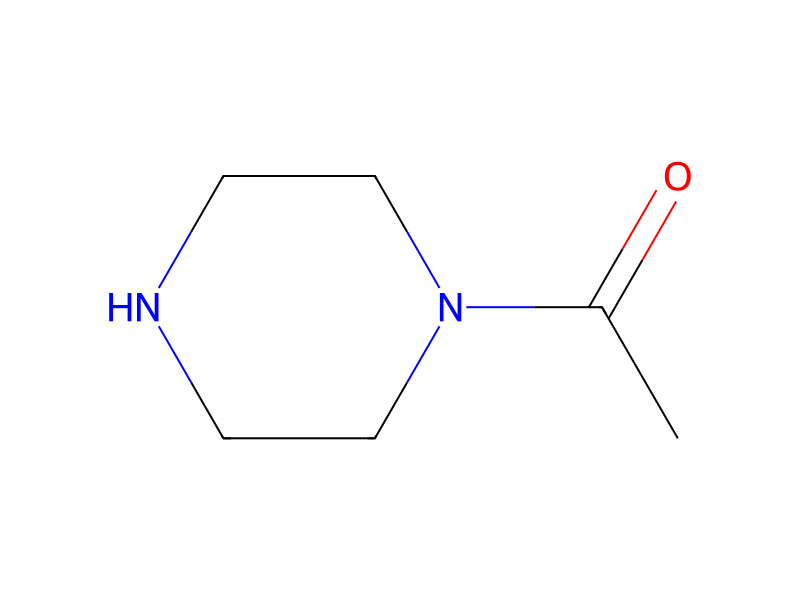
[OH:1][C:2]1[CH:9]=[CH:8][C:5]([CH:6]=O)=[CH:4][CH:3]=1.[C:10]([N:13]1[CH2:18][CH2:17][NH:16][CH2:15][CH2:14]1)(=[O:12])[CH3:11].S(=O)(=O)(O)O>[Ni].CO>[C:10]([N:13]1[CH2:18][CH2:17][N:16]([CH2:6][C:5]2[CH:8]=[CH:9][C:2]([OH:1])=[CH:3][CH:4]=2)[CH2:15][CH2:14]1)(=[O:12])[CH3:11]Participants
6
Reactant 3


Product 1

Reagents, catalysts & solvents 2


Conditions
- Temperature
- 80 °C
Procedure
A mixture of 22.4 g=0.2 mole of p-hydroxybenzaldehyde, 25.6 g=0.2 mole of acetylpiperazine, 200 ml of methanol, 10 g of Raney nickel and 0.1 ml of concentrated sulfuric acid is stirred for 4 hours in an autoclave at 80° C. and under a hydrogen pressure of 100 atmospheres. After cooling, and releasing the pressure, the catalyst is filtered off, the solvent is removed in vacuo on a rotary evaporator, the residue is taken up in methylene chloride, the mixture is washed with 2 N sodium carbonate solution, the organic phase is dried with sodium sulfate, the solvent is removed as above and the residue is recrystallized from a mixture of ethyl acetate and diisopropyl ether. This gives 33.4 g (71% of theory), melting point: 130°-132° C.
Workup
- temperatureAfter cooling
- filtrationthe catalyst is filtered off
- customthe solvent is removed in vacuo on a rotary evaporator
- washthe mixture is washed with 2 N sodium carbonate solution
- dry with materialthe organic phase is dried with sodium sulfate
- customthe solvent is removed as above and the residue
- customis recrystallized from a mixture of ethyl acetate and diisopropyl ether
Sources & evidence
- ORD record
- ord-3b1552d7a5b14db79d7795096c72d7d1
- Source dataset
- uspto-grants-1983_07
- Patent number
- US04391805
Reaction notes
Loading…