Water → 2-Phenyl-1-propanol
Reaction equation

[CH3:1][C:2]([C:7]1[CH:12]=[CH:11][CH:10]=[CH:9][CH:8]=1)([CH2:5][OH:6])[CH:3]=[O:4].O.CO.[CH3:16][C:17]([C:22]1[CH:27]=[CH:26][CH:25]=[CH:24][CH:23]=1)([CH2:20][OH:21])[CH2:18][OH:19].O>CO>[C:7]1([CH:2]([CH3:1])[CH2:3][OH:4])[CH:12]=[CH:11][CH:10]=[CH:9][CH:8]=1.[CH3:16][C:17]([C:22]1[CH:27]=[CH:26][CH:25]=[CH:24][CH:23]=1)([CH2:20][OH:21])[CH:18]=[O:19].[CH3:1][C:2]([C:7]1[CH:12]=[CH:11][CH:10]=[CH:9][CH:8]=1)([CH2:5][OH:6])[CH2:3][OH:4]Participants
Reactant 4



Product 3
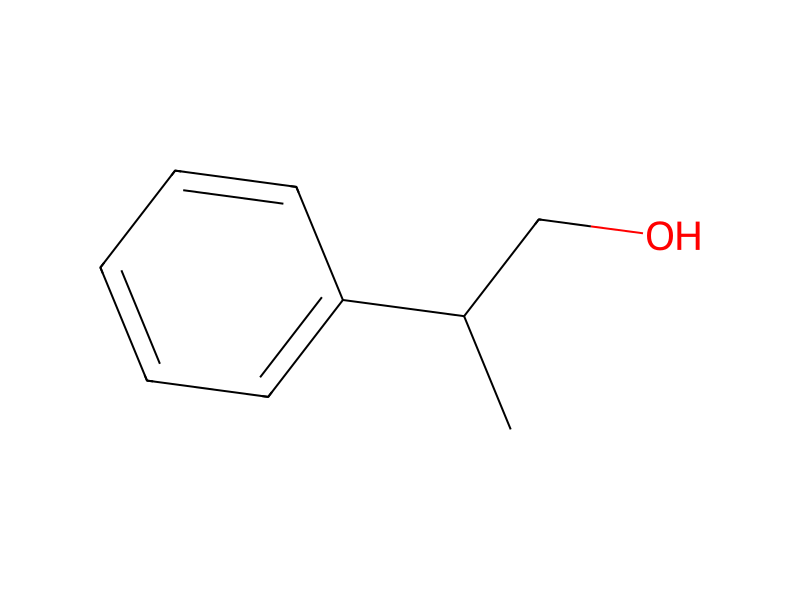
Reagents, catalysts & solvents 1

Procedure
Using the method described in Example 1(b), 1.2 parts per hour of a 50 percent strength by weight solution of 2-methyl-2-phenyl-3-hydroxypropanal in a 1:1 water-methanol mixture are hydrogenated, over the catalyst prepared as described in Example 1(a), at 130° C. and 30 bar, with a throughput of 0.3 part of 2-methyl-2-phenyl-3-hydroxypropanol per liter of catalyst per hour. The conversion is over 99 percent. The hydrogenated material is fractionated through a packed column. After first runnings of water, methanol, 2-phenylpropanol and 2-methyl-2-phenyl-3-hydroxypropanal, 2-methyl-2-phenyl-propane-1,3-diol, of boiling point 143°-145° C./1 mbar (melting point 80°-82° C.), is obtained in an amount corresponding to 0.5405 part per hour. This is equivalent to a yield of 89% of theory, based on starting material.
Workup
- customprepared
- customas described in Example 1(a), at 130° C.
Sources & evidence
- ORD record
- ord-c2e746feab4d4dafa2f931534b0d3e60
- Source dataset
- uspto-grants-1983_07
- Patent number
- US04393251
Reaction notes
Loading…