Sodium Carbonate → 3-Benzoyl-2-(2-bromoacetamido)pyrazine
Reaction equation

[NH2:1][C:2]1[C:7]([C:8](=[O:15])[C:9]2[CH:14]=[CH:13][CH:12]=[CH:11][CH:10]=2)=[N:6][CH:5]=[CH:4][N:3]=1.[Br:16][CH2:17][C:18](Br)=[O:19].C(=O)([O-])[O-].[Na+].[Na+]>C(Cl)Cl>[C:8]([C:7]1[C:2]([NH:1][C:18](=[O:19])[CH2:17][Br:16])=[N:3][CH:4]=[CH:5][N:6]=1)(=[O:15])[C:9]1[CH:14]=[CH:13][CH:12]=[CH:11][CH:10]=1Participants
5
Reactant 3

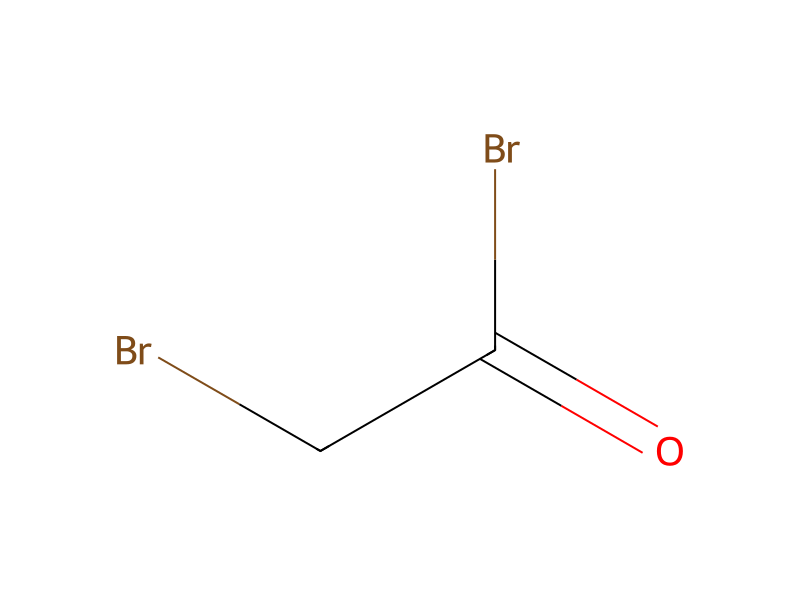

Product 1

Reagents, catalysts & solvents 1

Procedure
A solution of 2 g. (0.01 mol) of 2-amino-3-benzoylpyrazine and 20.2 g. (0.1 mol) of 2-bromo-acetyl bromide in 50 ml. of methylene chloride was layered with 25 ml. of 10% aqueous sodium carbonate solution. The two-phase mixture was stirred for 1 hour at room temperature. The methylene chloride layer was separated, washed several times with 10% aqueous sodium carbonate solution and was dried over sodium sulfate. The residue obtained after evaporation was crystallized from methylene chloride/hexane to yield 2.9 g. (90.6%) of the above-named product as tan crystals, m.p. 130°-135° dec.
Workup
- customThe methylene chloride layer was separated
- washwashed several times with 10% aqueous sodium carbonate solution
- dry with materialwas dried over sodium sulfate
- customThe residue obtained
- customafter evaporation
- customwas crystallized from methylene chloride/hexane
- customto yield 2.9 g
Sources & evidence
- ORD record
- ord-bc1ed0993b244a40a35a09f8d5667483
- Source dataset
- uspto-grants-1976_05
- Patent number
- US03954753
Reaction notes
Loading…