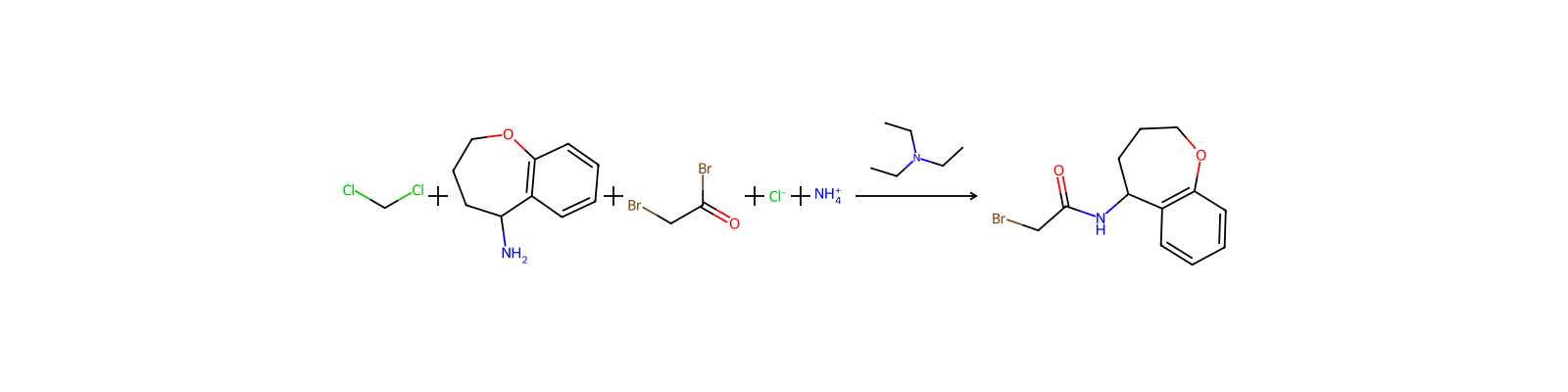
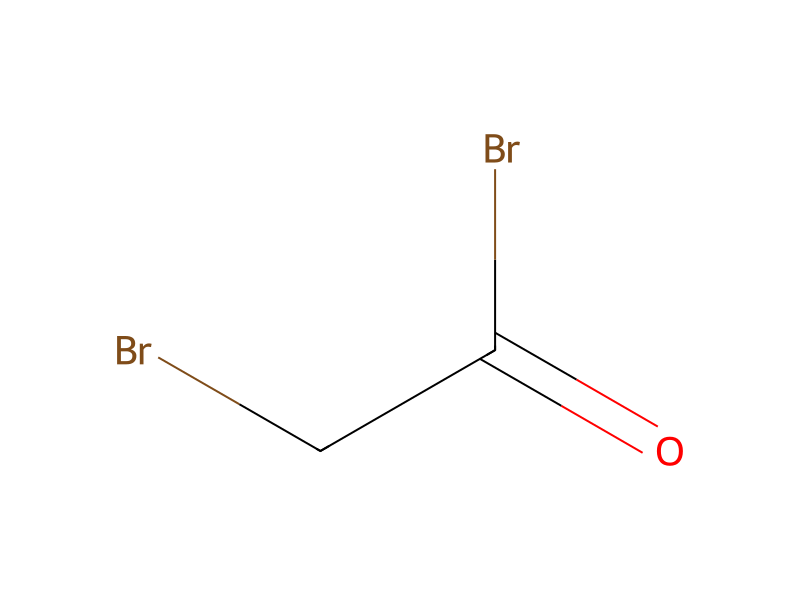
Basic information
- Standard SMILES
O=C(Br)CBr- InChIKey
LSTRKXWIZZZYAS-UHFFFAOYSA-N- Molecular formula
- C2H2Br2O
- Average molar mass
- 201.84 g/mol
- Monoisotopic mass
- 199.84723888
Overview
Bromoacetyl bromide appears as a water-white liquid with a pungent odor. Denser than water. Irritates skin, eyes and mucous membranes. May be toxic by ingestion, inhalation and skin absorption. Used to make other chemicals.
Names & identifiers
- Preferred name
- Bromoacetyl bromide
- IUPAC
- 2-bromoacetyl bromide
- English name
- Bromoacetyl bromide
- Molecular formula
- C2H2Br2O
- Molecular weight
- 201.84
Names & synonyms
Bromoacetyl bromide598-21-0ACETYL BROMIDE, BROMO-Acetyl bromide, 2-bromo-CCRIS 9090EINECS 209-923-5UN2513alpha-bromoacetyl bromideDTXSID10605062bromoacetyl bromideAcetyl bromide, bromoalphaBromoacetyl bromide
Show more names
acetylbromide,bromo-bromoacetylBroMoacetyl brAKOS BBS-00004286bromo-acetylbromid?BROMOACETYL?BROMIBrominemonobromide1,2-Dibromoethanone
Acetyl bromide, 2bromoRefChem:570322BROMOETHANOYL BROMIDEMONOBROMOACETYL BROMIDEDTXCID7042699209-923-52-Bromoacetyl bromidebromoacetylbromide
Database identifiers
- CAS
598-21-0- PubChem CID
- 61147
- DTXSID
DTXSID1060506- UNII
- GV64Q4VP87
- EC Number
- 209-923-5
- Nikkaji
- J474J
Properties
Computed structural properties
- XLogP
- 1.6
- Topological polar surface area
- 17.1 Ų
- Hydrogen bond donors
- 0
- Hydrogen bond acceptors
- 1
- Rotatable bonds
- 1
- Heavy atoms
- 5
- Formal charge
- 0
- Complexity
- 42.9
Experimental & physicochemical properties
Chemical Classes
Other Classes -> Halogenated Ketones
Corrosives
SpringerMaterials PropertiesSchoenflies notation
Density2.317 at 68 °F (USCG, 1999) - Denser than water; will sink
Boiling Point298 °F at 760 mmHg (USCG, 1999)
Physical Description
Bromoacetyl bromide appears as a water-white liquid with a pungent odor. Denser than water. Irritates skin, eyes and mucous membranes. May be toxic by ingestion, inhalation and skin absorption. Used to make other chemicals.
Fuming water-white liquid with a pungent odor; [CAMEO] Colorless to light yellow liquid with an extremely irritating odor; [CHRIS] Dark brown liquid; [Sigma-Aldrich MSDS]
Physicochemical properties
- Melting point
- 148.5 °C · 148.5°C (estimate)
- Boiling point
- 147 · 147-150 °C(lit.)
- Density
- 2.324 g/mL · 2.324 g/mL at 20 °C
- vapor pressure
- 3.8 mm · 3.8 mm Hg ( 25 °C)
- refractive index
- 20 · n20/D 1.547(lit.)
- Flash point
- 105 °C · >105°C
- storage temp.
- Refrigerator (+4°C)
- solubility
- soluble in Chloroform
- form
- Powder
- color
- White
- Water Solubility
- REACTS
- Sensitive
- Moisture Sensitive
- BRN
- 605440 · 605440
- Dielectric constant
- 12.6 · 12.6(20℃)
- Stability
- Stable, but reacts violently with water. Incompatible with water, moisture, alcohols, strong bases, strong oxidizing agents.
- InChI
- 1S/C2H2Br2O/c3-1-2(4)5/h1H2
- InChIKey
- LSTRKXWIZZZYAS-UHFFFAOYSA-N
- SMILES
- BrCC(Br)=O
- LogP
- -0.04 at · -0.04 at 25℃
- CAS DataBase Reference
- 598 · 598-21-0(CAS DataBase Reference)
- NIST Chemistry Reference
- Bromoacetyl bromide(598-21-0)
- EPA Substance Registry System
- 2 · Acetyl bromide, 2-bromo- (598-21-0)
- UNSPSC Code
- 12352100 · 12352100
- NACRES
- 22 · NA.22
- Symbol(GHS)
- 5 · GHS05,GHS08
- Signal word
- Danger
- Hazard statements
- 314 · H314-H341-H290
- Precautionary statements
- 501 · P501-P202-P234-P201-P264-P280-P390-P308+P313-P303+P361+P353-P301+P330+P331-P363-P304+P340+P310-P305+P351+P338+P310-P406-P405
- PPE
- Faceshields, Gloves, Goggles, type ABEK (EN14387) respirator filter
- Hazard Codes
- C
- Risk Statements
- 34 · 34-14
- Safety Statements
- 26 · 26-36/37/39-45-8-30-25
- RIDADR
- 2513 · UN 2513
- WGK Germany
- 3 · 3
- F
- 10 · 10-19
- TSCA
- TSCA listed
- HazardClass
- 8 · 8
- PackingGroup
- II
- HS Code
- 29159080 · 29159080
- Storage Class
- 8 A · 8A - Combustible corrosive hazardous materials
- Hazard Classifications
- 1 B · Skin Corr. 1B
- REACH Registrations
- Active
- Limited Quantities
- 1 Kg · 1 Kg (2.2 lbs) (solid)
- Excepted Quantities
- Max Inner Pack (30g or 30ml) and Max Outer Pack (500g or 500ml)
Safety & regulation
GHS classification
GHS Classification
Danger
H314 (100%): Causes severe skin burns and eye damage [Danger Skin corrosion/irritation]
P260, P264, P264+P265, P280, P301+P330+P331, P302+P361+P354, P304+P340, P305+P354+P338, P316, P317, P321, P363, P405, and P501 (click each P-code to see the statement)
Aggregated GHS information provided per 73 reports by companies from 9 notifications to the ECHA C&L Inventory. Each notification may be associated with multiple companies.
Not Classified
Hazard information
Regulatory Information
Chemical: Acetyl bromide, bromo-
Status: Active Update: 10-05-2022 https://echa.europa.eu/registration-dossier/-/registered-dossier/17142
Bromoacetyl bromide: Does not have an individual approval but may be used under an appropriate group standard
The New Jersey Worker and Community Right to Know Act requires public and private employers to provide information about hazardous substances at their workplaces. (N.J.S.A. 34:5A-1 et. seq.)
DOT LabelCorrosive
Fire Hazards
Special Hazards of Combustion Products: Heat of fire can cause decomposition, with evolution of highly toxic and irritating hydrogen bromide and bromophosgene vapors.
· Combustible material: may burn but does not ignite readily.
Health Hazards
Inhalation causes severe irritation of upper respiratory system. External contact causes severe irritation of eyes and skin. Ingestion causes severe irritation of mouth and stomach. (USCG, 1999)
· TOXIC and/or CORROSIVE; inhalation, ingestion or contact (skin, eyes) with vapors, dusts or substance may cause severe injury, burns or death.
Hazards Summary
Reacts violently with water evolving hydrogen bromide; Causes severe skin irritation and serious eye injury; Brief contact can cause second- and third-degree skin burns; [CHRIS] Readily hydrolyzes; Causes burns; Inhalation may cause corrosive injuries to upper respiratory tract; [Sigma-Aldrich MSDS] See Dichloroacetone. See Hydrogen bromide.
DOT ID and Guide2513 156
Reactive GroupHalogenated Organic Compounds
Reactivity AlertsWater-Reactive
Reactivity Profile
BROMOACETYL BROMIDE is incompatible with water, with bases (including amines), with strong oxidizing agents, with alcohols. May react vigorously or explosively if mixed with diisopropyl ether or other ethers in the presence of trace amounts of metal salts [J. Haz. Mat., 1981, 4, 291]. Decomposes when heated with evolution of highly toxic and irritating hydrogen bromide and bromophosgene vapors.
DOT Hazard Classification
Bromoacetyl bromide
UN2513
Class 8 Corrosive material (49 eCFR § 173.136)
PG II: the degree of danger presented by the material is medium
Air and Water ReactionsFumes in air. Reacts violently with water to form hydrobromic acid (HBr) (USCG 1991).
Hazard Classes and Categories
Skin Irrit. 2 (100%)
Corrosives, Reactive agents - 2nd degree
Safety & protection
Fire FightingExcerpt from ERG Guide 156 [Substances - Toxic and/or Corrosive (Combustible / Water-Sensitive)]:
Accidental Release Measures
· CALL 911. Then call emergency response telephone number on shipping paper. If shipping paper not available or no answer, refer to appropriate telephone number listed on the inside back cover.
· ELIMINATE all ignition sources (no smoking, flares, sparks or flames) from immediate area.
First Aid
INHALATION: Remove from exposure; support respiration, call physician.
General First Aid:
Exposure Control and Personal Protection· Wear positive pressure self-contained breathing apparatus (SCBA).
Nonfire Spill ResponseExcerpt from ERG Guide 156 [Substances - Toxic and/or Corrosive (Combustible / Water-Sensitive)]:
Isolation and Evacuation
Excerpt from ERG Guide 156 [Substances - Toxic and/or Corrosive (Combustible / Water-Sensitive)]:
Immediate precautionary measure
Personal Protective Equipment (PPE)Acid-type canister mask; self-contained breathing apparatus (full face); rubber gloves and full protective clothing. (USCG, 1999)
Emergency Response Planning Guidelines· Note: Most foams will react with the material and release corrosive/toxic gases.
Toxicology
Adverse EffectsDermatotoxin - Skin burns.
Safety data
- F
- 10-19
- PPE
- Faceshields, Gloves, Goggles, type ABEK (EN14387) respirator filter
- wgk
- 3
- tsca
- TSCA listed
- ridadr
- UN 2513
- hs_code
- 29159080
- risk_code
- 34-14
- Signal word
- Danger
- Symbol(GHS)
- GHS05,GHS08
- hazard_code
- C
- safety_code
- 26-36/37/39-45-8-30-25
- hazard_class
- 8
- Storage Class
- 8A - Combustible corrosive hazardous materials
- packing_group
- II
- Hazard statements
- H314-H341-H290
- Limited Quantities
- 1 Kg (2.2 lbs) (solid)
- Excepted Quantities
- Max Inner Pack (30g or 30ml) and Max Outer Pack (500g or 500ml)
- REACH Registrations
- Active
- Hazard Classifications
- Skin Corr. 1B
- Precautionary statements
- P501-P202-P234-P201-P264-P280-P390-P308+P313-P303+P361+P353-P301+P330+P331-P363-P304+P340+P310-P305+P351+P338+P310-P406-P405
Chemistry & industry
Uses & manufacturing
UsesUsed in chemical manufacture; [CAMEO]
General Manufacturing InformationAcetyl bromide, 2-bromo-: ACTIVE
Applications
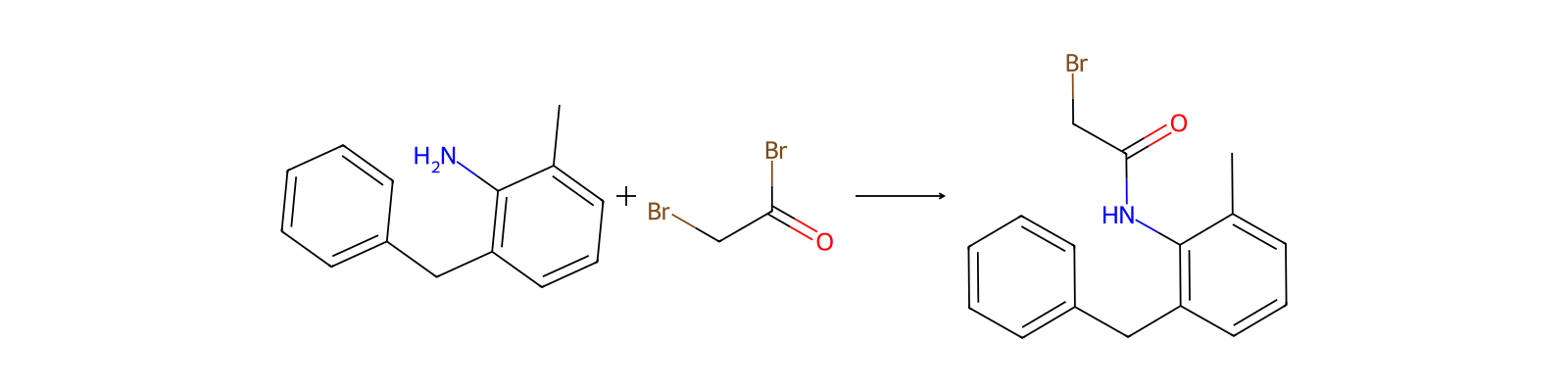
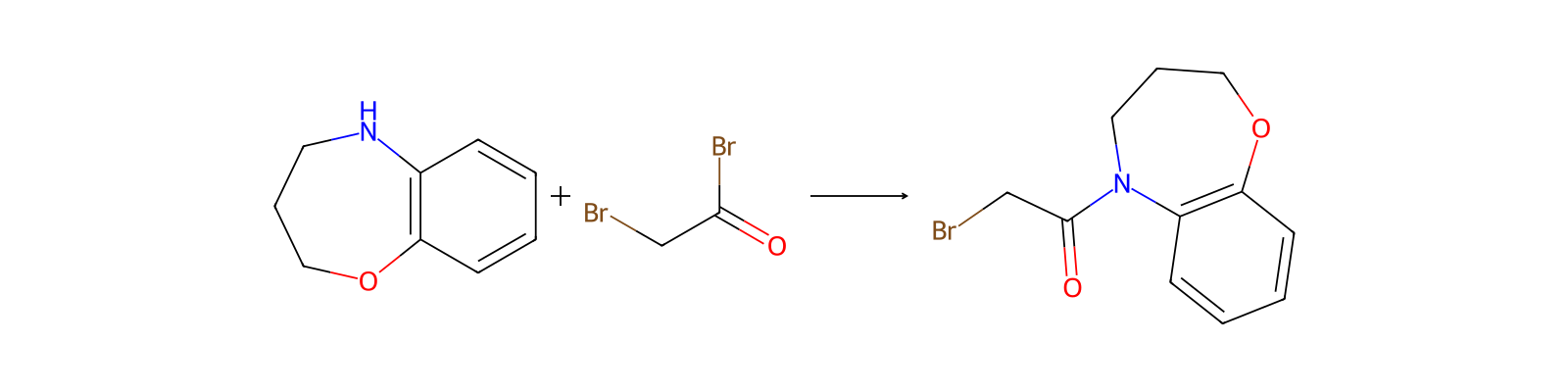
UsesBromoacetyl bromide is widely used in the synthesis of fine chemicals, agrochemicals, dyes and pharmaceuticals. As an acylating agent, it reacts with 10H-phenothiazine to give 10-bromoacetyl-10H-phenothiazine. Similarly, it is also involved in the preparation of bromoactylated starch which is a biodegradable thermoplastic copolymer.
General DescriptionA water-white liquid with a pungent odor. Denser than water. Irritates skin, eyes and mucous membranes. May be toxic by ingestion, inhalation and skin absorption. Used to make other chemicals.
Upstream & downstream products
Upstream raw materials
Downstream products
Suppliers50 total
国药集团化学试剂有限公司86-21-63210123 · [email protected]
梯希爱(上海)化成工业发展有限公司021-67121386 · [email protected]
衢州润东化工有限公司0570-8789886 18892685668 · [email protected]
上海阿拉丁生化科技股份有限公司400-6206333 13167063860 · [email protected]
爱斯特(成都)生物制药股份有限公司+86-28-85122536 85324413 · [email protected]
山东前元高分子材料有限公司18678041314 18765609661 · [email protected]
Hebei Yanxi Chemical Co., Ltd.+86-17531190177 · [email protected]
Syntechem Co.,Ltd[email protected]
上海迈瑞尔生化科技有限公司4006356688 18621169109 · [email protected]
宁波亿诺化学品有限公司86-574-27787657 · [email protected]
天津中信凯泰化工有限公司022-66880623 · [email protected]
阿法埃莎(中国)化学有限公司400-6106006 · [email protected]
安耐吉化学&3A(安徽泽升科技股份有限公司)400-0056266 · [email protected]
上海瀚鸿科技股份有限公司021-54306202 13764082696 · [email protected]
上海景颜化工科技有限公司13817811078 · [email protected]
嘉兴市艾森化工有限公司0573-85285100 18627885956 · [email protected]
山东西亚化学有限公司13355009207 13355009207 · [email protected]
玛雅试剂+86 (573) 82222445 (0)18006601000 452520369 · [email protected]
四川库利南科技有限公司400-1166-196 18981987031 · [email protected]
天津希恩思生化科技有限公司400 638 7771 · [email protected]
南京维奥化工有限公司Please Send Email 18652950785 · [email protected]
艾科试剂4008-755-333 18080918076 · [email protected]
上海思域化工科技有限公司86-21-34053660 · [email protected]
赛默飞世尔科技(中国)有限公司800-810-5118 · [email protected]
北京伊诺凯科技有限公司400-810-7969 010-59572699 · [email protected]
TCI AMERICA800-4238616 · [email protected]
TOKYO CHEMICAL INDUSTRY CO., LTD.03-36680489 · [email protected]
TCI Europe320-37350700 · [email protected]
上海贤鼎生物科技有限公司4009209199 · [email protected]
深圳康特腾科技有限公司86-0755-86635001 · [email protected]
上海湄水化工科技有限公司021-60549325 18616193163
上海将来实业股份有限公司021-61552785 · [email protected]
HBCChem, Inc.+1-510-219-6317 · [email protected]
日照力德士化工有限公司010-51268198 · [email protected]
美岚实业(上海)有限公司021-58958189 · [email protected]
上海爱蝶实业有限公司021-58957966 18930537195 · [email protected]
成都零六生物科技有限公司400-1166-196 13458535857 · [email protected]
广拓化学(上海)有限公司021-60899189-8001 18918189673 · [email protected]
雷丁试剂0510-85629785 18013409632 · [email protected]
上海御略医药科技有限公司021-60345187 13671753212 · [email protected]
上海麦克林生化科技股份有限公司15221275939 15221275939 · [email protected]
杭州杰恒化工有限公司0571-87396432 · [email protected]
上海嵩爰化工科技有限公司010-1234567 18521000990 · [email protected]
上海有朋化工有限公司021-69005955 13701776567 · [email protected]
上海凯赛化工有限公司021-33516722 13701817765 · [email protected]
上海彤源化工有限公司021-021-69182866 13701855675 · [email protected]
成都润泽本土化工有限公司13096311329 028-88469284 616445927 · [email protected]
凯试(上海)科技有限公司021-50135380 · [email protected]
上海蓝润化学有限公司021-69515658 ; 69515628 13701998368 · [email protected]
上海容立化学科技有限公司021-69992220 13701886816 · [email protected]
Related reactions
1,289 records
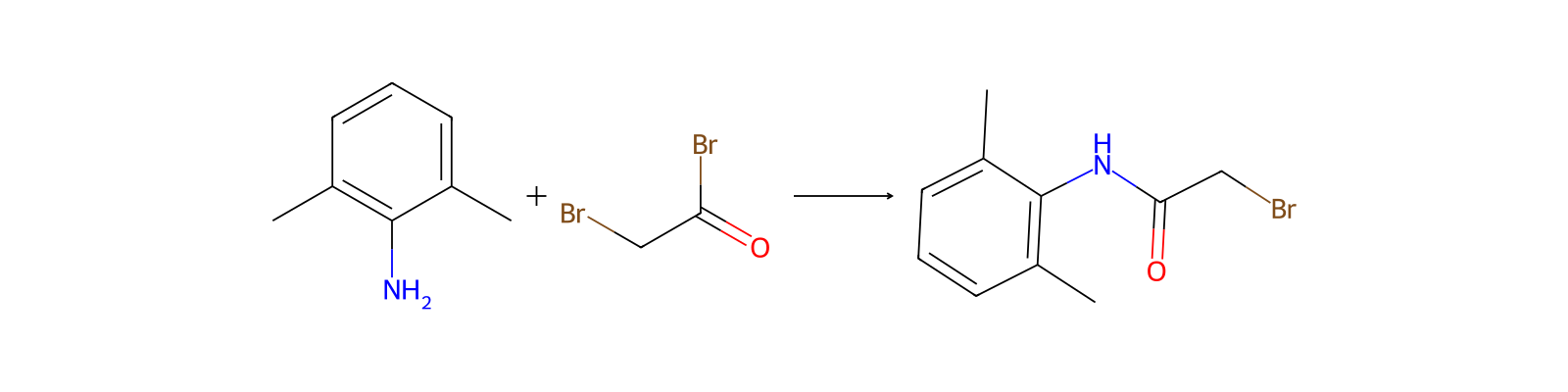
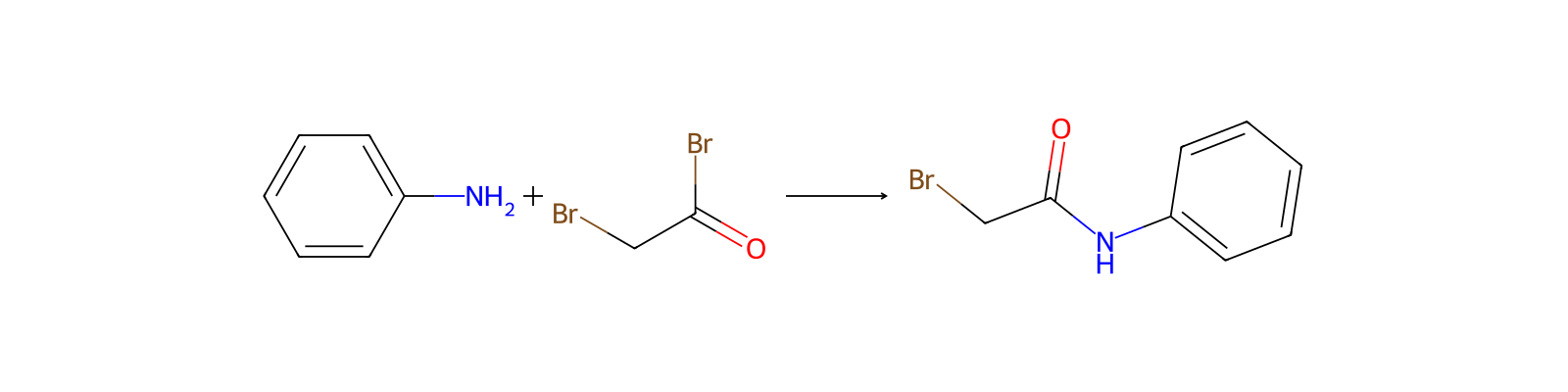
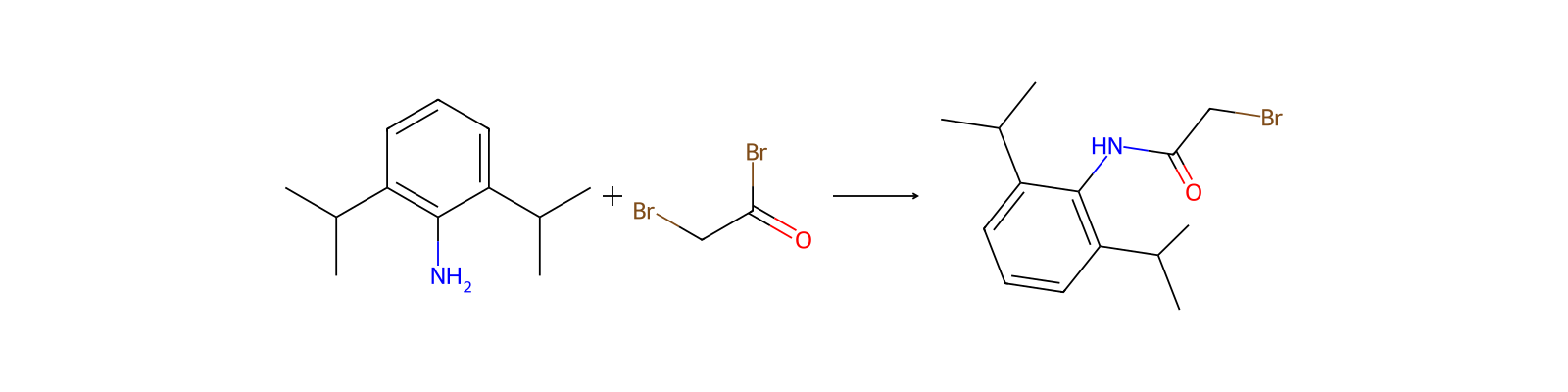

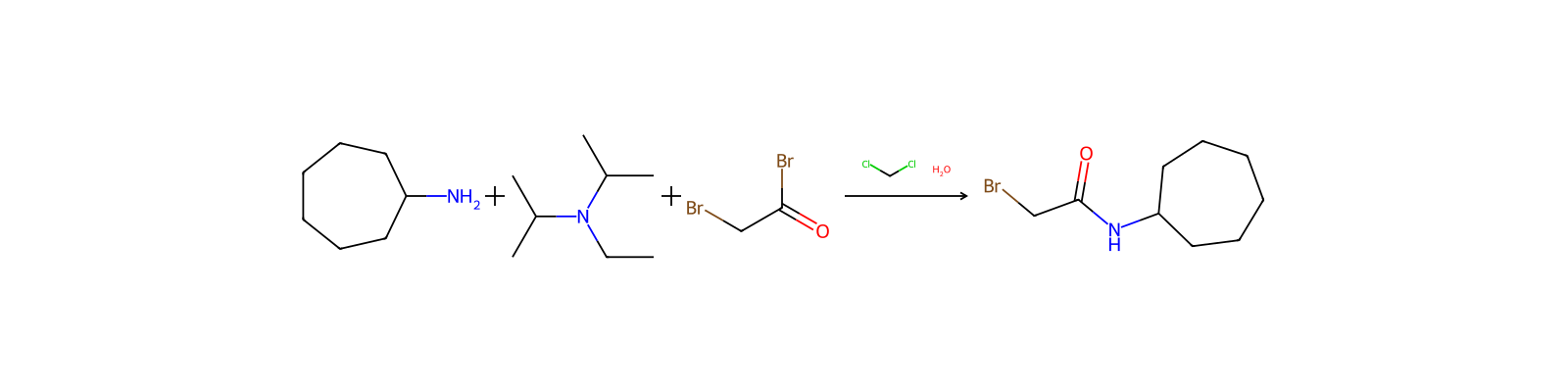
Linked notes
Loading…