Water → Camphor 2,3-dihydropyrazine
Reaction equation

[C:1]12([CH3:12])[C:9]([CH3:11])([CH3:10])[CH:6]([CH2:7][CH2:8]1)[C:4](=O)[C:2]2=[O:3].[CH2:13]([NH2:16])[CH2:14][NH2:15].[C:17]1(C)C=CC(S(O)(=O)=O)=C[CH:18]=1.O>C1C=CC=CC=1>[C:1]12([CH3:12])[C:9]([CH3:11])([CH3:10])[CH:6]([CH2:7][CH2:8]1)[CH2:4][C:2]2=[O:3].[N:15]1[CH2:17][CH2:18][N:16]=[CH:13][CH:14]=1Participants
6
Reactant 4

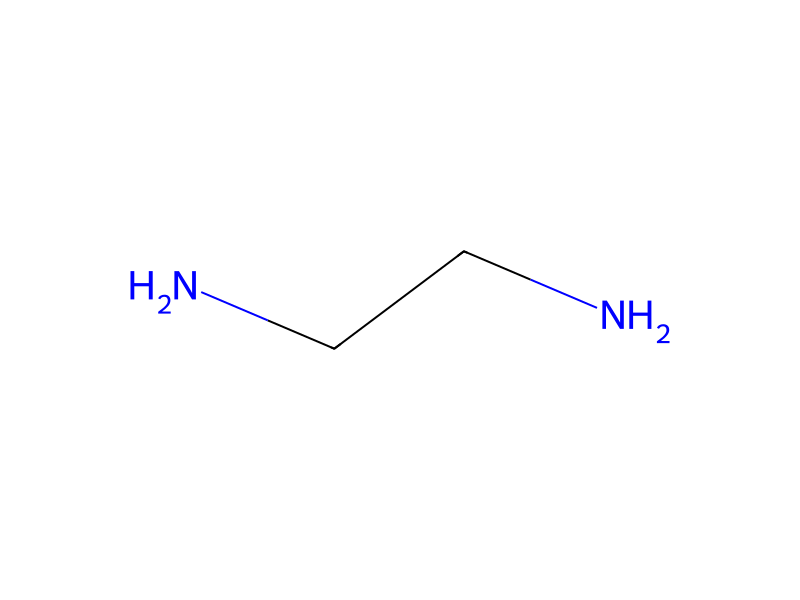


Product 1

Reagents, catalysts & solvents 1

Procedure
A solution of 15.6 g of camphorquinone, 7.2 g of ethylenediamine and 1 g of p-toluenesulphonic acid in 1 liter of anhydrous benzene is heated at reflux for 3 hours, 1.7 ml of water being produced. The mixture is cooled and washed with 100 ml of a 5 wt.% sodium hydroxide solution. The organic phase is decanted off and the benzene distilled off. The residue is fractionated in vacuo and there is obtained camphor-2,3-dihydropyrazine (formula I: R1 and R2 = H) with a boiling point of 90°-81°C/2.5 mm Hg. [α]D = +9.4° (ethanol). Yield 72%.
Workup
- temperatureat reflux for 3 hours
- temperatureThe mixture is cooled
- washwashed with 100 ml of a 5 wt.% sodium hydroxide solution
- customThe organic phase is decanted off
- distillationthe benzene distilled off
Sources & evidence
- ORD record
- ord-dcd2aa58709943b8907de1269fe32042
- Source dataset
- uspto-grants-1976_05
- Patent number
- US03954794
Reaction notes
Loading…