4-Chlorobenzaldehyde → HCID 54558418, compound
Reaction equation

[Cl:1][C:2]1[CH:9]=[CH:8][C:5]([CH:6]=O)=[CH:4][CH:3]=1.[Cl:10][C:11]1[CH:32]=[C:31]([Cl:33])[CH:30]=[CH:29][C:12]=1[CH2:13][C:14]([C:23]1[CH:28]=[CH:27][CH:26]=[CH:25][CH:24]=1)([C:20](=[O:22])[CH3:21])[CH2:15][CH2:16][C:17]([OH:19])=[O:18].[OH-].[Na+]>C(O)C.O>[Cl:10][C:11]1[CH:32]=[C:31]([Cl:33])[CH:30]=[CH:29][C:12]=1[CH2:13][C:14]([C:23]1[CH:24]=[CH:25][CH:26]=[CH:27][CH:28]=1)([C:20](=[O:22])[CH:21]=[CH:6][C:5]1[CH:8]=[CH:9][C:2]([Cl:1])=[CH:3][CH:4]=1)[CH2:15][CH2:16][C:17]([OH:19])=[O:18]Participants
6
Reactant 3
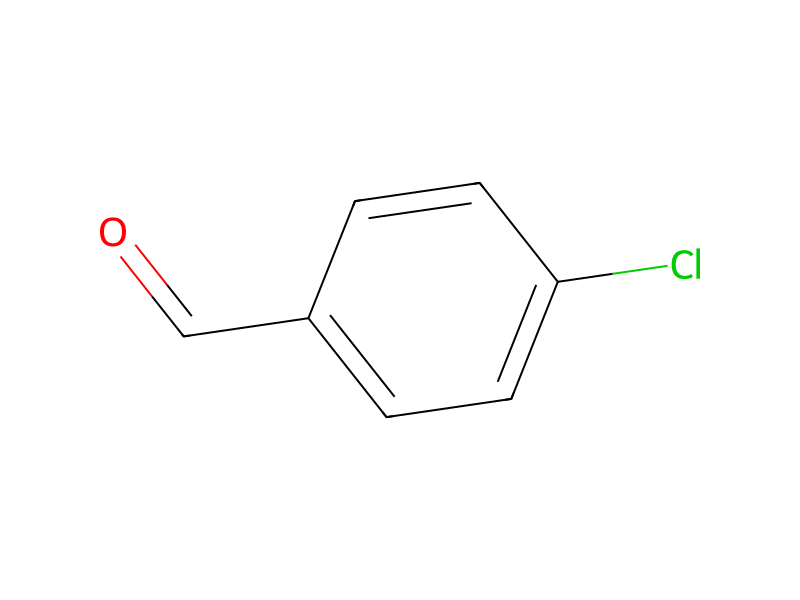


Product 1

Reagents, catalysts & solvents 2


Procedure
p-Chlorobenzaldehyde (3.5 g., 0.025 mole) in ethanol (10 ml.) is added to a solution of 4-(2,4-dichlorobenzyl)-4-phenyl-5-oxohexanoic acid (5.48 g., 0.015 mole) and sodium hydroxide (0.80 g., 0.03 mole) in water (50 ml.). The resulting mixture is heated on a steam bath for 24 hours. Then the reaction solution is cooled to room temperature, diluted with water (200 ml.) and extracted with ether to remove the excess p-chlorobenzaldehyde. The aqueous phase is then acidified with dilute hydrochloric acid (10 ml.), and the sticky solid which precipitates is filtered and air-dried, yield 5.5 g., m.p. 215°-226°C. Recrystallizations from ethanol gives material with m.p. 224.5°-227°C.
Workup
- temperatureThe resulting mixture is heated on a steam bath for 24 hours
- extractionextracted with ether
- customto remove the excess p-chlorobenzaldehyde
- customthe sticky solid which precipitates
- filtrationis filtered
- customair-dried
- customRecrystallizations from ethanol
- customgives material with m.p. 224.5°-227°C.
Sources & evidence
- ORD record
- ord-562d0c872b1f401687cdffc059c3cc91
- Source dataset
- uspto-grants-1976_05
- Patent number
- US03956374
Reaction notes
Loading…