Water → 2-(2,6-Dichloro-4-trifluoromethylphenylhydrazino)succinonitrile
Reaction equation

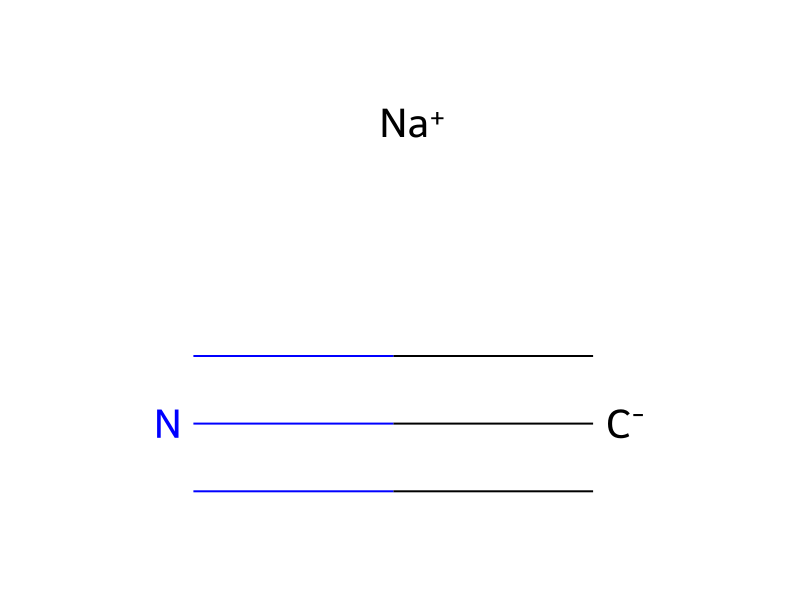
[Cl:1][C:2]1[CH:7]=[C:6]([C:8]([F:11])([F:10])[F:9])[CH:5]=[C:4]([Cl:12])[C:3]=1[NH:13][N:14]=[C:15]([CH2:18][C:19]#[N:20])[C:16]#[N:17].[C-]#N.[Na+].O.C(=O)(O)[O-].[Na+]>C(O)(=O)C>[Cl:1][C:2]1[CH:7]=[C:6]([C:8]([F:10])([F:11])[F:9])[CH:5]=[C:4]([Cl:12])[C:3]=1[NH:13][NH:14][CH:15]([CH2:18][C:19]#[N:20])[C:16]#[N:17]Participants
6
Reactant 4



Product 1

Reagents, catalysts & solvents 1

Procedure
2-(2,6-Dichloro-4-trifluoromethylphenylhydrazono) succinonitrile (0.296 g, 1 mmol), sodium cyanide (0.196 g, 4 equivalents), water (1 ml) and acetic acid (5 ml) were added successively to a sealed tube. After reacting for 40 hours at 20° C., the mixture was added to saturated sodium bicarbonate solution, extracted (dichloromethane), washed (water), dried (magnesium sulfate) and evaporated to give a mixture which contained 40% of the desired title compound, NMR 3.1 (m, 2H), 4.5 (m, 1H), 5.89 (m, 1H), 6.94 (d, 1H), 7.71 (s, 2H), together with 60% of unchanged starting hydrazone.
Workup
- extractionextracted (dichloromethane)
- washwashed (water)
- dry with materialdried (magnesium sulfate)
- customevaporated
- customto give a mixture which
Sources & evidence
- ORD record
- ord-7c8877349ecd41a09bb37cf0c4de17f1
- Source dataset
- uspto-grants-2006_08
- Patent number
- US07094906B2
Reaction notes
Loading…