Nitroxyl → 6-Aminopenicillanic acid
Reaction equation

[CH3:1][C:2]1([CH3:23])[S:6][C@@H:5]2[C@H:7]([NH:10]C(CC3C=CC=CC=3)=O)[C:8](=[O:9])[N:4]2[C@H:3]1[C:20]([OH:22])=[O:21].[K].CN(C)C1C=CC=CC=1.CP(Cl)(CCCCCCCC)=O.P(Cl)(Cl)(Cl)(Cl)Cl.N=O>C(Cl)Cl.C(O)CCC>[CH3:1][C:2]1([CH3:23])[S:6][C@@H:5]2[C@H:7]([NH2:10])[C:8](=[O:9])[N:4]2[C@H:3]1[C:20]([OH:22])=[O:21]Participants
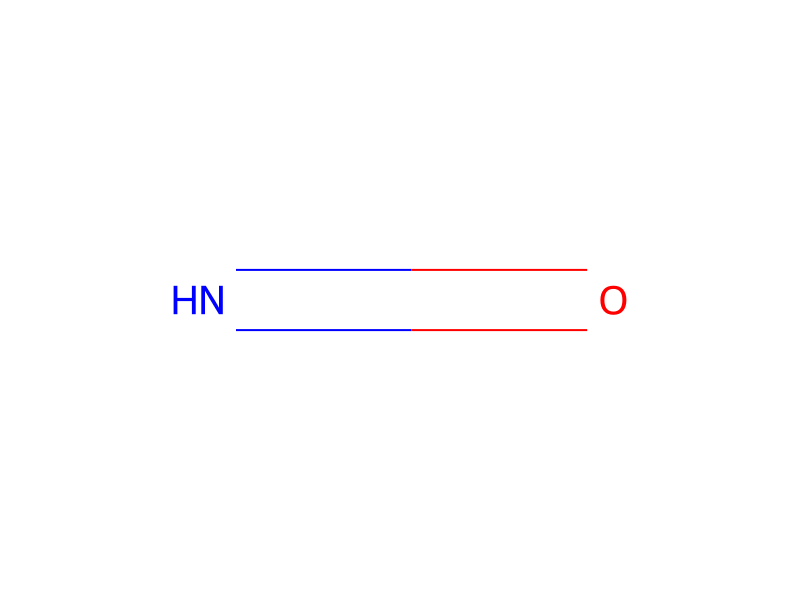




Conditions
- Temperature
- -25 °C
Procedure
To a suspension of 14.9 g of penicillin-G-potassium (= 40 mmols) in 60 ml of absolute methylene chloride 10 ml of N,N-dimethylaniline and 8.42 g (= 40 mmols) of methyl-n-octylphosphinic acid chloride were added successively while stirring. After an hour at 0°C the reaction mixture was cooled to -25°C and 9.0 g (= 43 mmols) of phosphorus pentachloride were introduced. After an hour at -25°C, 60 ml of n-butanol and 2 ml of N,N-dimethylaniline were introduced and by after-stirring for an hour at -25°C the iminoether was formed. Then, hydrolysis followed in the manner described in Example 1. 7.47 g (= 88.5 % of the theory) of 6-aminopenicillanic acid having a melting point of 195°C (decomposition) were isolated in the form of colorless crystals, the identity of which was examined in an analogous manner as described in Example 1.
Workup
- additionwere added successively
- waitAfter an hour at -25°C
- customwas formed
- customThen, hydrolysis
Sources & evidence
- ORD record
- ord-2cf404ac9ce345acba3877034472d295
- Source dataset
- uspto-grants-1976_05
- Patent number
- US03957771
Reaction notes
Loading…