Xanthene → 2,7-Bis(4-chlorobutyryl)xanthene
Reaction equation

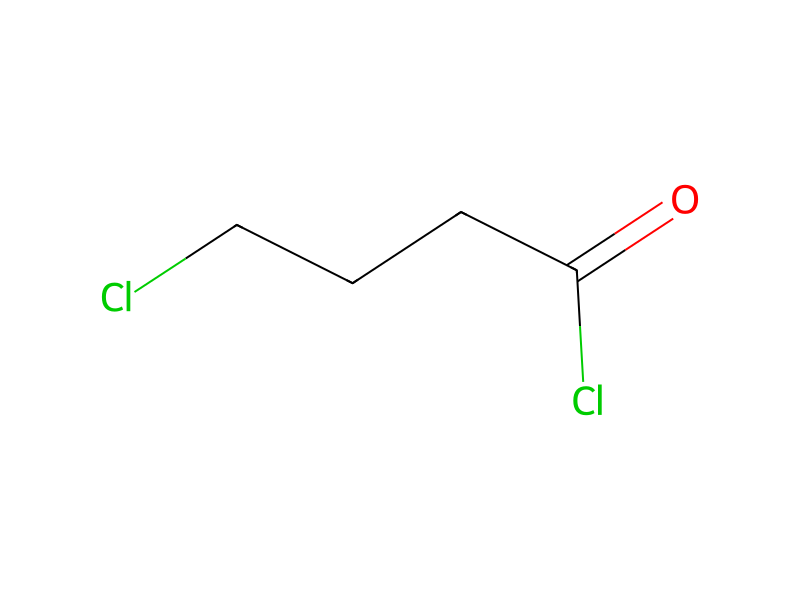
[CH:1]1[C:14]2[CH2:13][C:12]3[C:7](=[CH:8][CH:9]=[CH:10][CH:11]=3)[O:6][C:5]=2[CH:4]=[CH:3][CH:2]=1.[Cl:15][CH2:16][CH2:17][CH2:18][C:19](Cl)=[O:20].[Cl-:22].[Al+3].[Cl-].[Cl-]>C(Cl)Cl>[Cl:15][CH2:16][CH2:17][CH2:18][C:19]([C:10]1[CH:9]=[CH:8][C:7]2[O:6][C:5]3[C:14](=[CH:1][C:2]([C:5](=[O:6])[CH2:4][CH2:3][CH2:2][Cl:22])=[CH:3][CH:4]=3)[CH2:13][C:12]=2[CH:11]=1)=[O:20]Participants
Reactant 3


Product 1

Reagents, catalysts & solvents 1

Conditions
- Temperature
- -20 °C
Procedure
To a mixture of 91.1 g (0.5 mole) xanthene, 176.3 g (1.25 moles) of 4-chlorobutyryl chloride and 3 liters of dried methylene chloride cooled to -20°C. was added slowly over 1/2 hour 146.7 g (1.1moles) of aluminum chloride, maintaining a temperature below -10°C. The reaction mixture was allowed to warm slowly to room temperature and then refluxed for 4 hours and cooled to room temperature. The mixture was decomposed by pouring cautiously into 2 liters of ice water, and the layers were separated. The aqueous layer was extracted again with methylene chloride. The methylene chloride layers were combined and evaporated to a small volume and cooled. The resulting solid was filtered off and recrystallized from acetone to give the desired product. M.P. 131°-132°C.
Workup
- temperaturemaintaining a temperature below -10°C
- temperatureto warm slowly to room temperature
- temperaturerefluxed for 4 hours
- temperaturecooled to room temperature
- customthe layers were separated
- extractionThe aqueous layer was extracted again with methylene chloride
- customevaporated to a small volume
- temperaturecooled
- filtrationThe resulting solid was filtered off
- customrecrystallized from acetone
Sources & evidence
- ORD record
- ord-68da17306fbd403a83123b0ac5c1f7da
- Source dataset
- uspto-grants-1976_05
- Patent number
- US03957989
Reaction notes
Loading…