1-Chloronaphthalene → HCID 21280681, compound
Reaction equation

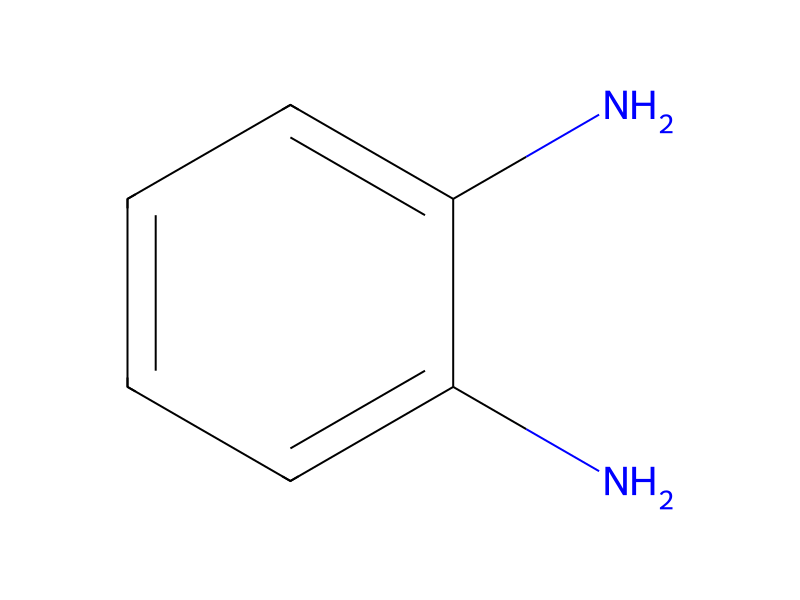
[C:1]1([NH2:8])[CH:6]=[CH:5][CH:4]=[CH:3][C:2]=1[NH2:7].Cl[C:10]1[C:19]2[C:14](=[CH:15][CH:16]=[CH:17][CH:18]=2)[CH:13]=[CH:12][CH:11]=1>>[CH:4]1[C:3]2=[C:2]3[C:3]([C:10]4[C:19]5[C:14](=[CH:15][CH:16]=[CH:17][C:18]2=5)[CH:13]=[CH:12][CH:11]=4)=[CH:2][CH:1]=[CH:6][C:1]3=[CH:6][CH:5]=1.[NH:8]1[CH:1]=[CH:2][N:7]=[CH:10]1Participants
3


Procedure
39.2 g of perylene-3,4,9,10-tetracarboxylic acid dianhydride, 32.4 g of o-phenylenediamine and 800 ml of α-chloronaphthalene were mixed, and the mixture was reacted at 260° C. for 6 hours. After the reaction product was left to cool, deposited crystals were collected by filtration, and were then repeatedly washed with methanol, followed by heating and drying to obtain 51.1 g of an imidazole perylene compound as a mixture of the compounds of Structural formulas 1 and 2. The product thus obtained was called a synthesized product, whose X-ray diffraction spectrum was as shown in FIG. 3.
Workup
- customthe mixture was reacted at 260° C. for 6 hours
- waitAfter the reaction product was left
- temperatureto cool
- filtrationwere collected by filtration
- washwere then repeatedly washed with methanol
- temperatureby heating
- customdrying
Sources & evidence
- ORD record
- ord-a546c20daa0c4e68bb12df6b8e4e98ce
- Source dataset
- uspto-grants-1996_08
- Patent number
- US05549997
Reaction notes
Loading…