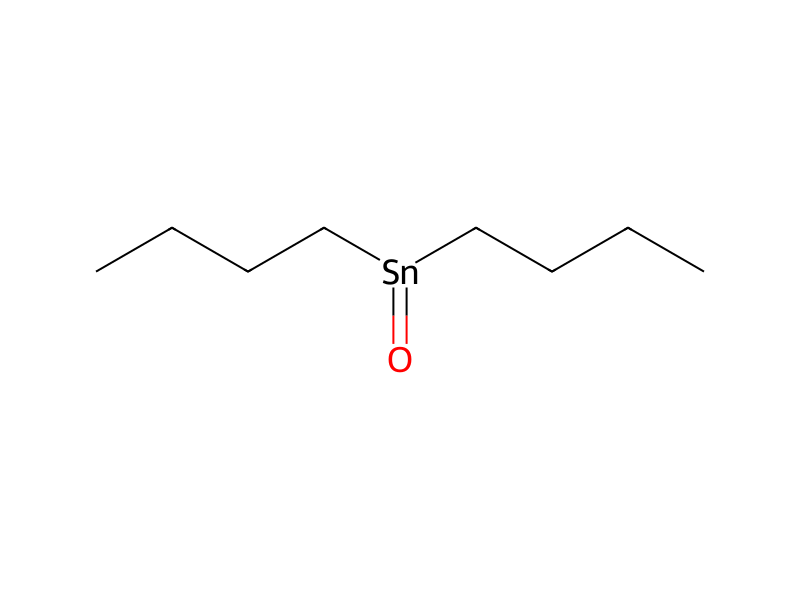
Dibutyltin oxide → HCID 178526045, compound
Reaction equation

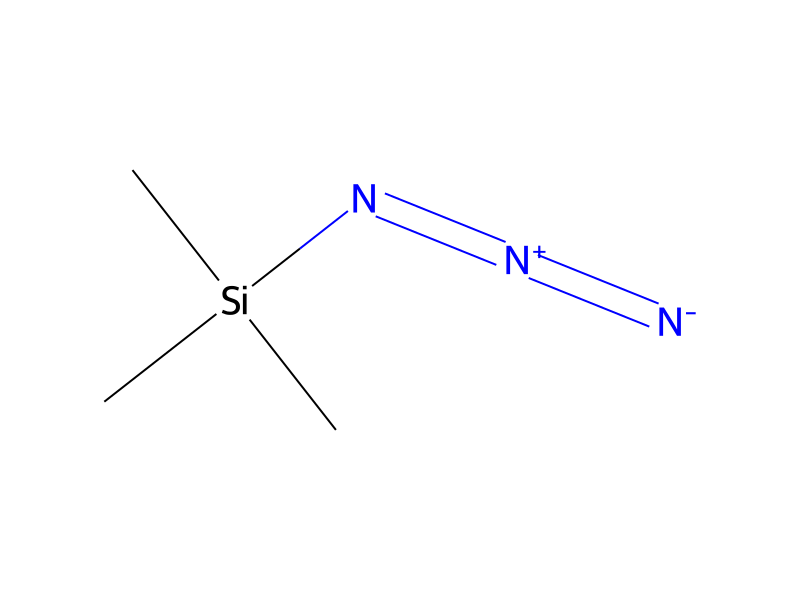
[C:1]([C:3]1[CH:14]=[CH:13][C:6]([CH2:7][S:8][CH2:9][C:10]([OH:12])=[O:11])=[CH:5][CH:4]=1)#[N:2].C[Si]([N:19]=[N+:20]=[N-:21])(C)C.C([Sn](=O)CCCC)CCC>C1(C)C=CC=CC=1>[NH:19]1[C:1]([C:3]2[CH:4]=[CH:5][C:6]([CH2:7][S:8][CH2:9][C:10]([OH:12])=[O:11])=[CH:13][CH:14]=2)=[N:2][N:21]=[N:20]1Participants
5
Reactant 3

Product 1

Reagents, catalysts & solvents 1

Procedure
(4-Cyanobenzylthio)acetic acid (from Example 3; 207 mg, 1 mmol) was added to a stirred solution of trimethylsilylazide (400 μL, 3 mmol) and dibutyltin oxide (25 mg, 100 μmol) in toluene (0.5 mL) at 110° C. After 6 hours, the reaction was quenched with MeOH (1 mL) and evaporated. The residue was purified by flash chromatography (silica gel; 1000:100:3 to 1000:100:13 CHCl3 /MeOH/HOAc) to give the title compound. Rf (silica; 1000:100:6 CHCl3 /MeOH/HOAc)=0.2 compared to the nitrile starting material of Rf =0.67. 1H NMR (d6DMSO); δ3.15 (s, 2H), 3.88 (s, 2H), 7.51 (d, 2H, J=8.1 Hz), 7.99 (d, 2H, J=8.1 Hz). FAB mass spectrum m/z=251 (M+1).
Workup
- customthe reaction was quenched with MeOH (1 mL)
- customevaporated
- customThe residue was purified by flash chromatography (silica gel; 1000:100:3 to 1000:100:13 CHCl3 /MeOH/HOAc)
Sources & evidence
- ORD record
- ord-d60b50b0e78b47feb895e73fb468d0ca
- Source dataset
- uspto-grants-1996_12
- Patent number
- US05585359
Reaction notes
Loading…