Hydrochloric Acid → (S)-(-)-1-Benzyl-3-pyrrolidinol
Reaction equation

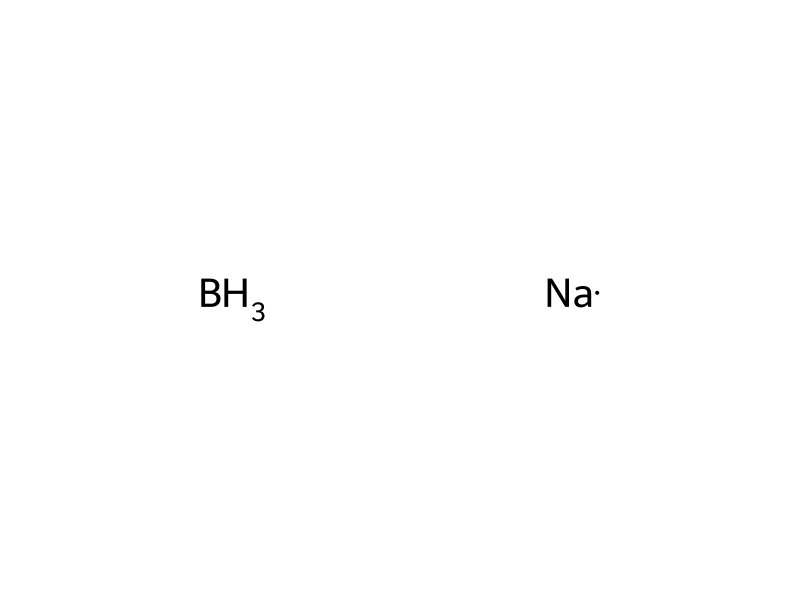
Cl.B.[Na].[CH2:4]([N:11]1[C:15](=O)[CH2:14][C@H:13]([OH:17])[C:12]1=O)[C:5]1[CH:10]=[CH:9][CH:8]=[CH:7][CH:6]=1.CO>COCCOC>[CH2:4]([N:11]1[CH2:15][CH2:14][C@H:13]([OH:17])[CH2:12]1)[C:5]1[CH:6]=[CH:7][CH:8]=[CH:9][CH:10]=1Participants





Conditions
- Temperature
- 70 °C
Procedure
173 g of a solution of hydrogen chloride in DME (content 21.1% w/w=36.5 g (1.0 mole) HCl) were added dropwise to a suspension of 37.8 g (1.0 mole) sodium boron hydride and 51.3 g (0.25 mole) (S)-1-benzyl-3-hydroxy-2,5-pyrrolidinedione (IIa) in 300 ml DME within 2 h at 15°-20° C. The mixture was heated to 70° C. and, after addition of another 100 ml DME, agitated 3 h at 70° C. After cooling off, 80 ml MeOH were added dropwise and the batch was evaporated to dryness. The residue was taken up in 240 ml water and, after addition of 60 ml conc. hydrochloric acid, agitated at room temperature until the end of the development of gas. 300 ml toluene were added and the mixture was alkalized with 100 ml 30% sodium hydroxide solution. The toluene phase was separated off at 70° C., compounded with 100 ml water and 300 ml conc. hydrochloric acid and agitated overnight at room temperature. The mixture was then alkalized again with 50 ml 30% sodium hydroxide solution and the toluene phase separated off at 70° C. After filtration, the toluene phase was evaporated to dryness to yield 44.8 g (practically quantitative) (S)-1-benzyl-3-hydroxypyrrolidine (IIIa) as almost colourless oil. The structure of IIIa was corroborated by an NMR spectrum.
Workup
- temperatureAfter cooling off
- customthe batch was evaporated to dryness
- additionafter addition of 60 ml conc. hydrochloric acid
- stirringagitated at room temperature until the end of the development of gas
- addition300 ml toluene were added
- customThe toluene phase was separated off at 70° C.
- stirringagitated overnight at room temperature
- customthe toluene phase separated off at 70° C
- filtrationAfter filtration
- customthe toluene phase was evaporated to dryness
Sources & evidence
- ORD record
- ord-f667c9c1305545a3a878e04c6122e5b0
- Source dataset
- uspto-grants-1996_12
- Patent number
- US05585500
Reaction notes
Loading…