L-Lysine → HCID 67924379, compound
Reaction equation

[S:1]1[CH:5]=[CH:4][CH:3]=[C:2]1[CH:6]=[CH:7][C:8]([NH:10][C:11]1[CH:19]=[CH:18][CH:17]=[CH:16][C:12]=1[C:13]([OH:15])=[O:14])=[O:9].[NH2:20][C@H:21]([C:27]([OH:29])=[O:28])[CH2:22][CH2:23][CH2:24][CH2:25][NH2:26]>O1CCCC1.O>[NH2:20][C@H:21]([C:27]([OH:29])=[O:28])[CH2:22][CH2:23][CH2:24][CH2:25][NH2:26].[S:1]1[CH:5]=[CH:4][CH:3]=[C:2]1[CH:6]=[CH:7][C:8]([NH:10][C:11]1[CH:19]=[CH:18][CH:17]=[CH:16][C:12]=1[C:13]([OH:15])=[O:14])=[O:9]Participants
5
Reactant 2
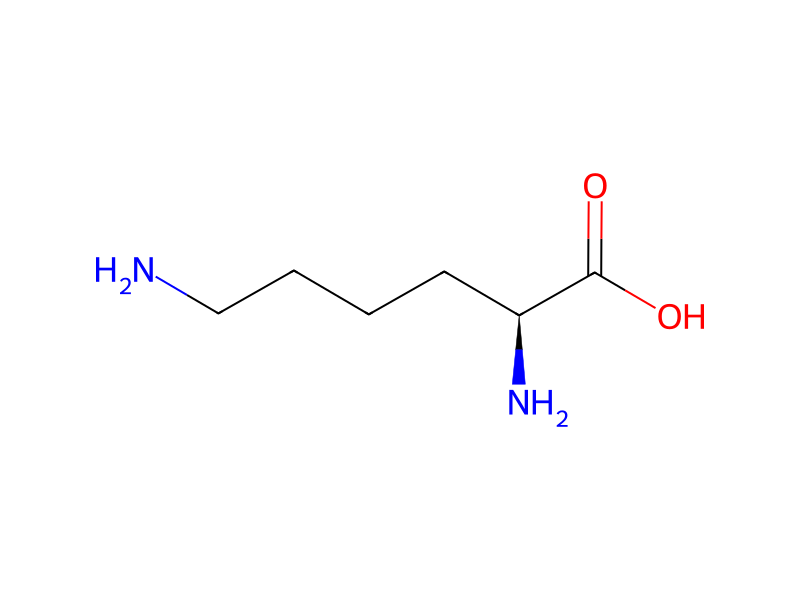

Product 1

Reagents, catalysts & solvents 2


Procedure
To a solution of 2-[3-(2-thienyl)acrylamido]benzoic acid (500 mg, 1.8 mmol) in tetrahydrofuran (5 ml) was added L-lysine (267 mg, 1.8 mmol) dissolved in water (3 ml). After stirring the mixture at room temperature for 1.5 hour, the solvent was removed, and the residue was triturated with ether to give crystals. After filtering and drying, the crystals were dissolved in water, the insoluble matter was removed and water was distilled off. The residue was crystallized with ether to give pale yellow solids of the desired L-lysine salt (510 mg, yield, 66%). m.p., 208°-213° C.
Workup
- customthe solvent was removed
- customthe residue was triturated with ether
- customto give crystals
- filtrationAfter filtering
- customdrying
- dissolutionthe crystals were dissolved in water
- customthe insoluble matter was removed
- distillationwater was distilled off
- customThe residue was crystallized with ether
Sources & evidence
- ORD record
- ord-ec83b9e36015448fbdc19cee50eb30e7
- Source dataset
- uspto-grants-1991_04
- Patent number
- US05006548
Reaction notes
Loading…