Acetonitrile → 3-(Pyridin-3-yl)propanenitrile
Reaction equation

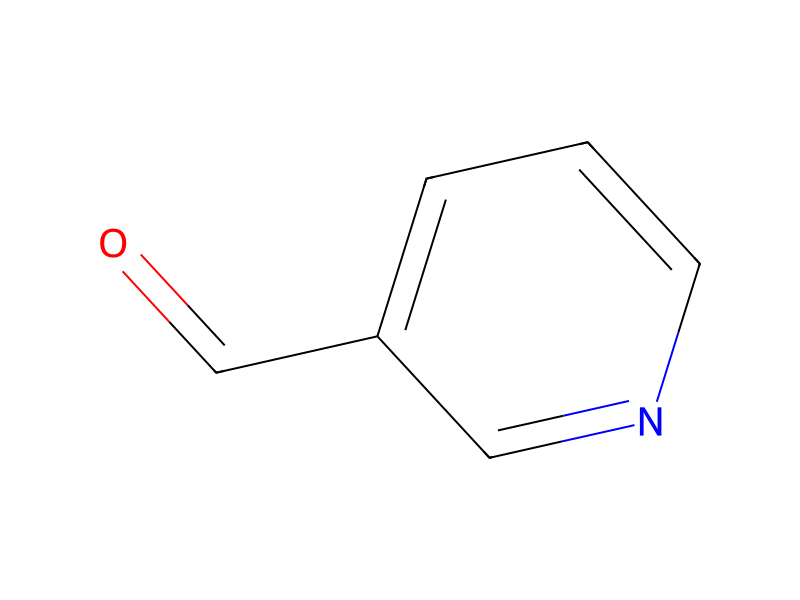
[OH-].[K+].[N:3]1[CH:8]=[CH:7][CH:6]=[C:5]([CH:9]=O)[CH:4]=1.[C:11](#[N:13])[CH3:12]>>[N:3]1[CH:8]=[CH:7][CH:6]=[C:5]([CH2:9][CH2:12][C:11]#[N:13])[CH:4]=1.[N:3]1[CH:8]=[CH:7][CH:6]=[C:5]([CH:9]=[CH:12][C:11]#[N:13])[CH:4]=1Participants




Procedure
3-(3-Pyridinyl)propionitrile is prepared in this example. A three-neck flask carrying a magnetic stir bar is fitted with a thermometer, pressure equalizing addition funnel, and a reflux condenser carrying an argon inlet. Freshly powdered potassium hydroxide (6.6 g, 0.1 mol) and anhydrous acetonitrile (150 ml) are charged into the flask and heated at reflux while 3-pyridinecarboxaldehyde (10.7 g, 0.1 mol) in anhydrous acetonitrile (50 ml) is added dropwise over a period of about five minutes and refluxing continued for about another three minutes. The resulting hot reaction mixture is poured into an ice/water mixture (100 g), and the resulting solution is extracted with CH2Cl2 (3×100 ml), dried with Na2SO4, and evaporated to give crude 3-(3-pyridinyl)acrylonitrile, which is purified by column chromatography over silica gel using CHCl3 as the eluent; yield 3.3 g (25.6%).
Workup
- customA three-neck flask carrying
- customa magnetic stir bar is fitted with a thermometer, pressure
- additionaddition funnel, and a reflux condenser
- temperatureheated
- additionis added dropwise over a period of about five minutes
- temperaturerefluxing
- customcontinued for about another three minutes
- extractionthe resulting solution is extracted with CH2Cl2 (3×100 ml)
- dry with materialdried with Na2SO4
- customevaporated
Sources & evidence
- ORD record
- ord-4ecb9cc7cb114af1bdf4663addbb344e
- Source dataset
- uspto-grants-1991_04
- Patent number
- US05008270
Reaction notes
Loading…