Acetyl chloride → HCID 15107894, compound
Reaction equation

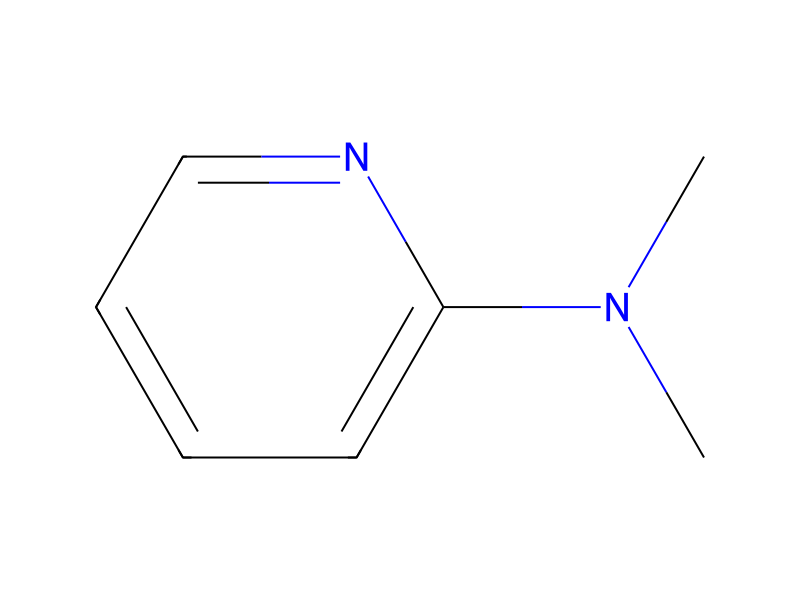
[NH2:1][C:2]1[N:6]2[N:7]=[C:8]([N:15]3[CH2:20][CH2:19][O:18][CH2:17][CH2:16]3)[C:9]3[CH2:10][CH2:11][CH2:12][CH2:13][C:14]=3[C:5]2=[N:4][N:3]=1.CN(C1C=CC=CN=1)C.C(N(CC)CC)C.[C:37](Cl)(=[O:39])[CH3:38]>ClC(Cl)C>[N:15]1([C:8]2[C:9]3[CH2:10][CH2:11][CH2:12][CH2:13][C:14]=3[C:5]3=[N:4][N:3]=[C:2]([NH:1][C:37](=[O:39])[CH3:38])[N:6]3[N:7]=2)[CH2:16][CH2:17][O:18][CH2:19][CH2:20]1Participants
6
Reactant 4



Product 1

Reagents, catalysts & solvents 1

Procedure
A 5.80 gm (0.0211 mole) quantity of the compound of Example 15 was dissolved in 100 ml of dichloroethane, and 380 mg (0.003 mole) of dimethylaminopyridine and 3.1 gm (0.03 mole) of triethylamine were added, followed by 2.38 gm (0.030 mole) of acetyl chloride. This mixture was refluxed overnight and evaporated. The resulting mixture was partioned between dilute aqueous NaHCO3 and CH2Cl2. The organic layer was dried and evaporated. The residue was triturated with ether and the resulting solid was collected to give 4.40 g of N-(7,8,9,10-tetrahydro-6-(4-morpholinyl)-1, 2,4-triazolo[3,4-a]phthalazin-3yl)acetamide; mp 147-149° C. (toluene-hexane).
Workup
- temperatureThis mixture was refluxed overnight
- customevaporated
- customThe organic layer was dried
- customevaporated
- customThe residue was triturated with ether
- customthe resulting solid was collected
Sources & evidence
- ORD record
- ord-fc8adebecde64290a731e608231549fa
- Source dataset
- uspto-grants-1991_04
- Patent number
- US05011835
Reaction notes
Loading…