Phenylpyruvic acid → Sodium 2-oxo-3-phenylbutanoate
Reaction equation

[OH-].[Na+:2].[C:3]1([CH2:9][C:10](=[O:14])[C:11]([OH:13])=[O:12])[CH:8]=[CH:7][CH:6]=[CH:5][CH:4]=1.[CH3:15]I>O1CCCC1>[O:14]=[C:10]([CH:9]([C:3]1[CH:8]=[CH:7][CH:6]=[CH:5][CH:4]=1)[CH3:15])[C:11]([O-:13])=[O:12].[Na+:2]Participants
5
Reactant 3
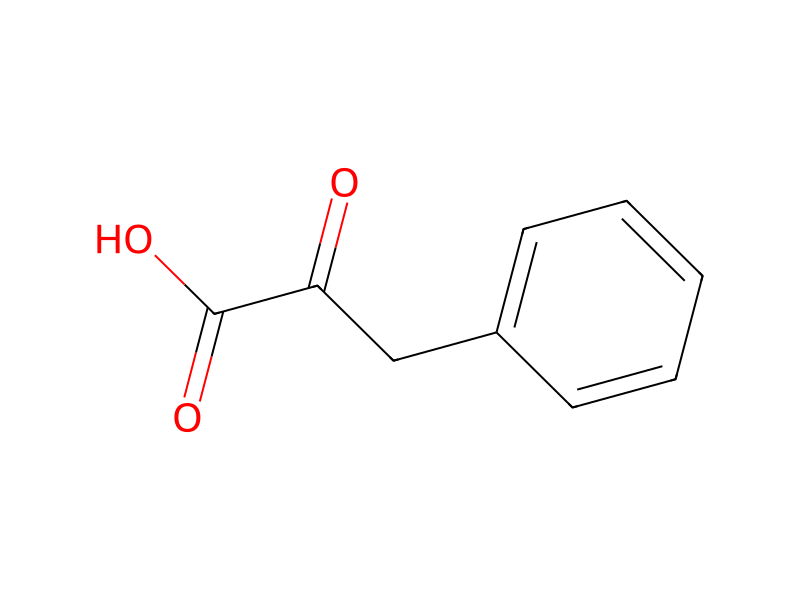


Product 1

Reagents, catalysts & solvents 1

Procedure
A 1N aqueous solution of sodium hydroxide (20 ml, 20 mmoles) and 30 ml of tetrahydrofuran were added to 1.64 g (10.0 mmoles) of phenylpyruvic acid to form a solution. Then, 2.0 ml of methyl iodide was added, and the mixture was stirred at room temperature for 10 hours. The reaction mixture was concentrated, and ether was added to the resulting pale yellowish white semi-solid. The precipitated sodium 2-oxo-3-phenylbutanoate as a white solid (0.68 g, yield 68 %) was isolated by filtration.
Workup
- customto form a solution
- concentrationThe reaction mixture was concentrated
- additionether was added to the resulting pale yellowish white semi-solid
Sources & evidence
- ORD record
- ord-e00b7c8585e447fbb58d58e56489a553
- Source dataset
- uspto-grants-1991_07
- Patent number
- US05028738
Reaction notes
Loading…