Ethanol → Succinate
Reaction equation

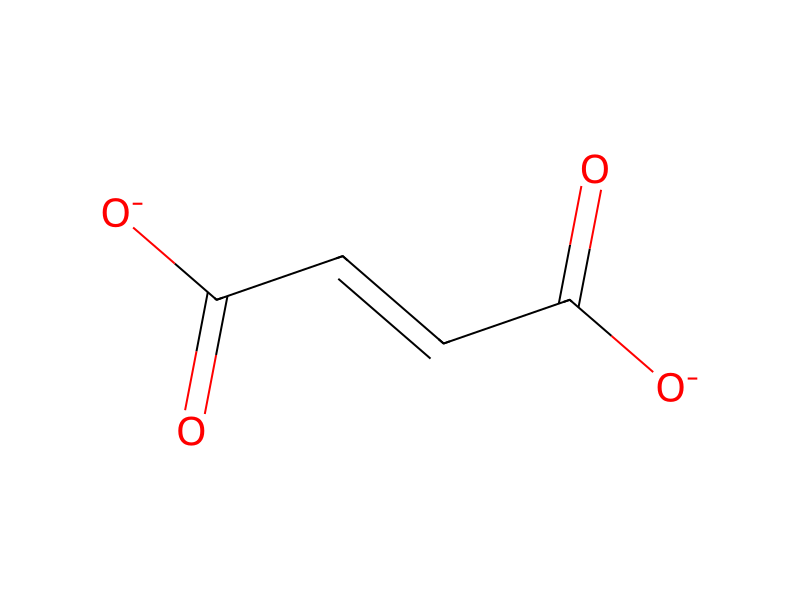
[C:1]([O:10][CH2:11][CH3:12])(=[O:9])/[CH:2]=[CH:3]\[C:4]([O:6][CH2:7][CH3:8])=[O:5].C1COCC1.CC/C(/C1C=CC(O)=CC=1)=C(\C1C=CC(O)=CC=1)/CC.C(O)C>O.C(O)CCC>[C:4]([O:6][CH2:7][CH3:8])(=[O:5])/[CH:3]=[CH:2]\[C:1]([O:10][CH2:11][CH3:12])=[O:9].[C:1]([O-:10])(=[O:9])/[CH:2]=[CH:3]/[C:4]([O-:6])=[O:5].[C:1]([O-:10])(=[O:9])[CH2:2][CH2:3][C:4]([O-:6])=[O:5]Participants






Procedure
EP-A 255,400 describes a method of producing pure GBL whereby the problem of the azeotrope formed by GBL and DES is avoided by adding diethyl maleate. The mixture of BD, THF, GBL, DES, ethanol, n-butanol and water produced by catalytic hydrogenation of diethyl maleate, fumarate or succinate is distilled in a first column such that ethanol, water, THF and n-butanol are removed at the top, whilst all other components remain at the bottom of the column. The bottoms from the first column are then distilled in a second column such that the GBL/DES azeotrope is removed at the top and the BD remains at the bottom. Purification of the GBL is effected by passing the overheads from the second column to a third column together with a suitable amount of diethyl maleate as used as starting material for the catalytic hydrogenation. Pure GBL is removed at the top of the column.
Sources & evidence
- ORD record
- ord-2a8e42a38db040c685f30bf1951127de
- Source dataset
- uspto-grants-1991_07
- Patent number
- US05030328
Reaction notes
Loading…