Catechol → 3-Nonylbenzene-1,2-diol
Reaction equation

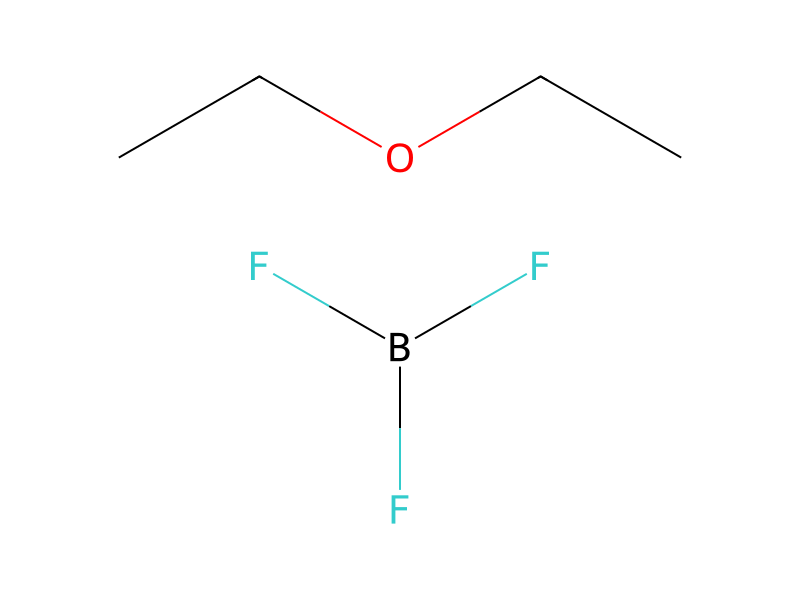
[C:1]1([C:3](=[CH:5][CH:6]=[CH:7][CH:8]=1)[OH:4])[OH:2].B(F)(F)F.CCOCC.[CH2:18]=[CH:19][CH2:20][CH2:21][CH2:22][CH2:23][CH2:24][CH2:25][CH3:26].[Cl-].[Na+]>>[CH2:18]([C:5]1[CH:6]=[CH:7][CH:8]=[C:1]([OH:2])[C:3]=1[OH:4])[CH2:19][CH2:20][CH2:21][CH2:22][CH2:23][CH2:24][CH2:25][CH3:26]Participants




Conditions
- Temperature
- 104 °C
Procedure
Into a 500ml, 3-neck reaction vessel was placed 64.8g (0.3125 moles) of catechol, after which time it was heated to 104° C. under a nitrogen flow. After the catechol was completely melted, 3.25g (5% based on the wt. of the catechol) of borontrifluoride-etherate was added dropwise, with stirring. After adding all of the catalyst, 63.2 g (0.25 moles) of 1-nonene was added dropwise to the reaction mixture, the rate of addition being adjusted so as to maintain a temperature of 130° C. After all of the 1-nonene was added, the resultant mixture was allowed to react for 3 hours, after which time 100 ml of a 10% sodium chloride solution was added to the reaction mixture. The resultant mixture was then stirred for 15 minutes at 95° to 100° C., after which time the bottom layer was separated. The mixture was again stirred at 95° to 100° C. for 15 minutes, after which time the bottom layer was again separated. The organic layer was then isolated to obtain a viscous, brown oil of the formula ##STR7##
Workup
- additionwas added dropwise
- additionwas added dropwise to the reaction mixture
- additionthe rate of addition
- temperatureto maintain a temperature of 130° C
- customto react for 3 hours
- customafter which time the bottom layer was separated
- stirringThe mixture was again stirred at 95° to 100° C. for 15 minutes
- customafter which time the bottom layer was again separated
- customThe organic layer was then isolated
- customto obtain a viscous, brown oil of the formula
Sources & evidence
- ORD record
- ord-eb9007d1091a4d13889e221728938f28
- Source dataset
- uspto-grants-1990_10
- Patent number
- US04960536
Reaction notes
Loading…