Cyclopentanone → 2-(2-Methylpentyl)cyclopentan-1-one
Reaction equation

[C:1]1(=[O:6])[CH2:5][CH2:4][CH2:3][CH2:2]1.[CH3:7][CH:8]([CH2:11][CH2:12][CH3:13])[CH:9]=O.[O-2].[Pr+3].[O-2].[O-2].[Pr+3]>[Pd]>[CH3:7][CH:8]([CH2:11][CH2:12][CH3:13])[CH2:9][CH:2]1[CH2:3][CH2:4][CH2:5][C:1]1=[O:6]Participants
Reactant 3
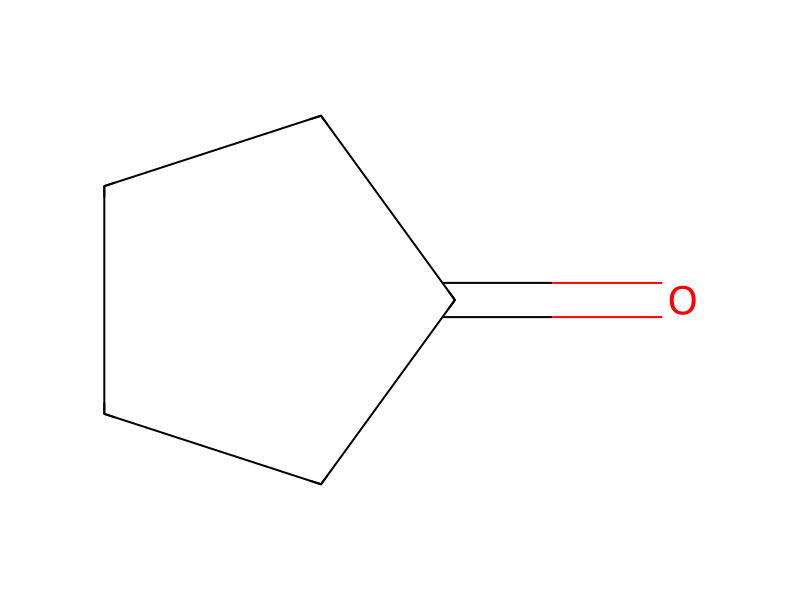


Product 1

Reagents, catalysts & solvents 1

Conditions
- Temperature
- 150 °C
Procedure
A mixture of 126 g (1.5 moles) of cyclopentanone, 50 g (0.5 mole) of 2-methylpentanal and 10 g of a pulverulent catalyst containing 1% by weight of palladium, 94% by weight of alumina and 5% by weight of praseodymium oxide was initially taken in a 300 ml autoclave. The autoclave was flushed with nitrogen and hydrogen at 20° C., after which H2 was forced in to a pressure of 10 bar and the reaction mixture was then heated at 150° C. under a hydrogen pressure of 30 bar until the pressure remained constant. The catalyst was removed, after which the mixture discharged from the autoclave was fractionated. 74.9 g of pure 2-(2-methylpentyl)-cyclopentanone (bp. 125° C./20 mbar) were obtained, corresponding to a selectivity of 89.2%, based on 2-methylpentanal.
Workup
- customThe autoclave was flushed with nitrogen and hydrogen at 20° C.
- customThe catalyst was removed
Sources & evidence
- ORD record
- ord-046bec4902ac47aea24b09e87a74f088
- Source dataset
- uspto-grants-1992_01
- Patent number
- US05081309
Reaction notes
Loading…