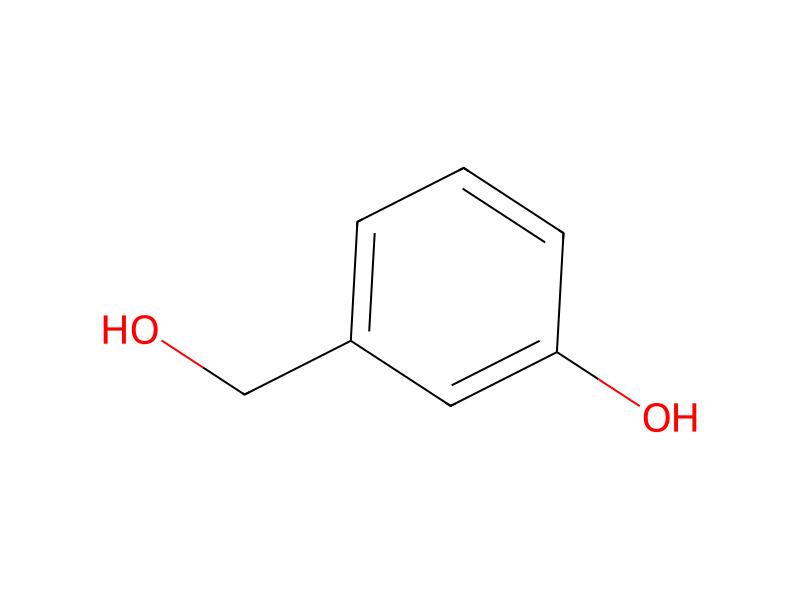
3-Hydroxybenzyl alcohol → Benzenemethanol, 3-(2-quinolinylmethoxy)-
Reaction equation

Cl.Cl[CH2:3][C:4]1[CH:13]=[CH:12][C:11]2[C:6](=[CH:7][CH:8]=[CH:9][CH:10]=2)[N:5]=1.[OH:14][C:15]1[CH:16]=[C:17]([CH:20]=[CH:21][CH:22]=1)[CH2:18][OH:19].[OH-].[Na+]>CS(C)=O>[OH:19][CH2:18][C:17]1[CH:16]=[C:15]([CH:22]=[CH:21][CH:20]=1)[O:14][CH2:3][C:4]1[CH:13]=[CH:12][C:11]2[C:6](=[CH:7][CH:8]=[CH:9][CH:10]=2)[N:5]=1Participants
5




Procedure
20.0 g (93.5 mmoles) of 2-chloromethylquinoline hydrochloride, 11.6g (93.5 mmoles) of 3-hydroxybenzylalcohol and 7.48g (186.42 mmoles) of powdered sodium hydroxide are combined in 56 ml of dimethylsulfoxide. After stirring room temperature for 24 hours the mixture is poured into ice-water and the resulting solid is collected and dried to give 25.6g of 2-(3-hydroxymethylphenoxy)methylquinoline.
Workup
- customthe resulting solid is collected
- customdried
Sources & evidence
- ORD record
- ord-a6e014de1fa54ef1b0de1cb0c3a9027d
- Source dataset
- uspto-grants-1992_01
- Patent number
- US05082849
Reaction notes
Loading…