2-Chlorobenzaldehyde → Z-2-(4-Fluorophenyl)-3-(2-chlorophenyl)propenal
Reaction equation

[OH-].[Na+].[Cl:3][C:4]1[CH:11]=[CH:10][CH:9]=[CH:8][C:5]=1[CH:6]=O.[F:12][C:13]1[CH:18]=[CH:17][C:16]([CH2:19][CH:20]=[O:21])=[CH:15][CH:14]=1>O.CO>[F:12][C:13]1[CH:18]=[CH:17][C:16](/[C:19](=[CH:6]/[C:5]2[CH:8]=[CH:9][CH:10]=[CH:11][C:4]=2[Cl:3])/[CH:20]=[O:21])=[CH:15][CH:14]=1Participants
6
Reactant 3
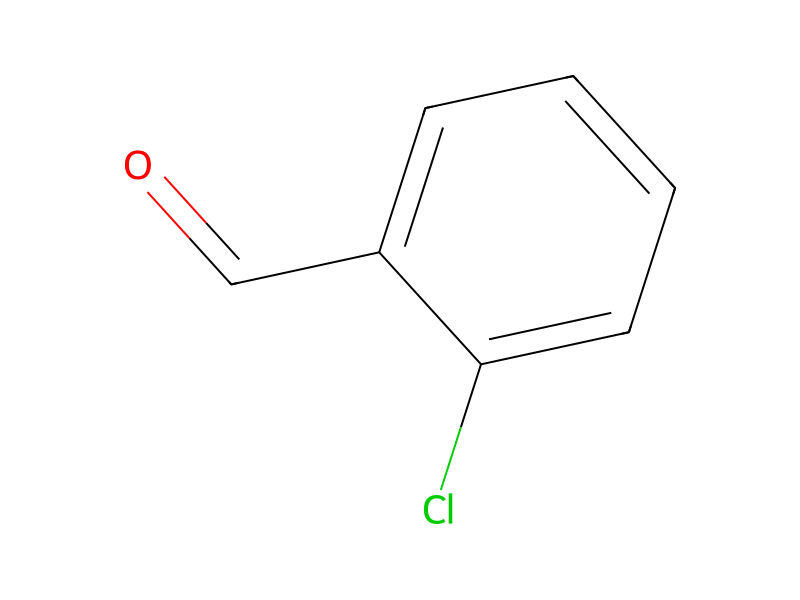


Product 1

Reagents, catalysts & solvents 2


Conditions
- Temperature
- 10 °C
Procedure
4.2 g of sodium hydroxide in 30 ml of water are added to a solution of 35 g of 2-chlorobenzaldehyde in 300 ml of methanol. The reaction mixture is cooled to 10° C. and 36 g of 4-fluorophenylacetaldehyde are rapidly added, during which the solution warms to 30°-40° C. The reaction solution is stirred at 40° C. for 10 hours and then cooled, and the crystals which separate out are filtered off with suction.
Workup
- customwarms to 30°-40° C
- temperaturecooled
- customthe crystals which separate out
- filtrationare filtered off with suction
Sources & evidence
- ORD record
- ord-0c59340eaebf4e5fa422a405723493d4
- Source dataset
- uspto-grants-1992_01
- Patent number
- US05084471
Reaction notes
Loading…