1,4-Dibromobutane → HCID 15611140, compound
Reaction equation

[OH:1][C:2]1[CH:19]=[CH:18][CH:17]=[CH:16][C:3]=1[C:4]([NH:6][C:7]1[CH:15]=[CH:14][CH:13]=[C:12]2[C:8]=1[CH:9]=[CH:10][NH:11]2)=[O:5].C(=O)([O-])[O-].[K+].[K+].[Br:26][CH2:27][CH2:28][CH2:29][CH2:30]Br>CC(C)=O>[Br:26][CH2:27][CH2:28][CH2:29][CH2:30][O:1][C:2]1[CH:19]=[CH:18][CH:17]=[CH:16][C:3]=1[C:4]([NH:6][C:7]1[CH:15]=[CH:14][CH:13]=[C:12]2[C:8]=1[CH:9]=[CH:10][NH:11]2)=[O:5]Participants
5
Reactant 3
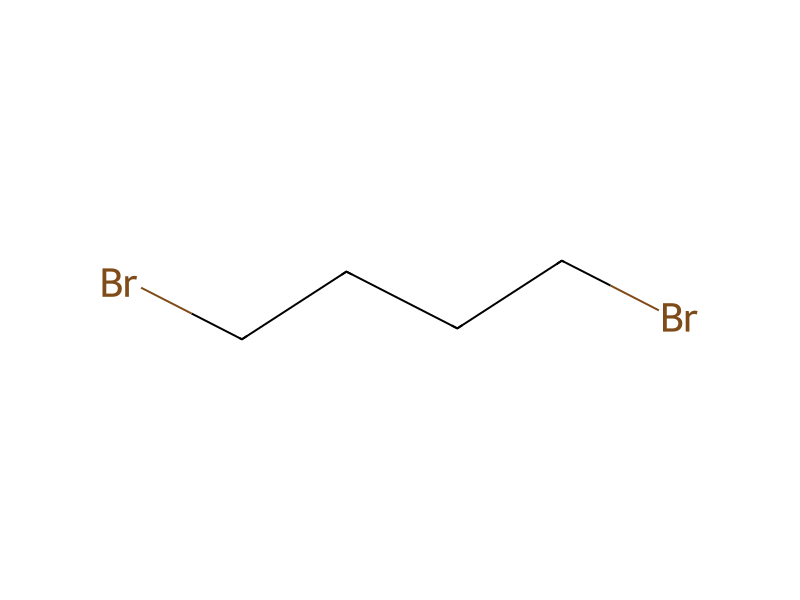


Product 1

Reagents, catalysts & solvents 1

Procedure
A suspension of 7.5 g of 2-hydroxy-N-(1H-indol-4-yl)benzamide and 8.28 g of potassium carbonate in 150 ml of acetone was refluxed for 75 minutes with 18 ml of 1,4-dibromobutane and the mixture was cooled. The precipitate was filtered off and rinsed with acetone and the filtrate was evaporated to dryness. The residue was purified by chromatography over silica (eluant: methylene chloride/ethyl acetate 9:1), followed by crystallization from ethyl acetate to obtain 2-(4-bromobutoxy) -N-(1H-indol-4-yl)benzamide melting at 135° C.
Workup
- temperaturethe mixture was cooled
- filtrationThe precipitate was filtered off
- washrinsed with acetone
- customthe filtrate was evaporated to dryness
- customThe residue was purified by chromatography over silica (eluant: methylene chloride/ethyl acetate 9:1)
- customfollowed by crystallization from ethyl acetate
Sources & evidence
- ORD record
- ord-d05ab429681244a79080cd6f2c8013b9
- Source dataset
- uspto-grants-1992_01
- Patent number
- US05084455
Reaction notes
Loading…