Diethylene Glycol Monoethyl Ether → 3-Oxo-2-(4-tert-butylphenyl)-3-(1,3,4-trimethylpyrazol-5-yl)propionitrile
Reaction equation

[C:1]([C:5]1[CH:10]=[CH:9][C:8]([CH2:11][C:12]#[N:13])=[CH:7][CH:6]=1)([CH3:4])([CH3:3])[CH3:2].C([O:16][C:17]([C:19]1[N:23]([CH3:24])[N:22]=[C:21]([CH3:25])[C:20]=1[CH3:26])=O)C.C(OCCOCCO)C.CO.C[O-].[Na+]>O.COCCOCCOC.CCCCCCC>[C:1]([C:5]1[CH:6]=[CH:7][C:8]([CH:11]([C:17]([C:19]2[N:23]([CH3:24])[N:22]=[C:21]([CH3:25])[C:20]=2[CH3:26])=[O:16])[C:12]#[N:13])=[CH:9][CH:10]=1)([CH3:4])([CH3:2])[CH3:3]Participants
Reactant 4


Product 1

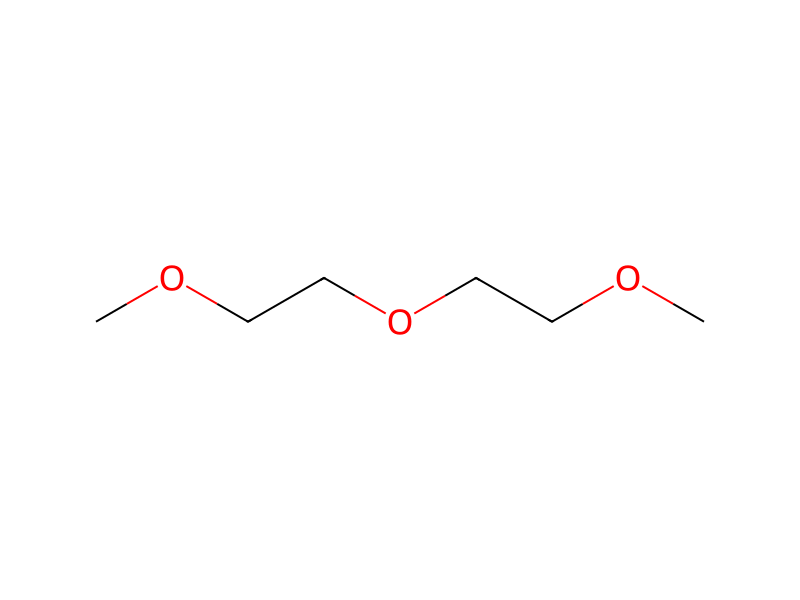
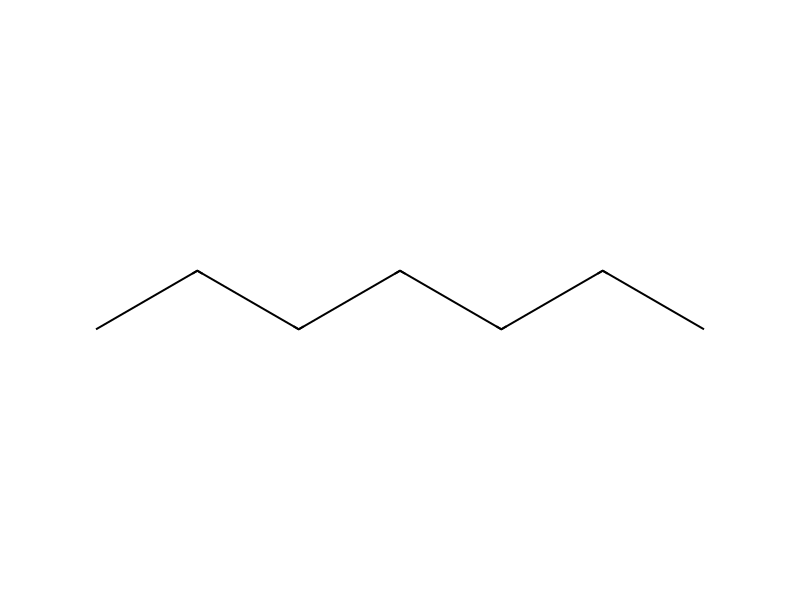
Reagents, catalysts & solvents 3
Conditions
- Temperature
- 92.5 °C
Procedure
In a 10 L-reaction flask equipped with a rectification column and a separating tank, 314 g (1.81 mol) of 4-tert-butylphenylacetonitrile, 300 g (1.65 mol) of 1,3,4-trimethylpyrazol-5-carboxylic acid ethyl ester, 3000 g of heptane, 225 g of diethylene glycol dimethyl ether, and 99 g of diethylene glycol monoethyl ether were added, the atmosphere was substituted with nitrogen, then azeotropic dehydration was carried out by heating at 90 to 95° C. for 1 hour. The temperature was maintained, 381 g (1.98 mol) of 28% sodium methoxide methanol solution was added dropwise over 10 hours, and the resulting mixture was further reacted for 7 hours. After cooling to 30° C. or less, 3000 g of water was added to separate out heptane phase, and the resulting aqueous phase was further washed with 600 g of heptane to separate out heptane phase. A quantitative analysis of the obtained aqueous phase with liquid chromatography showed that the aqueous phase contained 466 g (yield 91.5%) of 2-(4-tert-butylphenyl)-3-(1,3,4-trimethyl-5-pyrazolyl)-3-oxopropionitrile. After adding 2760 g of xylene to the aqueous phase, 206 g (1.98 mol) of 35% hydrochloric acid was added dropwise to be neutralized. After separating out the aqueous phase, the resulting organic phase was washed two times with 600 g of water and the aqueous phase was separated out to obtain xylene solution of 3-oxo-2-(4-tert-butylphenyl)-3-(1,3,4-trimethylpyrazol-5-yl) propionitrile. A quantitative analysis with liquid chromatography showed that the xylene solution contained 456 g (yield 89.6%) of 3-oxo-2-(4-tert-butylphenyl)-3-(1,3,4-trimethylpyrazol-5-yl) propionitrile.
Workup
- customIn a 10 L-reaction flask
- customequipped with a rectification column
- temperatureThe temperature was maintained
- customthe resulting mixture was further reacted for 7 hours
- temperatureAfter cooling to 30° C. or less
- customto separate out heptane phase
- washthe resulting aqueous phase was further washed with 600 g of heptane
- customto separate out heptane phase
Sources & evidence
- ORD record
- ord-c2e27459146e442c9c13246b9b180af5
- Source dataset
- uspto-grants-2012_03
- Patent number
- US08138368B2
Reaction notes
Loading…