Methyl iodide → 6-(4-Bromo-3-fluorophenyl)-3-(methylthio)-1,2,4-triazine
Reaction equation

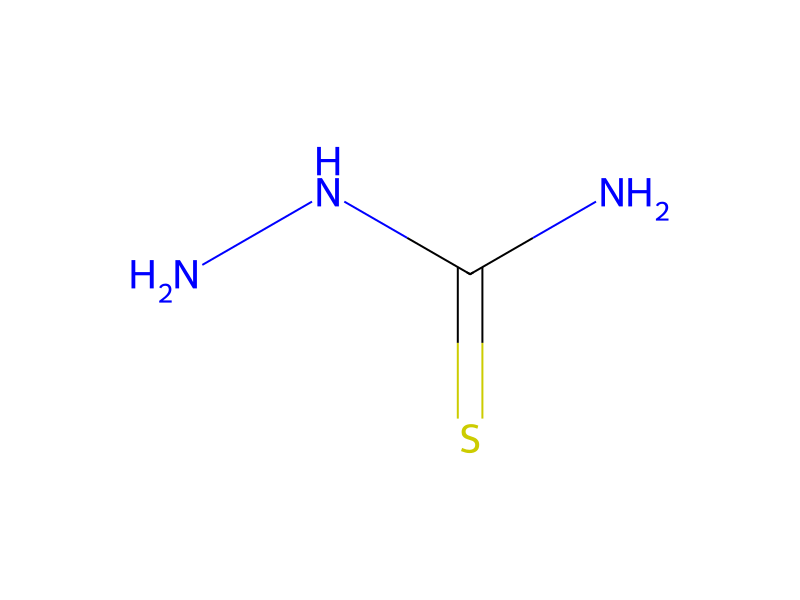
[Br:1][C:2]1[CH:7]=[CH:6][C:5]([C:8](=O)[CH:9](OCC)OCC)=[CH:4][C:3]=1[F:17].[NH2:18][NH:19][C:20]([NH2:22])=[S:21].[CH3:23]I>C(O)C.O.C1(C)C=CC(S(O)(=O)=O)=CC=1>[Br:1][C:2]1[CH:7]=[CH:6][C:5]([C:8]2[N:18]=[N:19][C:20]([S:21][CH3:23])=[N:22][CH:9]=2)=[CH:4][C:3]=1[F:17]Participants
Reactant 3


Product 1

Reagents, catalysts & solvents 2


Procedure
A solution of 1-(4-bromo-3-fluorophenyl)-2,2-diethoxyethanone (2.24 g, 0.00734 mol), thiosemicarbazide (0.702 g, 0.00771 mol), and p-toluenesulfonic acid monohydrate (70 mg) in ethanol (50 mL) was heated at 90° C. for 2 h. LCMS showed that the starting material was consumed. After cooled to RT, to the mixture was added methyl iodide (2.3 mL, 0.037 mol). The mixture was stirred at RT for 2 h, and concentrated. To the residue was added acetic acid (15 mL). The mixture was heated at 60° C. for 4 h. The volatiles were evaporated under reduced pressure. The residue was treated with methanol. The formed precipitate was collected by filtration, and dried in-vacuo to afford the desired product (1.15 g, 51%) which was directly used in next step without further purification.
Workup
- customwas consumed
- concentrationconcentrated
- additionTo the residue was added acetic acid (15 mL)
- temperatureThe mixture was heated at 60° C. for 4 h
- customThe volatiles were evaporated under reduced pressure
- additionThe residue was treated with methanol
- filtrationThe formed precipitate was collected by filtration
- customdried in-vacuo
Sources & evidence
- ORD record
- ord-59d2cf9b20dd483c867cf813da1cff86
- Source dataset
- uspto-grants-2012_03
- Patent number
- US08143251B2
Reaction notes
Loading…