5-Chloro-salicylaldehyde → 3-(4-chloro-3-nitrobenzylsulfonyl)-6-chloro-2H-chromen-2-one
Reaction equation

[Cl:1][C:2]1[CH:9]=[C:6]([CH:7]=O)[C:5]([OH:10])=[CH:4][CH:3]=1.[Cl:11][C:12]1[CH:25]=[CH:24][C:15]([CH2:16][S:17]([CH2:20][C:21](O)=[O:22])(=[O:19])=[O:18])=[CH:14][C:13]=1[N+:26]([O-:28])=[O:27]>C(O)(=O)C>[Cl:11][C:12]1[CH:25]=[CH:24][C:15]([CH2:16][S:17]([C:20]2[C:21](=[O:22])[O:10][C:5]3[C:6]([CH:7]=2)=[CH:9][C:2]([Cl:1])=[CH:3][CH:4]=3)(=[O:18])=[O:19])=[CH:14][C:13]=1[N+:26]([O-:28])=[O:27]Participants
4
Reactant 2
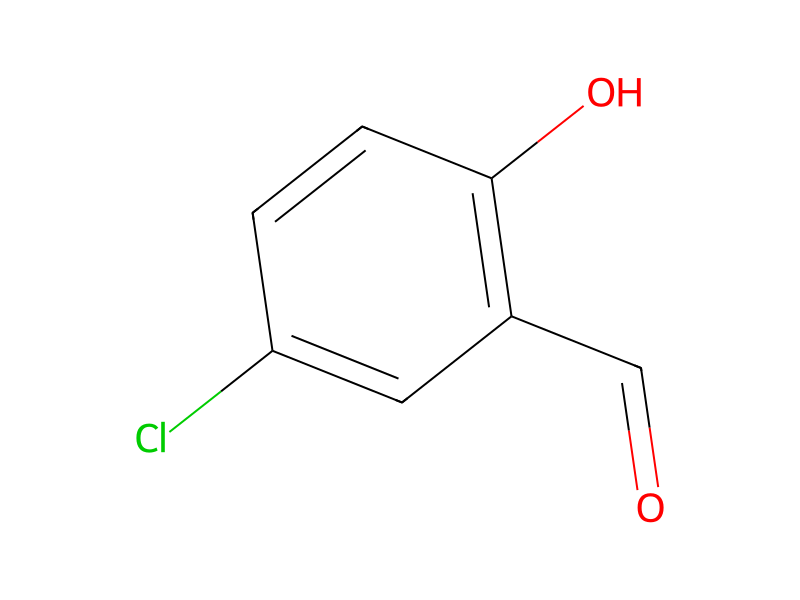

Product 1

Reagents, catalysts & solvents 1

Procedure
A solution of 5-chlorosalicylaldehyde (1 mmol) and 2-(4-chloro-3-nitrobenzylsulfonyl)acetic acid (1 mmol) in acetic acid (10 mL) was subjected to the General Procedure 2, Method A to generate a 93% yield of the title compound; m.p. 272-275° C.
Sources & evidence
- ORD record
- ord-84b8ffd190aa47c8a63cbf408924c5b5
- Source dataset
- uspto-grants-2012_03
- Patent number
- US08143428B2
Reaction notes
Loading…